 Foto: Şeyhmus Kino / Pexels
Emergency Water Storage for Families: How Much Do You Actually Need?
Emergency water storage calculator for families: exact quantities by family size, special needs for children and elderly, and practical storage solutions for apartments.
Water Planning for Families Is Different
A single person planning emergency water storage has one calculation. A family of four with children, elderly grandparents visiting, or a nursing baby has a much more complex equation — different age groups, different physiological needs, different practical constraints.
This guide addresses family-specific water planning directly.
Water Needs by Age Group
Adults (18-60)
Base need: 3.5-4 liters/day (drinking + cooking + basic hygiene)
Modifiers:
- Physical work or stress: add 1 liter
- Breastfeeding mother: add 1 liter (milk production requires extra hydration)
- Hot weather (>28°C): add 1-2 liters
- Illness with fever or diarrhea: add 2-3 liters
Children (6-12 years)
Base need: 2-2.5 liters/day
Children have higher surface-area-to-weight ratios and lose water faster through breathing and sweating. They also tend to forget to drink when absorbed in activities.
Key points:
- Dehydration in children escalates faster than in adults
- Monitor output (wet diapers, urination frequency) as a proxy for hydration status
- Children may not communicate thirst effectively — set regular drinking times
Toddlers (1-5 years)
Base need: 1-1.5 liters/day
Include water for food preparation (porridge, diluted juices, soups).
Infants Under 12 Months
Breastfed: No water for the baby — mother needs her increased daily intake (~1 extra liter).
Formula-fed: Formula must be prepared with safe (boiled or filtered) water. A formula-fed baby uses approximately 150-200ml per feed × 6-8 feeds per day = 1-1.5 liters of clean water per day just for formula.
This is a significant requirement that is often overlooked in family planning.
Elderly (65+)
Base need: 2-3 liters/day
Elderly individuals are at higher risk of dehydration because:
- The thirst mechanism weakens with age
- Some medications increase urinary output
- Reduced kidney function makes dehydration more dangerous
Active management required: Elderly household members should have scheduled drinking reminders built into any emergency plan.
Pets
Dogs need approximately 50ml of water per kg body weight per day.
- 10kg dog: 500ml/day
- 30kg dog: 1.5 liters/day
Cats: 200-300ml/day
Include pets in your water calculation explicitly — they are often forgotten until they are thirsty.
Family Water Calculation Tool
Step 1: Add up your household's daily water need:
| Family Member | Daily Need |
|---|---|
| Adult 1 | 4 L |
| Adult 2 | 4 L |
| Child (8 years) | 2.5 L |
| Child (5 years) | 2 L |
| Formula-fed baby | 1.5 L water for formula |
| Dog (20kg) | 1 L |
| Total | 15 L/day |
Step 2: Multiply by days of coverage (7 or 14).
Example above: 15 × 14 = 210 liters for 2 weeks.
Practical Storage Solutions for Families
In an Apartment (No Cellar/Garage)
Challenge: Limited space and carrying weight.
Solutions:
- Under-bed storage: Several 5-10 liter flat water containers fit under a standard bed frame
- Wardrobe bottom: Stack 10-liter jugs behind winter clothing
- Kitchen cabinet: Replace rarely-used items with emergency water bottles
Container recommendation: 5-10 liter HDPE jugs are most practical for apartments — manageable weight when full (~10kg for 10L), stack well, and fit under most furniture.
In a House with Cellar
Ideal location: Cool basement with stable temperature.
Options:
- Stack of 20-liter canisters for 80-100 liter capacity
- 100-200 liter barrel for a complete family reserve
- Separate children's water in smaller containers (5 liters) they can access independently
The Family Emergency Water Bag
Keep a pre-packed bag near the exit with:
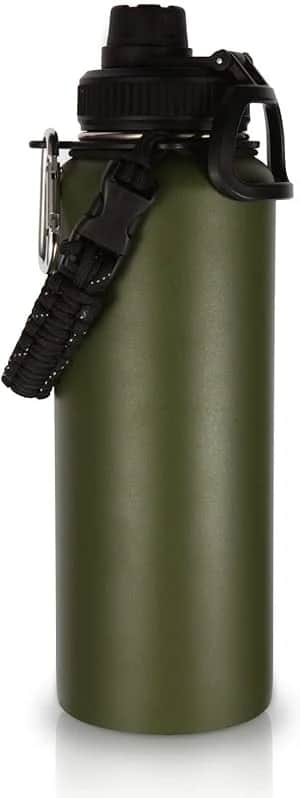
- 3-4 × 1.5L water bottles per family member (for evacuation)
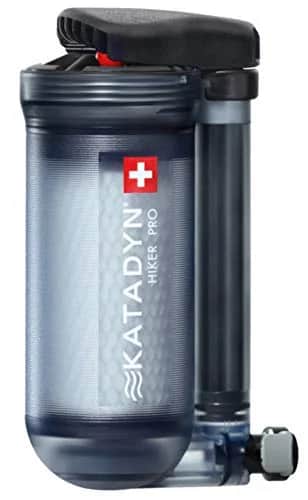
- 1 water filter (LifeStraw or Sawyer)
- 1 pack of Aquatabs
- Emergency water pouch (single-serve, 5-year shelf life) for children's bags
This bag goes with you if you need to leave quickly.
Baby-Specific Water Safety
Formula Preparation Without Safe Tap Water
When tap water is contaminated or under boil advisory:
- Boil water and cool to approximately 70°C (not fully cold — kills bacteria in powder formula)
- Add the required amount of formula powder
- Mix and cool to feeding temperature
- Use within 2 hours or refrigerate up to 24 hours
Pre-made liquid formula: Single-serve liquid formula (no water needed) is the safest option during a water crisis. Stock 2-3 weeks' supply if formula-dependent.
Updating the Family Plan as Children Grow
Children's water needs change significantly:
- Infant: 0 liters (if breastfed) → 1.5 liters (formula)
- Toddler: 1-1.5 liters
- Child: 2-2.5 liters
- Teen: 3-4 liters (approaching adult needs)
Review and update your family water calculation annually, or whenever a baby is born or an elderly parent moves in.
Conclusion
Family water planning requires accounting for every person (and pet) in the household with age-appropriate calculations. The formula is straightforward: sum up daily needs, multiply by coverage days, plan storage accordingly. For a typical family of 4, that is approximately 200 liters for 2 weeks — achievable with 10-20 liter HDPE canisters and an organized rotation plan. Infants and elderly members need special attention; their needs are often underestimated.
Recommended Products
As an Amazon Associate we earn from qualifying purchases. Buying through our links supports the development of this app at no extra cost to you.