 Foto: Insan Farooqi / Pexels
Buying a Water Filter for Emergencies: What Actually Matters
Water filter buying guide for crisis preparedness: hollow fiber vs ceramic vs UV, what to look for, and which models are worth the price for emergency use.
Why Most People Buy the Wrong Water Filter
The emergency water filter market is flooded with products marketed to survivalists, hikers, and preppers. Most of them are fine for hiking — but not all are right for home emergency use. The difference matters when you are actually in a crisis.
This guide focuses on what matters for emergency preparedness: reliability, volume capacity, ease of use under stress, and realistic cost.
The Three Filter Technologies You Need to Understand
Hollow Fiber (Membrane) Filters
How it works: Water passes through thousands of tiny tubes. Bacteria and protozoa (physical contaminants larger than the pore size) cannot pass through.
Removes: Bacteria, protozoa, sediment Does not remove: Viruses, chemicals, heavy metals, dissolved substances
Best known product: Sawyer Squeeze, LifeStraw
For emergencies: Excellent for filtering water from rainwater tanks, streams, and other natural sources in areas without chemical contamination.
Ceramic Filters
How it works: Water passes through fired ceramic material with very fine pores.
Removes: Bacteria, protozoa, sediment. Some ceramic filters include activated carbon for chemical removal.
Does not remove: Viruses (without silver impregnation)
For emergencies: Good for home use (gravity filters like Berkey, Doulton). Higher flow rate than hollow fiber for household volumes.
UV Purification
How it works: UV-C light kills (sterilizes) pathogens, preventing reproduction.
Removes/Neutralizes: Bacteria, viruses, protozoa Does not remove: Chemicals, sediment, heavy metals. Water must be clear for UV to work effectively.
Best known product: SteriPen
For emergencies: Ideal as a complement to filtration, not standalone. Requires clear water and battery power.
Key Specifications to Check Before Buying
Filter Pore Size
For bacteria removal: needs to be 0.2 microns or smaller. For protozoa (Giardia, Cryptosporidium): 0.2 microns is sufficient. For viruses: hollow fiber/ceramic alone is insufficient — add UV or chlorination.
Rated Volume
How many liters does the filter last before it needs replacing?
- LifeStraw: 4,000 liters (personal use)
- Sawyer Squeeze: 378,000 liters (claims; real-world significantly less)
- Berkey system: 22,000 liters per filter element pair
For a family of 4 using 10 liters/day: you need at least 100 liters/month capacity with easy filter servicing.
Flow Rate
Critical for household emergencies:
- Straw-type filters (LifeStraw): 1-2 liters/hour maximum
- Sawyer Squeeze: 1 liter/minute (when squeezed)
- Gravity filters (Berkey): 10-15 liters/hour
Rule: For a family, gravity filters win. For individual emergency use, squeeze filters win.
Recommended Products by Use Case
Individual Use (Hiking, Get-Home Bag)
LifeStraw Personal (~20 euros)
- Lightweight, easy to use
- 0.2 micron hollow fiber
- Limitation: straw only, cannot fill bottles
Sawyer Squeeze (~45 euros)
- More versatile — can fill bottles, attach to hydration bladder
- Better flow rate than LifeStraw
Family Home Emergency Use
Berkey Gravity Filter (~350-450 euros for the Big Berkey)
- Filters 10-15 liters/hour without electricity or pressure
- Removes bacteria, protozoa, and most chemicals (with Black Berkey elements)
- High upfront cost, very low per-liter cost
Budget alternative: MSR MiniWorks EX (~90 euros)
- Ceramic filter, manually pumped
- 1 liter/minute
- Good if gravity filter cost is prohibitive
Complete Protection (Including Viruses)
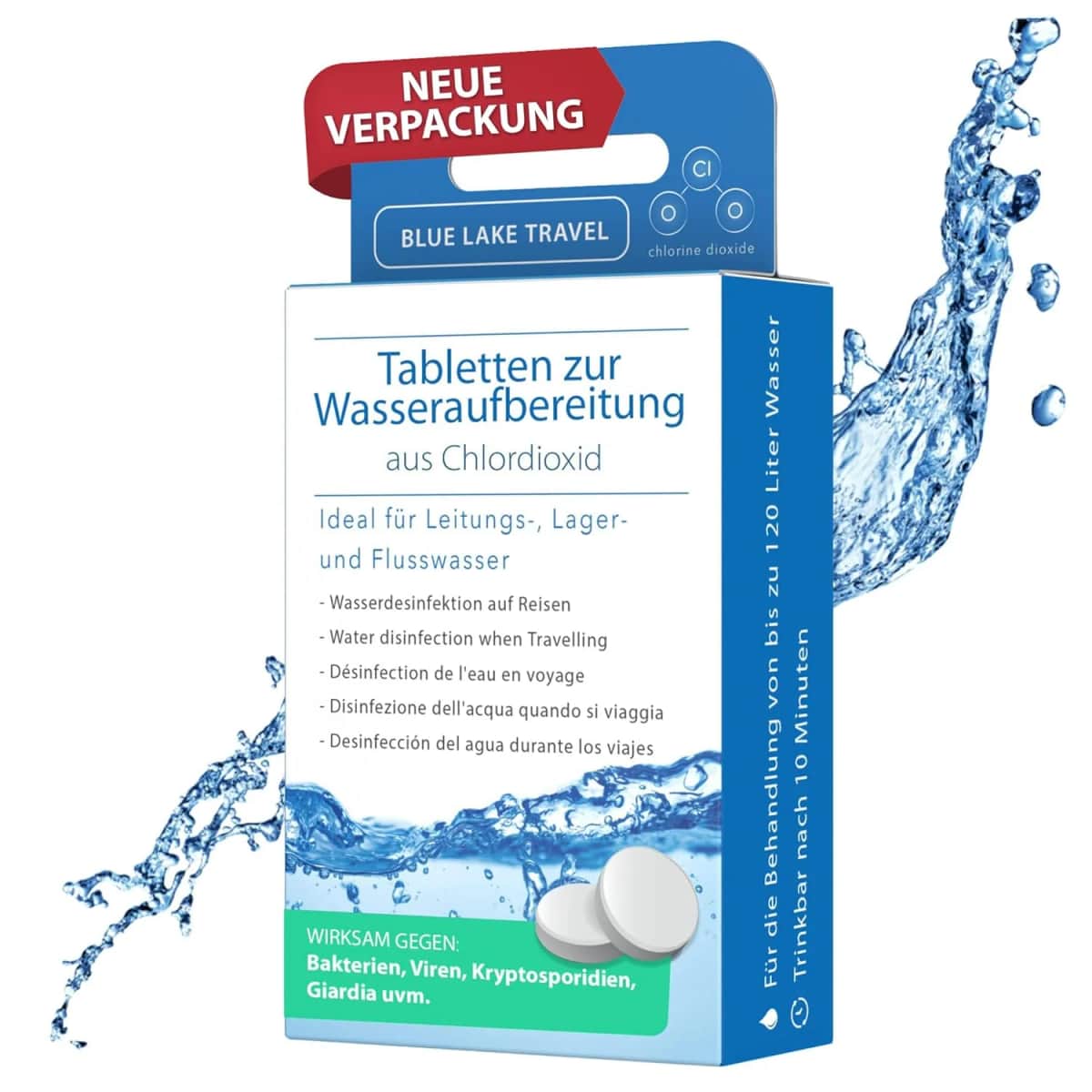
Combine hollow fiber + chlorination tablets:
- Sawyer Squeeze filter (removes bacteria/protozoa)
- Aquatabs (kills viruses)
- Total cost: ~60 euros
This combination handles nearly any biological water contamination in European scenarios.
What You Do Not Need
Marketing claims to ignore:
- "Removes 99.9999% of bacteria" — the real question is what about viruses?
- "Military-grade filtration" — meaningless marketing
- Filters with built-in activated carbon only — these remove taste, not pathogens
Expensive combinations for European use: Virus contamination from surface water is uncommon in Central Europe. Hollow fiber + occasional chlorination is sufficient for most realistic scenarios.
The Practical Emergency Filter Kit
Recommended home emergency filter kit (under 80 euros):
- 1x Sawyer Squeeze: 45 euros
- 100x Aquatabs chlorination tablets: 10 euros
- 20-liter collapsible water container: 15 euros
- Waterproof bag for storage: 10 euros
This covers a family for months of water emergencies from any source — rain, stream, neighbor's tap.
Conclusion
Buying a water filter for emergencies requires matching the technology to your realistic risk. For Central Europe: hollow fiber filter + chlorination tablets covers 99% of scenarios. For pure individual use, a LifeStraw costs 20 euros and lasts 4,000 liters. For a household, a gravity filter like the Berkey is the gold standard — if the upfront cost fits the budget.
Recommended Products
As an Amazon Associate we earn from qualifying purchases. Buying through our links supports the development of this app at no extra cost to you.