 Foto: Inna Mykytas / Pexels
The Ultimate Emergency Food Storage Guide: Building a 4-Week Supply
How to build a complete 4-week emergency food stockpile: the right foods, quantities, storage conditions, rotation schedule, and calorie calculations for your household.
Why 4 Weeks and Not Just 72 Hours?
Emergency management agencies typically recommend a minimum of 72 hours to one week of food supply. Germany's BBK specifically recommends 10 days. But realistic long-term emergencies — extended infrastructure failures, supply chain disruptions, severe weather events — often exceed these minimums.
A 4-week supply is the sweet spot for most households:
- Covers virtually all plausible emergency scenarios
- Does not require specialized equipment or freeze-drying technology
- Is achievable with regular supermarket purchases
- Costs €150–300 for a couple
- Requires minimal storage space when organized correctly
Understanding Calorie Needs
The central question in emergency food storage is caloric sufficiency, not just variety.
Daily Caloric Requirements
| Person | Sedentary | Moderate Activity | Heavy Work/Cold |
|---|---|---|---|
| Adult male | 2,000 kcal | 2,500 kcal | 3,000+ kcal |
| Adult female | 1,600 kcal | 2,000 kcal | 2,500 kcal |
| Child 6–12 | 1,400 kcal | 1,800 kcal | 2,200 kcal |
| Teen | 1,800 kcal | 2,400 kcal | 3,000 kcal |
In a crisis, especially in cold weather or when doing manual work, caloric needs rise significantly. Plan for moderate activity (the middle column) as your baseline.
4-Week Calculation Example
For 2 adults:
- 2,200 kcal/person/day × 2 people × 28 days = 123,200 kcal total
This sounds daunting until you see how it breaks down into practical quantities.
The Core Stockpile: Category by Category
Grains and Starches (40% of Calories)
These form the caloric backbone of your stockpile. Extremely long shelf life, dense calories, versatile.
Per person for 4 weeks:
- 4 kg pasta (whole grain preferred) — ~1,400 kcal/kg, 5.6 million kcal in 4 kg
- 3 kg rice (white or brown) — ~3,500 kcal/kg
- 2 kg oats — ~3,600 kcal/kg; excellent hot breakfast
- 1 kg flour — breadmaking if you have a camp stove and Dutch oven
Protein Sources (25% of Calories)
Without refrigeration, protein comes from shelf-stable sources:
Per person for 4 weeks:
- 15 cans (400g each) of legumes: lentils, chickpeas, kidney beans, white beans
- 8 cans of fish: tuna, sardines, mackerel (rich in omega-3, good protein density)
- 8 cans of meat: chicken, corned beef, pork
- 500g lentils (dried) — extremely high protein, cook down from dried
- 500g mixed nuts and seeds — high calorie density, no cooking needed
Fats (20% of Calories)
Fat is calorie-dense (9 kcal/g vs. 4 kcal/g for protein and carbs) and critical for satiety and warmth.
Per person for 4 weeks:
- 1L olive oil or sunflower oil (long shelf life, ~8,000 kcal/L)
- 500g ghee (clarified butter, shelf-stable without refrigeration: 1–3 year shelf life)
- 500g nut butter (peanut, almond, or mixed) — 600 kcal per 100g
- 500g walnuts or mixed nuts
Vegetables and Micronutrients (10% of Calories)
A purely calorie-focused stockpile neglects micronutrient deficiency — a real risk in extended emergencies.
Per person for 4 weeks:
- 10 cans mixed vegetables (corn, peas, tomatoes, mixed)
- 1 kg dried tomatoes or sun-dried tomatoes
- 500g dried mushrooms (dense micronutrients, long shelf life)
- Multivitamin tablets: 1 bottle of 90+ tablets (nutritional insurance)
- 200g dried seaweed flakes (iodine, minerals)
Comfort and Morale Items (5%)
Often overlooked but psychologically important:
- Coffee or tea (morale in crisis is real)
- Chocolate and hard candy
- Honey (also antimicrobial for wound care)
- Spices and salt (makes otherwise bland emergency food edible)
- Instant soup packets
Foods to Avoid in Your Stockpile
- Foods requiring refrigeration after opening (avoid cans that don't seal for later)
- Items requiring extensive water to prepare (when water is scarce)
- Foods your household doesn't normally eat (crisis is not the time for unfamiliar textures)
- Very salty foods (increase water consumption; problematic when water is rationed)
Storage Conditions
Temperature
The single biggest factor in shelf life. For every 10°C (18°F) rise in temperature, shelf life roughly halves.
- Optimal: 10–15°C (50–59°F)
- Acceptable: up to 20°C (68°F)
- Degraded: 20–30°C (68–86°F)
- Avoid: above 30°C
A cool basement, interior pantry, or climate-controlled room is ideal.
Light
Direct sunlight degrades nutrients and accelerates plastic packaging breakdown. Store in boxes, dark cupboards, or wrap containers in cardboard.
Moisture
High humidity causes clumping, mold, and container corrosion. Target below 60% relative humidity. Silica gel packets in sealed containers help.
Pests
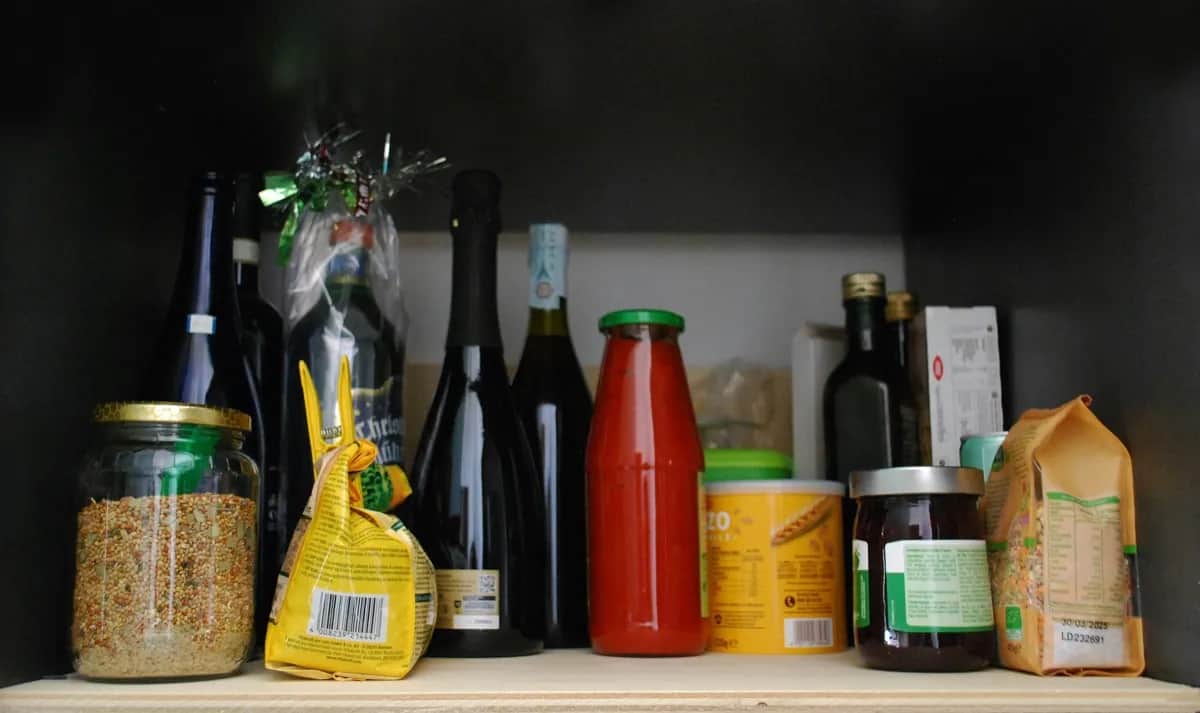
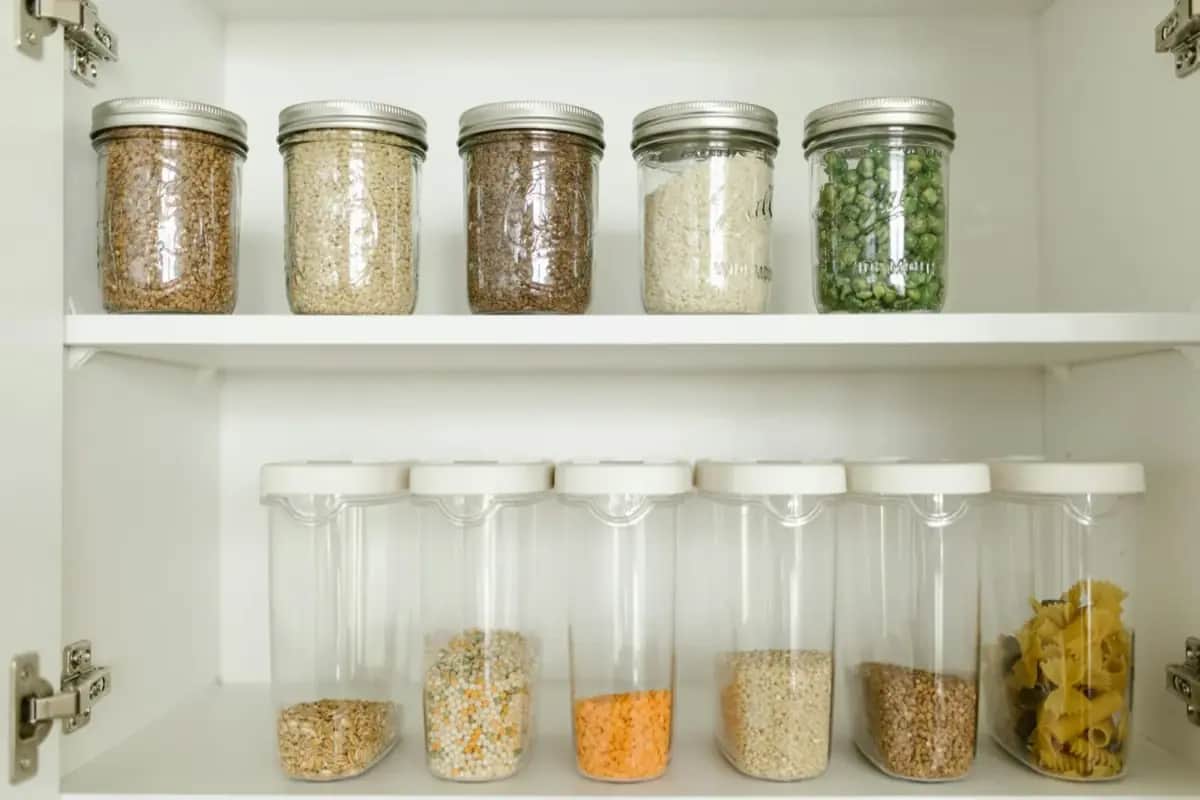
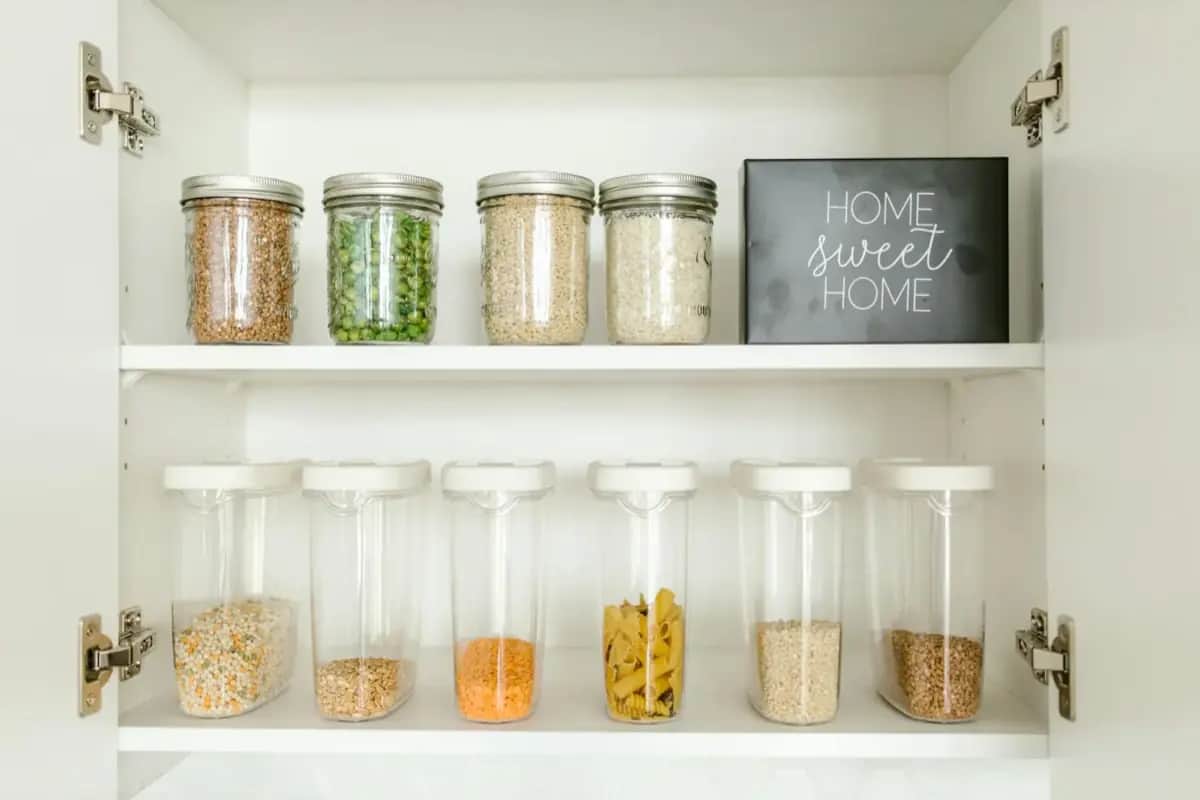
Weevils, moths, and rodents are attracted to dry goods. Use sealed containers (glass jars or hard plastic buckets with tight lids) for flour, oats, rice, and pasta. Bay leaves in containers naturally repel some insects.
The FIFO Rotation System
"First In, First Out" — the fundamental principle of stockpile management.
- When you buy new items, place them at the back
- Use from the front (oldest items first)
- Replace what you use from the front by adding to the back
This approach means your stockpile is continuously refreshed and nothing ever reaches expiration. The food you're "storing for emergencies" is just a larger version of what you normally eat.
Practical Implementation
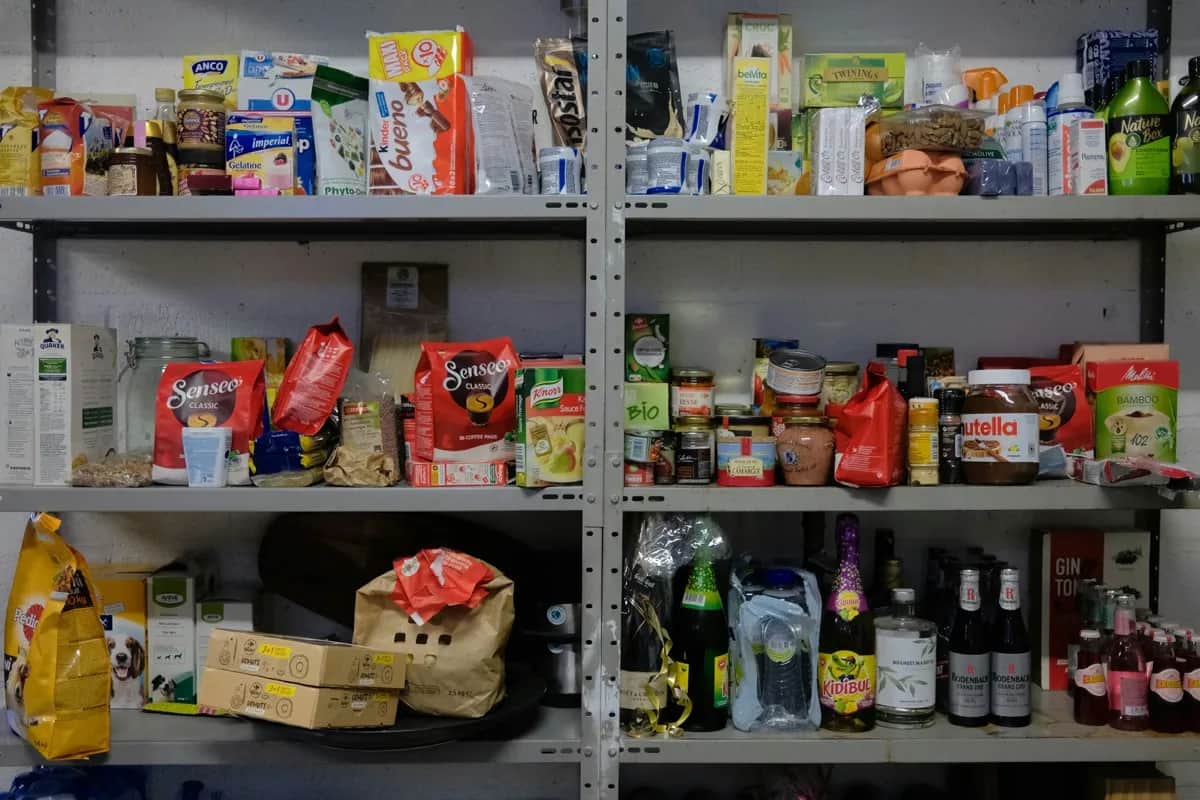
- Store your emergency stockpile in the same pantry as your regular groceries
- Or use dedicated shelving labeled by category with clear date visibility
- Audit quarterly: check dates, identify items approaching expiration, move to kitchen use
Building Your Supply Week by Week
Week 1: The 72-Hour Foundation (€30–40 total)
- 2 kg pasta
- 5 cans mixed legumes
- 5 cans fish/meat
- 500g oats
- 500g nut butter
- 1L oil
Week 2: Extend to 2 Weeks (add €40–50)
- 2 kg rice
- 5 more cans legumes
- 5 more cans vegetables
- Nuts and dried fruit
- Coffee, tea, spices
Week 3–4: Complete 4-Week Supply (add €80–100)
- Remaining grain quantities
- Full canned goods inventory
- Ghee, honey, multivitamins
- Comfort items
Total Investment for 2-Person 4-Week Supply: ~€150–200
This is a one-time investment that costs almost nothing to maintain if you follow the rotation system.
Equipment Checklist
Your food stockpile is only as useful as your ability to prepare it:
- Manual can opener (two — the first always breaks when you need it most)
- Camp stove with 10+ gas canisters
- Large pot (5+ liters) and smaller pot for heating
- Eating utensils for all household members
- Washing-up bowl and biodegradable soap
Conclusion: Start Small, Build Systematically
The 4-week target can feel overwhelming at first. Start with the 72-hour foundation this week. Add to it systematically over 3–4 weeks. Within a month, you'll have a complete, rotated, organized food supply that gives you genuine resilience against extended emergencies.
The worst time to start is during an emergency. The best time is before one. Today is always better than tomorrow.
Recommended Products
As an Amazon Associate we earn from qualifying purchases. Buying through our links supports the development of this app at no extra cost to you.