 Foto: dumitru B / Pexels
Emergency Food Calorie Calculator: How Many Calories Does Your Household Need for 14 Days?
Calculate exactly how many calories your emergency food stockpile must provide. Includes per-person daily needs, household totals, and food quantities to achieve those targets.
The Core Calculator
Use this formula to determine your total caloric need:
Total calories = sum of all household members' daily needs × number of days
Daily Caloric Needs by Person Type
| Person | Sedentary | Moderate Activity | High Activity or Cold |
|---|---|---|---|
| Adult male (18–65) | 2,000 kcal | 2,500 kcal | 3,000–3,500 kcal |
| Adult female (18–65) | 1,600 kcal | 2,000 kcal | 2,500–3,000 kcal |
| Senior (65+) | 1,800 kcal | 2,200 kcal | 2,600 kcal |
| Teen (13–17) | 1,800 kcal | 2,400 kcal | 3,000 kcal |
| Child (6–12) | 1,400 kcal | 1,800 kcal | 2,200 kcal |
| Child under 6 | 1,000 kcal | 1,400 kcal | 1,600 kcal |
| Nursing mother | +500 kcal above base | +500 kcal | +500 kcal |
Which activity level to use: For most household emergency scenarios (sheltering in place during a crisis), use "Moderate Activity." In cold weather, add 500–800 kcal/person/day. Physical labor (shoveling snow, cutting firewood, carrying supplies) increases needs by 500–1,500 kcal/day.
Household Total Calorie Calculator
Work through each member of your household:
| Person | Daily Need | × 14 days | × 28 days |
|---|---|---|---|
| Example: Adult male | 2,500 | 35,000 | 70,000 |
| Example: Adult female | 2,000 | 28,000 | 56,000 |
| Example: Child 8 years | 1,800 | 25,200 | 50,400 |
| TOTAL (example family) | 6,300/day | 88,200 | 176,400 |
Now translate this calorie target into actual foods.
Caloric Density of Common Emergency Foods
These are the calories per 100 grams (dry weight or as stated):
High Caloric Density (Priority Items)
| Food | kcal/100g | 1 kg provides |
|---|---|---|
| Olive/sunflower oil | 884 | 8,840 kcal |
| Peanut butter | 600 | 6,000 kcal |
| Walnuts | 654 | 6,540 kcal |
| Almonds | 579 | 5,790 kcal |
| Ghee (clarified butter) | 900 | 9,000 kcal |
| Dark chocolate (70%+) | 540 | 5,400 kcal |
Medium Caloric Density (Core Staples)
| Food | kcal/100g | 1 kg provides |
|---|---|---|
| Pasta (dry) | 350 | 3,500 kcal |
| Rice (dry) | 360 | 3,600 kcal |
| Oats (dry) | 370 | 3,700 kcal |
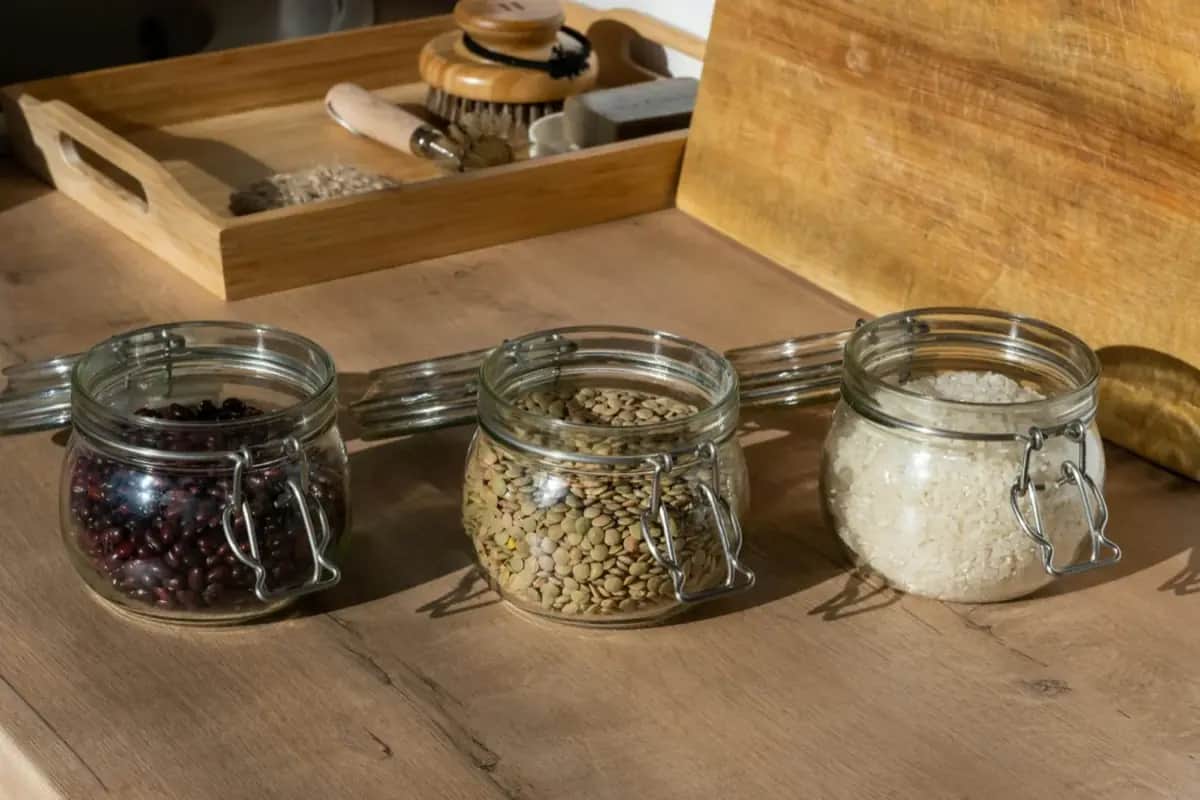
| Dried lentils | 350 | 3,500 kcal |
| Flour | 340 | 3,400 kcal |
| Raisins/dried fruit | 300 | 3,000 kcal |
Lower Caloric Density (Vitamins/Variety)
| Food | kcal/100g | Standard can |
|---|---|---|
| Canned tuna (drained) | 130 | ~120 kcal/100g can |
| Canned chickpeas | 120 | ~180 kcal/400g can |
| Canned tomatoes | 25 | ~100 kcal/400g can |
| Canned vegetables | 30–60 | ~130 kcal/400g can |
Worked Example: 2 Adults, 14 Days
Target: 2,500 + 2,000 = 4,500 kcal/day × 14 days = 63,000 total kcal
How to Build 63,000 kcal of Food Storage
| Food | Quantity | Calories |
|---|---|---|
| Pasta | 4 kg | 14,000 kcal |
| Rice | 3 kg | 10,800 kcal |
| Oats | 2 kg | 7,400 kcal |
| Oil (1L bottle) | 1L (~0.9 kg) | 7,956 kcal |
| Peanut butter | 800g | 4,800 kcal |
| Nuts (walnuts, almonds) | 1 kg | 6,000 kcal |
| Canned legumes (10 × 400g) | 4 kg drained | 4,800 kcal |
| Canned fish/meat (10 cans) | 1.5 kg drained | 1,800 kcal |
| Dried lentils | 500g | 1,750 kcal |
| Dried fruit | 400g | 1,200 kcal |
| Chocolate/honey | 400g | 2,000 kcal |
| Canned vegetables/tomatoes | 10 × 400g | 1,400 kcal |
| TOTAL | ~64,000 kcal |
This meets the 63,000 kcal target with a small buffer.
Container Weight: What 63,000 kcal Weighs and Occupies
Total food weight in the example above: approximately 18–20 kg
This fits comfortably in 2–3 cardboard boxes or a single medium-sized storage shelf section. Emergency food storage is not the space challenge people imagine — high caloric density foods are remarkably compact.
Adjusting for Extended Duration
To extend from 14 days to 28 days, multiply all quantities by 2. The additional cost is modest because the core items (pasta, rice, lentils) are inexpensive:
- 14-day supply for 2 adults: approximately €80–120
- 28-day supply for 2 adults: approximately €150–220
- 90-day supply for 2 adults: approximately €350–450
At 90 days, bulk purchasing (25kg flour bags, 25kg rice bags) reduces cost per calorie significantly.
Accounting for Cooking Losses
Not all calories in dry goods are recovered — some are lost in cooking water or preparation:
- Grains (pasta, rice): 5–10% cooking loss
- Legumes: 10–15% cooking loss (some starch stays in cooking water)
- Dehydrated vegetables: 90%+ recovery on rehydration
For simplicity, the 5% buffer in the example above accounts for these losses.
Special Caloric Needs
Cold Weather Bonus
Add 20–30% to calorie targets for sustained cold exposure. A household sheltering without heat in winter should plan for:
- Adults: 2,800–3,200 kcal/day instead of 2,000–2,500
- This increases storage needs significantly — plan accordingly if you live in a cold climate
Illness
Illness reduces appetite but increases fluid and electrolyte needs. Your stockpile should include oral rehydration salts and easily digestible foods (crackers, plain rice, clear broth soups) for this scenario.
Children Under 2
Infants and toddlers often have specialized needs. Formula-fed infants require their specific formula. Toddlers need age-appropriate textures. Ensure your stockpile accounts for these needs explicitly.
Conclusion
The calorie calculator approach transforms emergency food storage from a vague "stock up on stuff" activity into a concrete, quantified target. Once you know your household's 14-day caloric need — and which foods provide those calories most efficiently — building and maintaining the supply becomes a straightforward project.
Start with the 14-day target. Master the rotation system. Then extend to 28 or 90 days when ready.