 Foto: Chiara Guercio / Unsplash
Building a 14-Day Emergency Stockpile: The Complete Guide
Step-by-step guide to building an emergency food supply that feeds your family for 14 days - including shopping list.
Why 14 Days Is the Right Target
Most emergency preparedness guides recommend a 72-hour supply. That's the floor, not the goal. For significant disruptions — a major hurricane, extended regional power failure, or severe winter storm — 72 hours often isn't enough.
FEMA itself has upgraded its messaging to recommend at least a 2-week supply. The reason is practical: major infrastructure damage typically takes 7-14 days to repair. Grocery stores run out of stock within hours of a crisis announcement, and delivery systems are disrupted for days or weeks after.
A 14-day stockpile is achievable, affordable, and doesn't require a dedicated prepper room. This guide shows you exactly how to build one — with specific quantities, a shopping list, and a rotation strategy to keep it fresh.
Step 1: Calculate Your Household's Caloric Needs
Before you buy anything, know how much food your household actually needs.
Daily calorie requirements:
| Person | Calories/Day | 14-Day Total |
|---|---|---|
| Adult male (moderately active) | 2,500 kcal | 35,000 kcal |
| Adult female | 2,000 kcal | 28,000 kcal |
| Child 6-12 years | 1,800 kcal | 25,200 kcal |
| Child under 6 | 1,400 kcal | 19,600 kcal |
Quick calculation: For a family of 4 (2 adults + 2 kids), budget for roughly 8,000 kcal per day = 112,000 kcal total over 14 days.
A simpler working rule: 2,000 kcal per person per day. This slightly under-counts adults and over-counts small children, but averages out well for planning purposes.
Step 2: Choose the Right Foods
Not all shelf-stable foods are created equal. The best emergency stockpile prioritizes caloric density, nutritional balance, long shelf life, and foods you actually enjoy eating.
Category 1: Grains and Starches (40% of calories)
These should form the bulk of your stockpile:
White rice: The single best emergency food. 350 kcal per 100g, 5+ year shelf life in sealed packaging, inexpensive, and familiar to most people. Buy in 5-pound bags.
Dried pasta: 350 kcal per 100g, 3-5 year shelf life, cooks in 8-10 minutes with minimal fuel. Versatile with canned sauce, olive oil, or dried herbs.
Oatmeal (rolled oats): 380 kcal per 100g, filling, requires minimal cooking time. Can also be eaten cold when soaked in water.
Hard crackers (Wasa-style): 400 kcal per 100g, no cooking required, 12-month shelf life. Essential for no-cook days.
Category 2: Legumes (20% of calories)
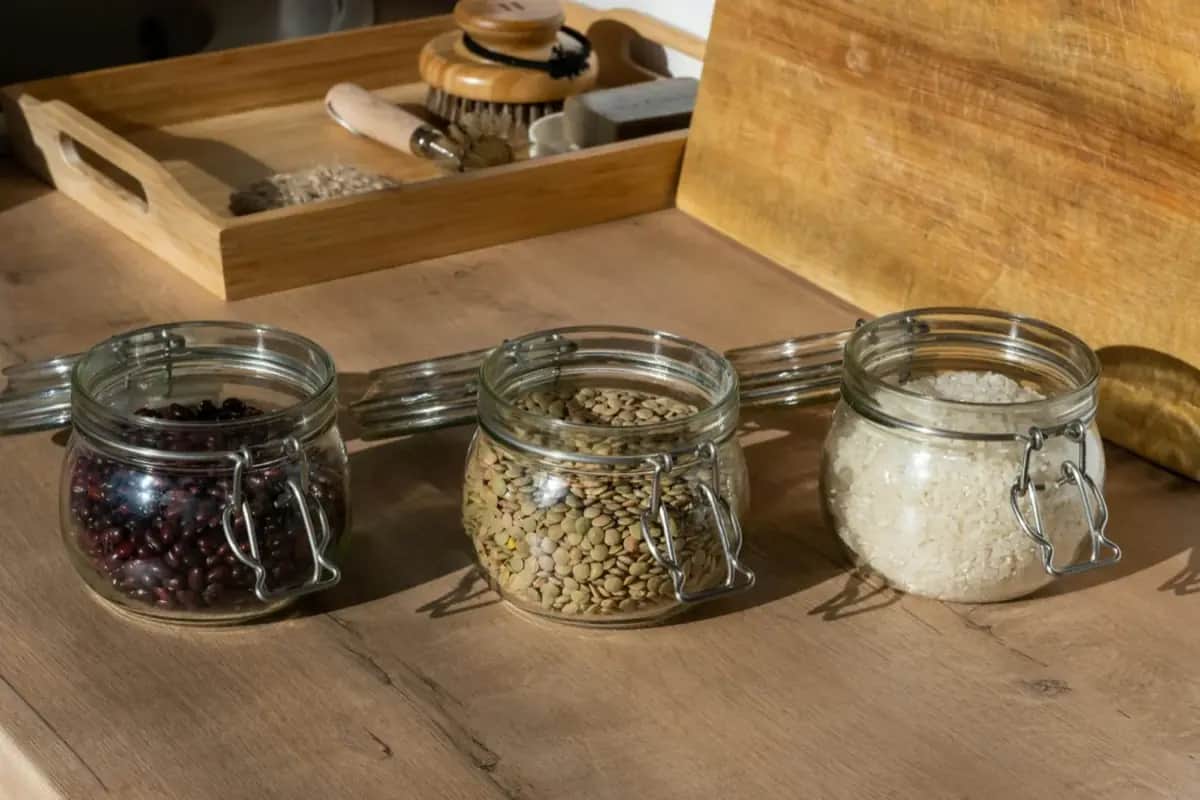
Protein and fiber source that's shelf-stable for 5+ years when dried:
- Dried lentils (red or green): 340 kcal per 100g, cooks in 20-30 minutes
- Canned beans (black beans, kidney beans, chickpeas): 90 kcal per 100g — lower density but ready to eat without cooking
- Canned lentil soup: Ready to eat, adds protein and fiber
Category 3: Fats and Calorie-Dense Foods (20% of calories)
Fats are your most energy-dense emergency food:
- Peanut butter: 590 kcal per 100g, 18-month shelf life, excellent protein + fat source
- Mixed nuts (almonds, walnuts, cashews): ~600 kcal per 100g, 6-12 months shelf life
- Olive oil or vegetable oil: ~900 kcal per 100ml, 18-24 month shelf life — adds calories and flavor to any grain or bean dish
Category 4: Protein (15% of calories)
- Canned tuna and sardines: 180-200 kcal per 100g, 3-5 year shelf life, omega-3 rich
- Canned chicken: 140 kcal per 100g, 3-5 years, highly versatile
- Whole milk powder: 500 kcal per 100g, 2-5 year shelf life — adds nutrition to oatmeal, coffee, or reconstituted recipes
Category 5: Comfort and Morale Foods
Don't neglect these. In a stressful emergency, familiar comfort foods matter enormously for psychological resilience:
- Dark chocolate: 12-month shelf life, 550 kcal per 100g
- Coffee and tea: 12-24 months, essentially zero calories but critical for many people's daily functioning
- Honey: Indefinite shelf life, 300 kcal per 100g, works as a sweetener and energy source
- Hot sauce, soy sauce, dried herbs: Zero caloric value, 100% morale value
Step 3: The Shopping List (2-Person Household, 14 Days)
Estimated cost: $90-130
| Qty | Item | Calories | Cost (approx.) |
|---|---|---|---|
| 5 lbs | White rice | 8,000 kcal | $5 |
| 5 lbs | Dried pasta | 8,000 kcal | $5 |
| 2 lbs | Rolled oats | 3,400 kcal | $4 |
| 2 lbs | Dried red lentils | 3,200 kcal | $4 |
| 4 cans | Canned tuna (5 oz) | 1,600 kcal | $8 |
| 2 jars | Peanut butter (16 oz) | 5,000 kcal | $8 |
| 2 lbs | Mixed nuts | 5,400 kcal | $16 |
| 1 lb | Raisins/dried fruit | 1,500 kcal | $4 |
| 12 cans | Canned vegetables (15 oz) | 2,400 kcal | $12 |
| 1 box | Hard crackers (Wasa) | 1,200 kcal | $5 |
| 24 oz | Honey | 2,300 kcal | $8 |
| 16 oz | Whole milk powder | 2,500 kcal | $8 |
| 1 bottle | Olive oil (16 oz) | 4,000 kcal | $8 |
| Total | ~58,500 kcal | ~$95 |
This covers roughly half the calories for two adults. Scale up quantities by 1.5-2x depending on your activity level and comfort margin.
Step 4: Storage Principles
Where and how you store your food matters as much as what you buy.
Ideal storage conditions:
- Temperature: 50-70°F (10-21°C) — cool, but above freezing
- Dark: Light accelerates fat oxidation and vitamin degradation
- Dry: Humidity encourages mold and pests
- Sealed: Especially important for flour, oats, nuts
Suitable storage locations:
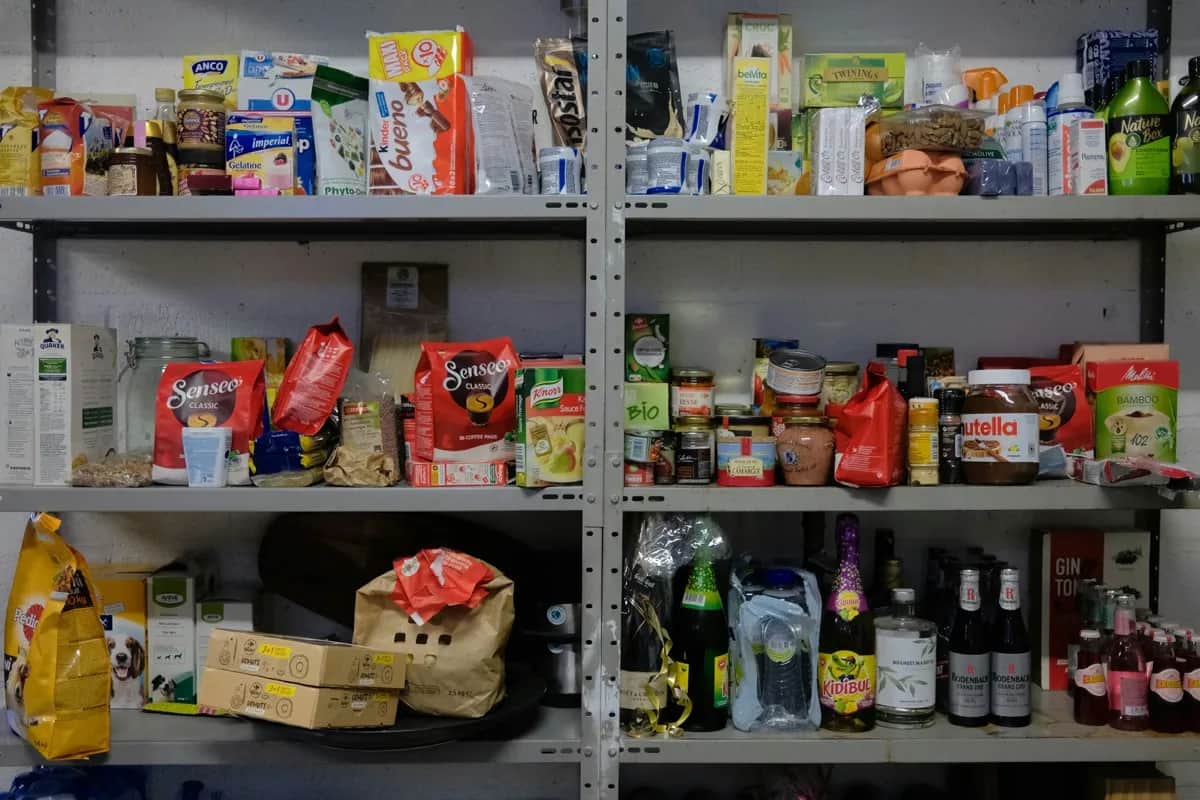
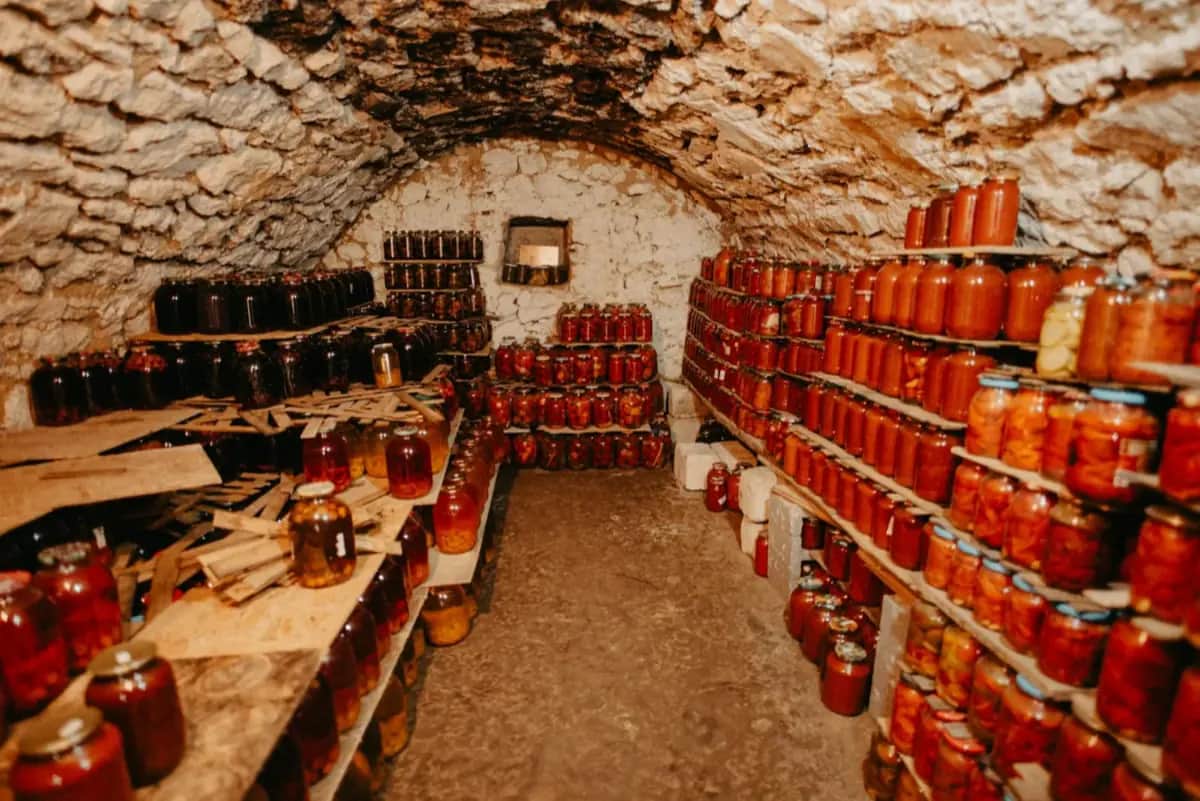
- Basement or cellar (ideal — consistently cool and dark)
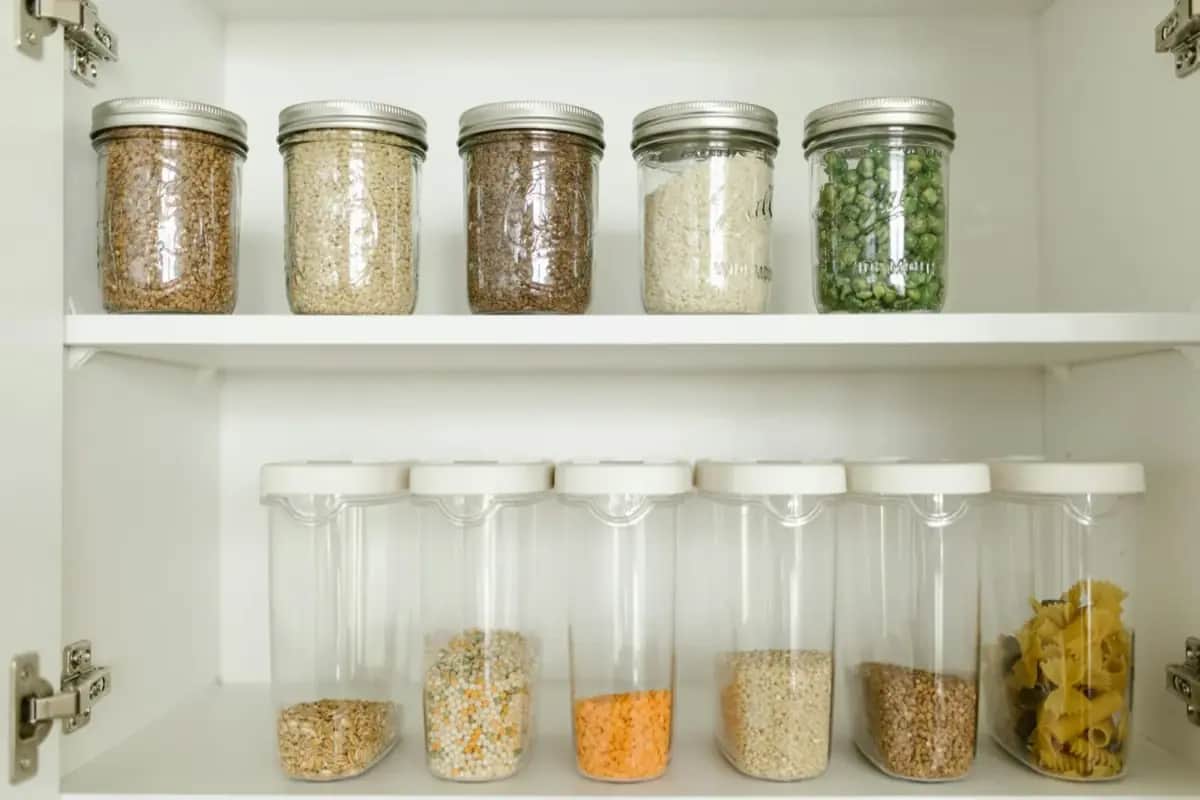
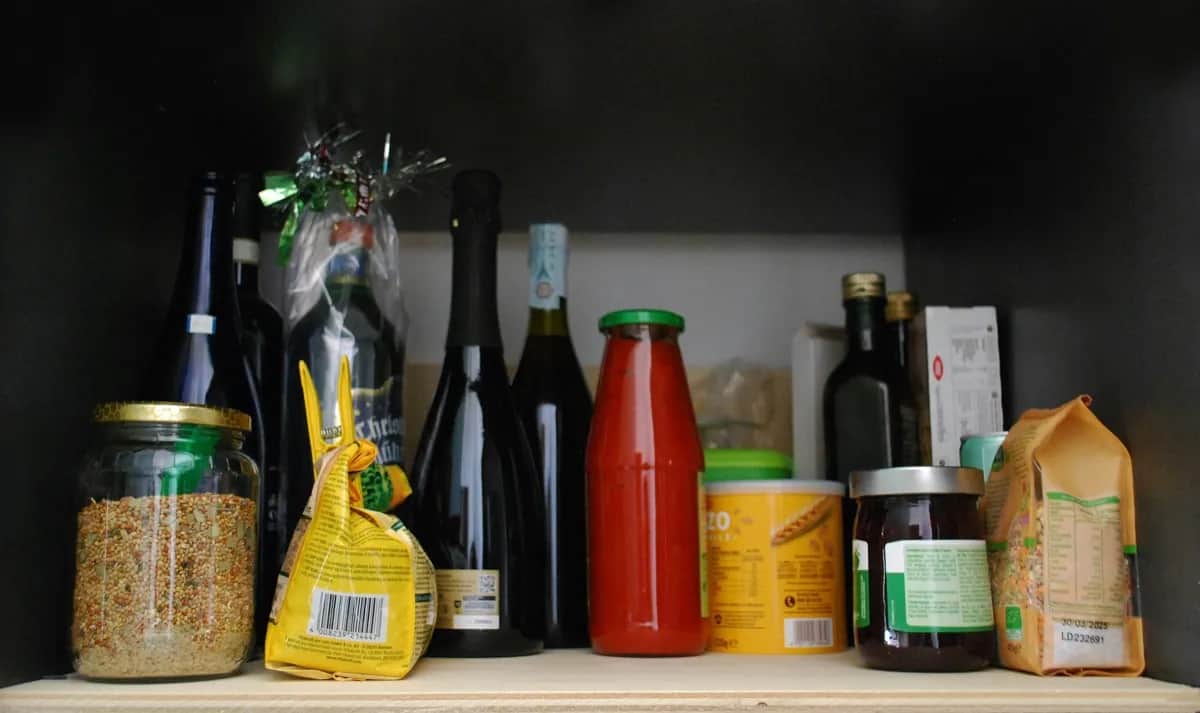
- Pantry or dedicated kitchen cabinet
- Under-bed storage in flat bins
- Unused closets in cooler rooms
Containers:
- Original packaging is usually adequate for items you'll use within 12 months
- Vacuum-sealed glass jars for medium-term storage (1-3 years)
- Mylar bags with oxygen absorbers for long-term storage of rice, pasta, grains (5+ years)
- Always label everything with purchase date and expiration date
Step 5: The Rotation System
The most common mistake in emergency preparedness: buy a supply, forget about it, discover everything expired during the emergency.
The FIFO principle (First In, First Out):
- When you buy new stock, put it in the back
- Older items stay at the front and get used first
- Cook with your emergency supplies regularly — eat what you store, store what you eat
Recommended check intervals:
- Monthly: Visual inspection for damage, pests, or swelling cans
- Every 6 months: Full inventory, remove and replace anything within 3 months of expiration
- Annually: Replace everything with a shelf life under 18 months
Building It Over 4 Weeks
You don't need to buy everything at once. A 4-week build-up spreads the cost and effort:
Week 1 (~$30): Rice (5 lbs), pasta (5 lbs), olive oil, 4 cans tuna Week 2 (~$30): Peanut butter (2 jars), mixed nuts (1 lb), dried lentils (2 lbs) Week 3 (~$25): Canned vegetables (8 cans), dried fruit, honey Week 4 (~$20): Oatmeal, milk powder, crackers, remaining gaps from inventory
After week 4, review your inventory list and add water (target: 14 liters per person).
Special Considerations
Infants: Baby formula, ready-to-use baby food pouches, sterilization capability Pets: Dog food or cat food for 14 days — commonly forgotten until it's too late Dietary restrictions: Gluten-free, nut-free, or low-sodium variants are readily available and should be substituted wherever relevant Medical nutrition: High-calorie supplement shakes (Ensure, Boost) for elderly household members who may eat less under stress Chronic medications: Work with your doctor to maintain a 14-day buffer supply — this is arguably more important than food for people on critical medications
What a 14-Day Stockpile Actually Costs You
| Household Size | Food | Water (28 liters per person) | Total |
|---|---|---|---|
| 1 person | $50-75 | $10-15 | $60-90 |
| 2 people | $90-130 | $20-30 | $110-160 |
| Family of 4 | $160-220 | $40-60 | $200-280 |
This is a one-time investment. Once your stockpile is built, maintaining it costs nothing extra — you're just buying slightly more of what you'd buy anyway, and rotating through it. The money doesn't disappear; it lives in food you'll eventually eat.
That shift in perspective — from "spending money on prepping" to "pre-buying food you'll eat" — is what makes a 14-day stockpile sustainable for most households.