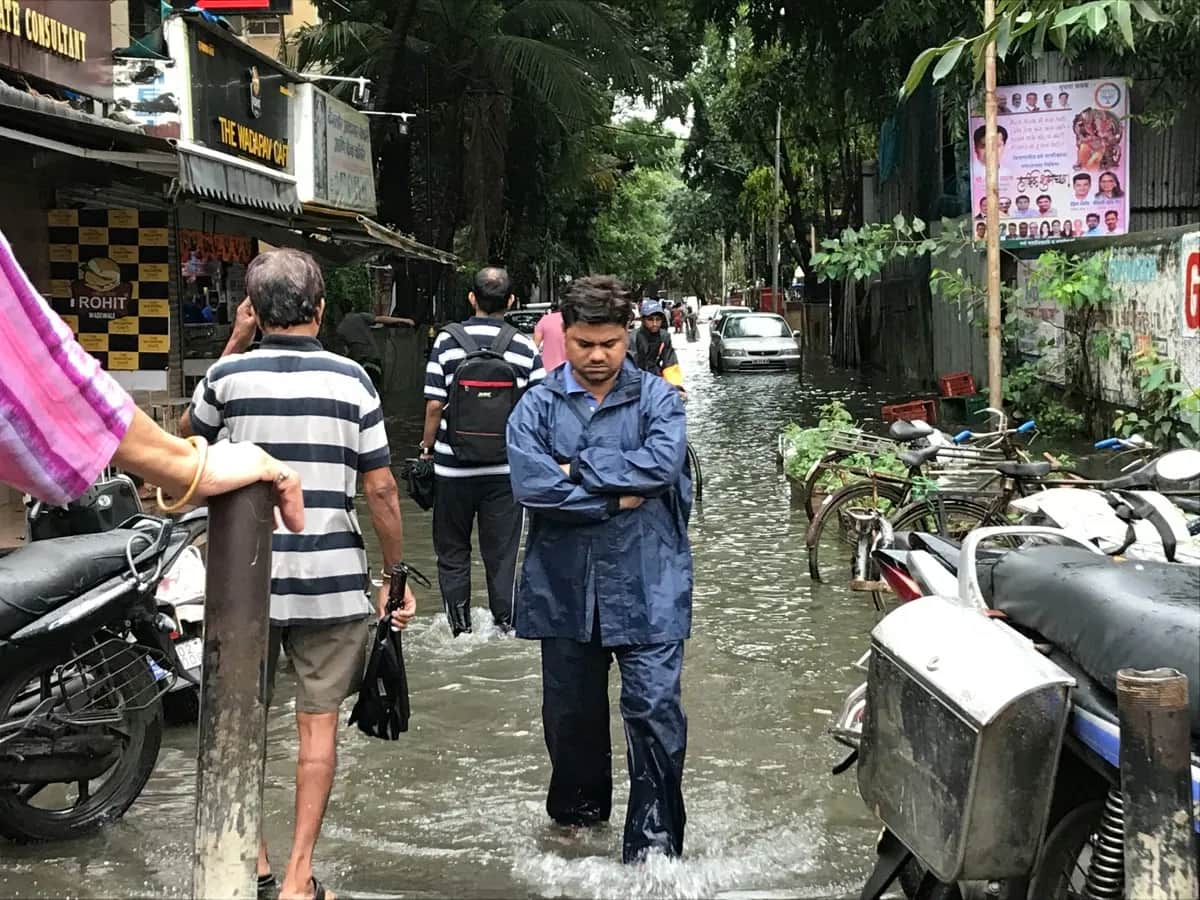
 Foto: Piyush Priyank / Unsplash
OECD Disaster Resilience Report: Germany in International Comparison
How does Germany rank in disaster preparedness among OECD countries? Key metrics and what we can learn from other nations.
The OECD Framework for Disaster Resilience
The Organisation for Economic Co-operation and Development (OECD) has been assessing the disaster resilience of its 38 member countries through regular reports and its "OECD Recommendation on the Governance of Critical Risks" since 2019. Germany is a founding OECD member and is benchmarked in these reports against Japan, Switzerland, the Netherlands, and other high-performing nations.
The OECD defines resilience along four dimensions: Risk Awareness, Prevention Capacity, Response Capability, and Recovery Strength. Each dimension is supported by measurable indicators, allowing for meaningful cross-national comparison.
Germany's OECD Ranking: Strengths and Weaknesses
Germany falls in the mid-range of the OECD overall disaster resilience ranking — an average to slightly below-average position for a country of this economic size and infrastructure quality, particularly compared to Nordic countries, Japan, and Switzerland.
| Dimension | Germany | Japan | Switzerland | Netherlands |
|---|---|---|---|---|
| Population risk awareness | Medium | High | High | High |
| Critical infrastructure protection | High | Very high | High | High |
| Individual household preparedness | Low | Very high | High | Medium |
| Community response capability | Medium | Very high | High | High |
| Public warning system | Medium | Very high | High | High |
Notably, Germany has strong governmental protection infrastructure (THW Federal Agency for Technical Relief, fire brigades, civil defense), but comparatively weak individual and community-level preparedness culture.
What Germany Can Learn from Japan
Japan represents the global benchmark in many OECD resilience metrics. Having learned from devastating earthquakes, tsunamis, and nuclear incidents, Japan has developed a culture of systematic preparedness that is institutionally embedded and socially accepted.
School Emergency Drills: In Japan, regular emergency drills in schools and workplaces are mandated by law. Children learn from an early age how to respond to earthquakes, where the nearest evacuation point is, and how to pack an emergency backpack.
Household Preparedness Culture: According to Japanese surveys, over 60% of households have emergency kits with at least a 3-day supply. Specialized emergency backpacks ("Bosai-Bag") are commercially available and present in many homes as standard items.
Community Resilience Centers: Japan has a dense network of disaster response facilities at the neighborhood level, stocked with supplies, drinking water, generators, and basic medical equipment.
Public Warning Systems: Japan's J-Alert system is the most advanced in the world, warning citizens within seconds via broadcast, smartphones, and public address systems — including differentiated alerts for different threat types.
What Germany Can Learn from Switzerland and the Netherlands
Switzerland — Mandatory Reserve Concept: Switzerland mandates certain economic sectors to maintain strategic reserves — a concept that is also strongly embedded at the household level culturally. The Swiss Federal Office for Civil Protection (BABS) actively promotes and advertises household food storage of at least 2 weeks, providing concrete product lists and shopping guides.
Netherlands — Risk Communication: The Netherlands has developed a pronounced risk culture through centuries of experience with flood management. The population is systematically and openly informed about risks — not through fear-based messaging, but with factual data and concrete action recommendations.
| Approach | Switzerland | Netherlands | Germany (Current Status) |
|---|---|---|---|
| Public awareness campaigns | Intensive | Intensive | Strengthening (BBK Warn App) |
| Household preparedness as social norm | Strongly embedded | Medium | Weakly embedded |
| Mandatory economic reserves | Yes | Partial | No |
| School-based emergency training | No | No | No |
Areas for Germany's Improvement
The OECD report identifies three main areas where Germany has improvement potential:
Public Warning Systems: The nationwide warning day in 2020 publicly demonstrated that Germany's warning system did not function comprehensively (insufficient siren coverage, app failures). Measures have been taken since then (DE-Alert cell broadcast), but full rollout is ongoing.
Cultivated Risk Awareness: Germany has a stronger tradition of state responsibility in disaster response — which paradoxically weakens personal accountability. "The government will handle it" is more deeply embedded in Germany than in Japan or Switzerland.
Critical Infrastructure Dependencies: The interlocking of critical infrastructure (electricity → water → communication → food supply) is particularly pronounced in Germany, without sufficient redundant backup systems at the local level.
What Individual Households Should Take Away
The OECD comparison has an important implication at the individual level: in countries with lower community-level resilience investment (like Germany compared to Japan), individual preparation becomes even more important — because the system's overall buffer capacity is lower.
This is not a call for government skepticism but for realistic planning. A household that is self-sufficient for 3-10 days significantly relieves emergency systems — and that is precisely the goal of BBK recommendations.
The comparison with Japan shows that a culture of preparedness is neither a luxury nor a fear phenomenon. It is a societal standard that highly developed, resilient societies consciously cultivate. Germany is on this path — but has not yet arrived.