 Foto: Atlantic Ambience / Pexels
How to Convince Your Partner and Family to Take Emergency Preparedness Seriously
Your family thinks emergency preparedness is paranoia? These evidence-based arguments and approaches help you have productive conversations and get everyone on board.
You've done the research. You understand why emergency preparedness matters. But your partner rolls their eyes, or your family thinks you've joined a doomsday cult. Getting everyone on the same page is half the battle. Here's how to have these conversations effectively.
Why Resistance Happens
Understanding resistance makes it easier to address:
Cognitive dissonance: People have psychological mechanisms that protect their mental comfort. "That won't happen to us" is a natural defense against anxiety.
Social stigma: "Preppers" have a media image of bunkers and conspiracy theories. Reasonable preparedness gets unfairly lumped in with extremism.
Present bias: Spending money and effort on something that "might" happen feels less rational than spending it on certain, immediate pleasures.
Loss of control anxiety: Thinking about emergencies requires accepting vulnerability, which is uncomfortable.
The Right Framing: Insurance, Not Paranoia
The most effective reframe: emergency preparedness is household insurance.
The insurance argument: "We have fire insurance on our home, but we don't expect our house to burn down. We have health insurance, but we don't expect to get seriously ill. A 2-week food supply is the same — we hope we never need it, but if we do, we'll be glad we have it."
This framing:
- Is socially normal (everyone has insurance)
- Is rational (risk management, not fear)
- Requires no belief in specific threats
- Has a clear cost-benefit that most people accept
Evidence That Works: Recent Events
Abstract risks are easy to dismiss. Concrete recent examples are harder to argue with:
Germany-specific examples:
- 2021 Ahr Valley flood: Communities isolated for days with no power, no clean water
- COVID-19: Supermarket shelves cleared of basics within 48 hours
- 2024/2025 power outages: Multiple German cities experienced multi-day outages
- German government BBK recommendation: 10 days of food and water for every household
The powerful question: "When the government itself recommends that every household keep 10 days of food and water, is keeping 10 days of food and water 'paranoid' — or just following official advice?"
Practical Entry Points That Reduce Resistance
Start small: "I'd like us to have a few extra days of food we use regularly." This is much less threatening than "I want to build a 3-month emergency supply."
Make it routine-based: "Let's just keep one extra of everything we already buy" — nobody can object to buying two instead of one.
Frame it as frugality: Bulk buying staples you already use is often cheaper per unit. "We'd actually save money by buying rice in larger quantities."
Use the children argument: "I'd feel better knowing that if something happened — power outage, bad weather, job loss — we could still feed the kids normally for a few weeks."
The Job Loss Angle
Emergency preparedness isn't just about natural disasters. A 4-week food supply also means:
- Job loss doesn't immediately impact food security
- Unexpected bills don't create a food crisis
- Economic downturns are cushioned
This "financial resilience" framing resonates with people who reject disaster scenarios but understand personal financial risk.
Getting Them Involved
The most resistant partners become advocates when they're involved:
- Ask them to pick what foods to stock (they choose what they'd want to eat)
- Let them organize the storage system
- Calculate together how much you'd need (math feels neutral)
- Do the first shopping trip together
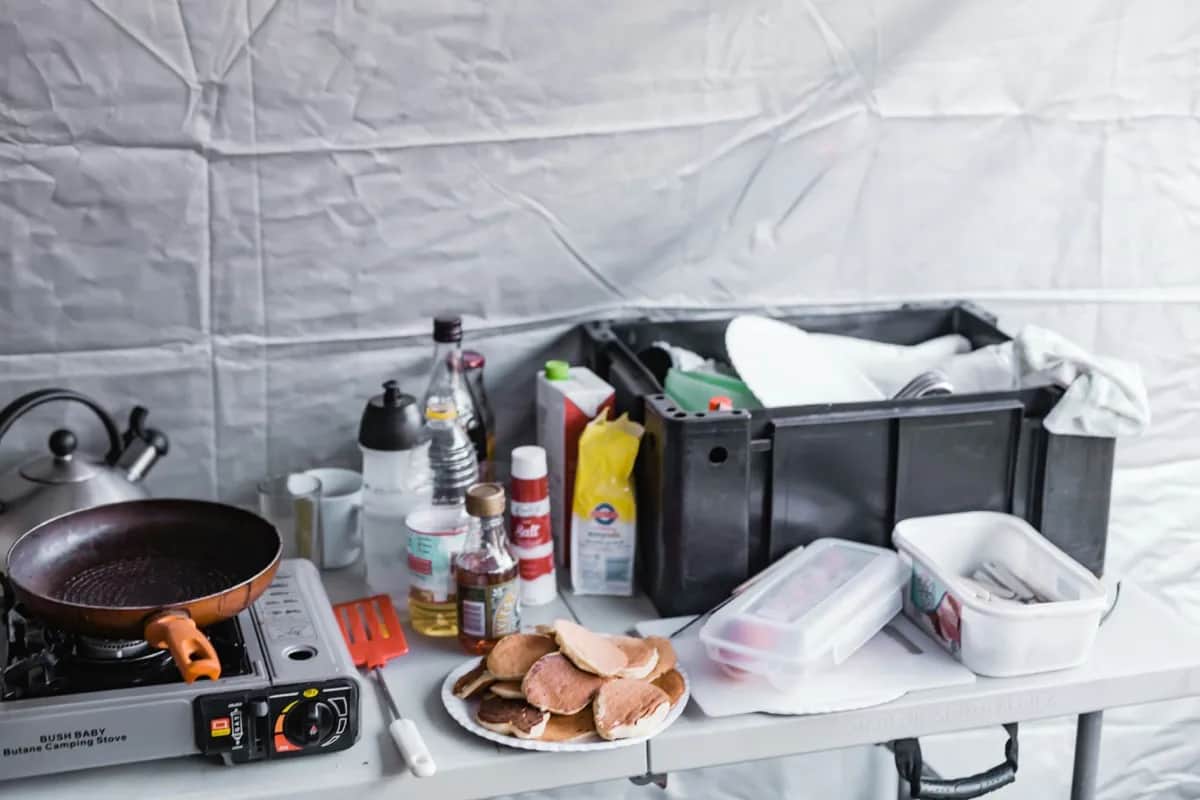
The dinner test: Cook one full meal entirely from your emergency stockpile. If the food is good and the experience is calm, it demystifies the whole concept.
What NOT to Do
Don't use fear: Leading with worst-case scenarios triggers defensive resistance, not rational consideration.
Don't make it about "them": "You'll be glad when disaster strikes" creates a power struggle.
Don't start too big: A plan for 6 months of food will overwhelm and alienate. Start with 1 week.
Don't attach it to political views: Emergency preparedness is politically neutral. Keep it that way.
The Minimum Agreement
If your family can only agree to one thing, this is it:
"We'll keep 3 days of extra food, water, and a charged flashlight."
This is the absolute minimum for basic household resilience. It's cheap (€30-50), takes no special skill, requires minimal space, and is hard to argue against.
From there, expand over time as everyone sees how normal and easy it actually is.