 Foto: Kristina Chuprina / Pexels
Nuclear Protection for Civilians: What Iodine Tablets Actually Do
Nuclear protection for civilians explained: what iodine tablets do and don't do, when to take them, what shelter-in-place achieves, and what realistic preparation looks like.
Nuclear Protection: Cutting Through the Confusion
Few emergency preparedness topics generate more confusion than nuclear protection. Online discussions range from "buy potassium iodide now" to "there is nothing you can do anyway." Neither extreme is accurate.
This article explains nuclear protection for civilians in precise terms: what works, what does not, when it applies, and what realistic preparation looks like.
Understanding Nuclear Threats for Civilians
Two Distinct Scenarios
Scenario 1: Nuclear power plant accident
This is the most realistic nuclear scenario for Central European civilians. A major reactor accident (like Chernobyl 1986 or Fukushima 2011) releases radioactive materials — primarily radioactive iodine (I-131) and cesium — into the atmosphere.
The primary risk: radioactive iodine absorbed by the thyroid gland. The secondary risk: cesium and other isotopes deposited in the environment, entering the food chain.
Scenario 2: Nuclear weapon detonation
A much higher-severity, much lower-probability event. The effects and protection measures differ fundamentally from an industrial accident. This is a separate topic — surviving the immediate blast zone is the first concern, then fallout shelter.
The guidance below focuses primarily on Scenario 1, which is the realistic preparation target for most Central European civilians.
What Potassium Iodide (KI) Does — and Does Not Do
What KI Does
When radioactive iodine (I-131) is released in a nuclear accident, it can be inhaled or ingested (via contaminated food or water) and absorbed by the thyroid gland. The thyroid concentrates iodine — it is the primary organ at risk from I-131 exposure.
Potassium iodide saturates the thyroid with stable (non-radioactive) iodine. A thyroid already saturated with stable iodine cannot absorb the radioactive form.
KI effectively protects the thyroid from I-131 absorption.
What KI Does Not Do
KI does not:
- Protect against any other form of radiation
- Protect any organ other than the thyroid
- Protect against cesium, strontium, or other radioactive isotopes
- Decontaminate you from existing radiation exposure
- Provide general radiation shielding
KI is a single-purpose medication for a single-organ protection against a single isotope. It is powerful for that purpose — and completely useless for everything else.
When to Take KI
Take KI only when officially recommended by authorities. This is not optional guidance — it is medically important.
Timing is critical: KI must be taken before or very shortly after exposure to radioactive iodine. Taking it too early or too late significantly reduces effectiveness.
- Most effective: Up to 24 hours before exposure
- Effective: Up to 2-4 hours after exposure begins
- Less effective: 4-8 hours after exposure
- Ineffective and potentially harmful: Much later
Premature self-dosing (taking KI "just in case" without official guidance) can cause thyroid disorders, particularly in people with thyroid conditions. Do not take KI without official direction.
Who Should Take KI
Official guidance during an event will specify priority groups. Generally:
- Children and adolescents (thyroid is most sensitive to I-131)
- Adults up to 40 (some protection)
- Pregnant and breastfeeding women (protects thyroid of fetus/infant)
- Adults over 40: thyroid cancer risk from I-131 is very low; KI benefit may be outweighed by side effects — follow official guidance
Dosing
Standard adult dose: one 130mg tablet at the time of official recommendation.
Do not take more: Multiple doses do not improve protection and increase risk of side effects.
Children's dosing (follow package insert):
- 3-12 years: 65mg (half a standard tablet)
- 1 month - 3 years: 32.5mg (quarter tablet)
- Newborns: 16.25mg
Shelter-in-Place: What It Achieves
Beyond iodine tablets, shelter-in-place is the primary civilian protective action during a radiological event.
The Physics
Radioactive fallout particles in the air — and their radiation — are significantly attenuated by physical barriers. A sealed interior room provides meaningful protection because:
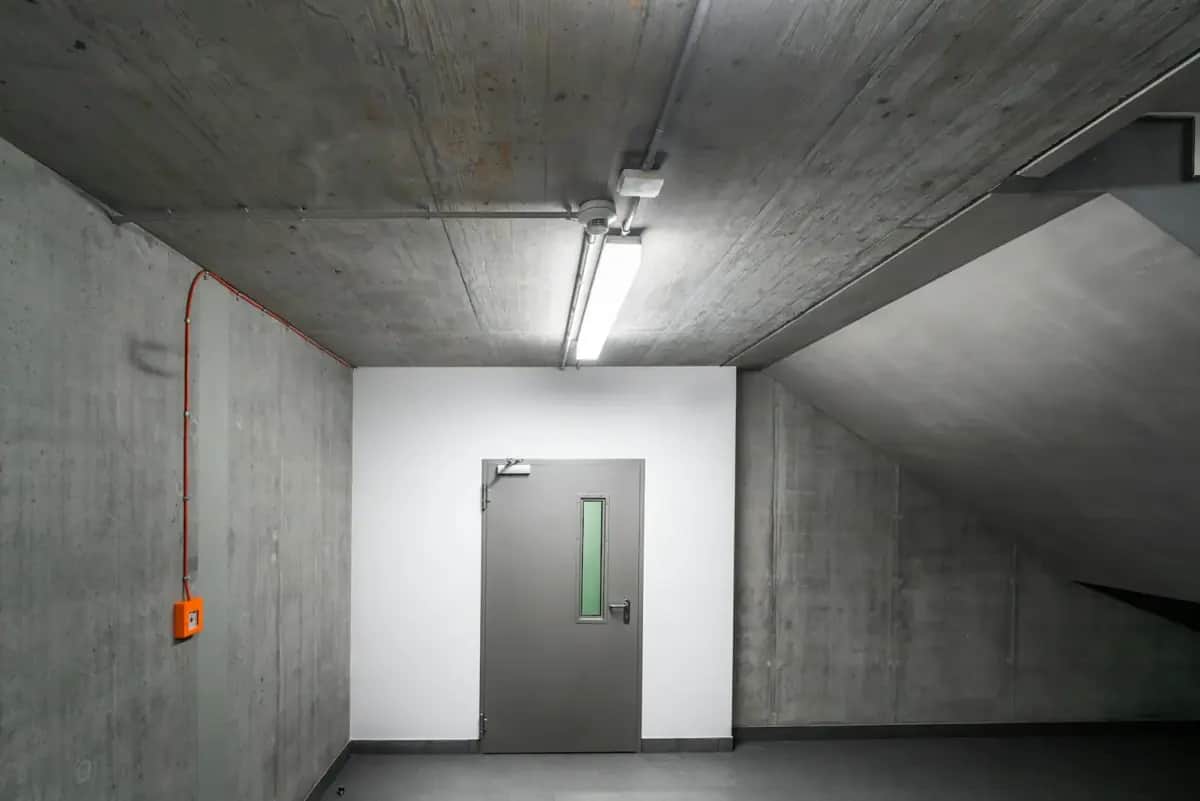
- The building structure itself absorbs gamma radiation — concrete, brick, and earth are effective radiation shields
- Sealing prevents air exchange — radioactive particles cannot enter a sealed space
- Distance from the exterior — being in an inner room, away from exterior walls, increases the protective benefit
Protection Factor by Building Type
| Location | Approximate Protection Factor |
|---|---|
| Outdoors | 1x (baseline) |
| Wood-frame house, typical room | 2x |
| Brick house, interior room | 5-10x |
| Multi-story concrete building, inner room | 10-50x |
| Underground parking structure | 100x+ |
Practical meaning: In an interior room of a concrete apartment building, your radiation exposure is 10-50 times lower than if you were standing outside. This is meaningful protection.
How to Shelter in Place
- Move to an interior room (avoid rooms with large windows or on the top floor)
- Close and seal all windows and doors
- Turn off all HVAC and ventilation systems
- Use duct tape and plastic sheeting to seal any remaining gaps (air vents, electrical outlets on exterior walls)
- Monitor official communications (NINA, battery radio)
Duration: Shelter-in-place is typically maintained for 12-48 hours, until authorities confirm it is safe to move or give evacuation orders.
Food and Water Safety After a Nuclear Event
Water
- Do not drink tap water until authorities confirm it is safe
- Sealed bottled water is safe regardless of fallout
- Covered water containers (pots with lids, tanks) are likely safe — the surface water is the concern
- Running water from an uncontaminated source upstream of the event is typically safe (local authorities will confirm)
Food
- Food produced and packaged before the event is safe
- Fresh produce that was outdoors (vegetables, fruit) during fallout may be contaminated — wash thoroughly or avoid until cleared by authorities
- Dairy products: milk from animals grazing during the event may contain I-131; authorities will issue specific guidance
What to Prepare
If within 100-200km of a nuclear power plant:
| Item | Action |
|---|---|
| Potassium iodide tablets | Buy from pharmacy; ask for adult and child dosing |
| Duct tape + plastic sheeting | Stock for shelter-in-place sealing |
| 48-72 hour sealed water supply | Bottled water in sealed containers |
| Battery radio | For official emergency broadcasts |
| NINA app | For emergency alerts |
Total cost: 40-80 euros
If more than 200km from any nuclear plant: The iodine tablet priority is lower. General emergency preparedness (go-bag, water supply, battery radio) covers the realistic residual risk.
Common Misconceptions
"Iodine tablets protect against all radiation": False. They protect only the thyroid against radioactive iodine. Zero protection against other radiation types.
"There is nothing you can do": False. Shelter-in-place provides significant dose reduction. KI provides specific thyroid protection. These measures saved lives at Fukushima compared to Chernobyl, where neither was implemented consistently.
"I should stock up on KI and take it if I hear any nuclear news": False. Premature dosing before official guidance causes thyroid harm. Wait for official recommendation with specific timing instructions.
Conclusion
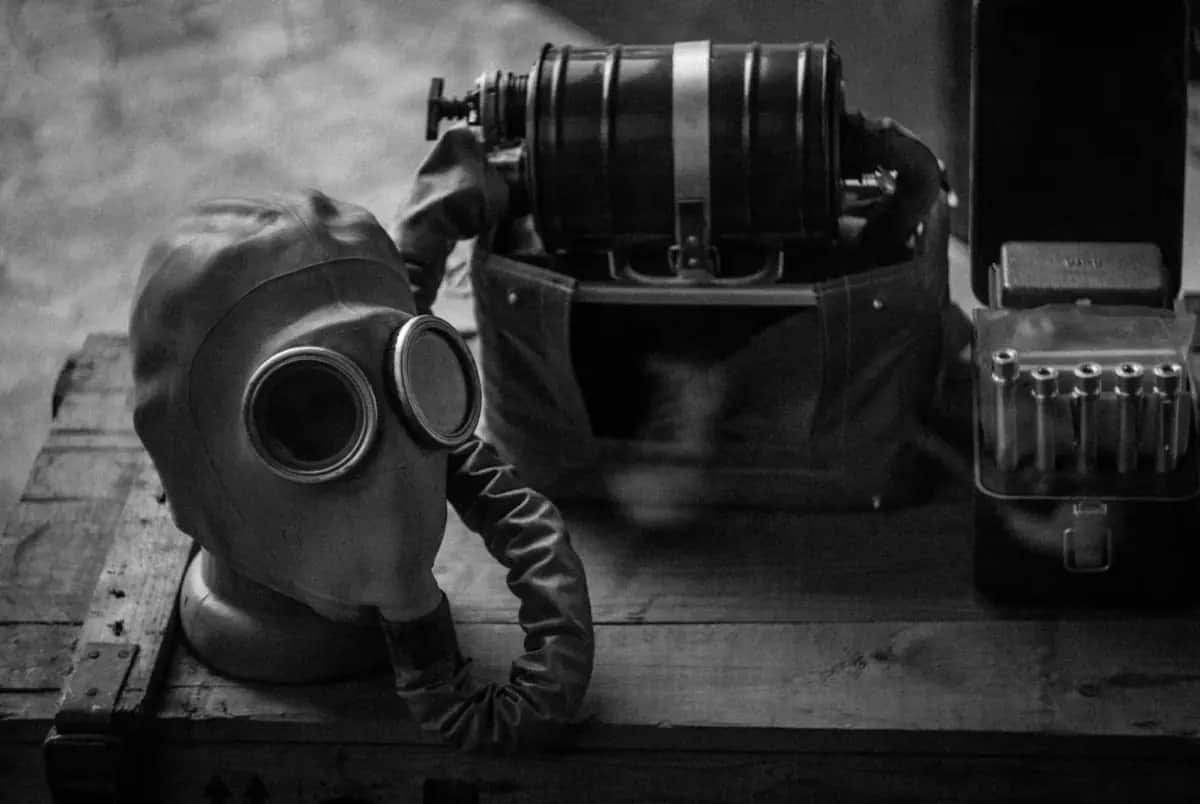
Nuclear protection for civilians is a defined, achievable set of actions: shelter in place in an interior room of a solid building, take KI when officially recommended with correct timing, avoid contaminated food and water. The preparation cost is modest (40-80 euros). The protection benefit is real. The key is knowing the difference between what works (shelter-in-place, correctly timed KI) and what does not (gas masks against gamma radiation, multiple KI doses).