 Foto: Kalistro / Pexels
Food Storage for Beginners: How to Start Without Getting Overwhelmed
Just starting with emergency food storage? This beginner's guide shows you the simplest approach to building a meaningful food stockpile in 3 easy steps.
Emergency food storage sounds complicated when you start reading about it: oxygen absorbers, mylar bags, calorie calculators, rotation systems. The reality: getting started is much simpler. You can build a meaningful 2-week supply this weekend.
The Simplest Possible Framework
Forget complex systems to begin with. Here's the simplest framework that works:
1. Store what you eat 2. Eat what you store 3. Replace what you use
That's the entire system. No special knowledge required. The complexity comes later if you want to extend your time horizon beyond 1-2 months.
Step 1: Start With a 3-Day Supply
Before building a 4-week supply, master 3 days. This is achievable in one shopping trip.
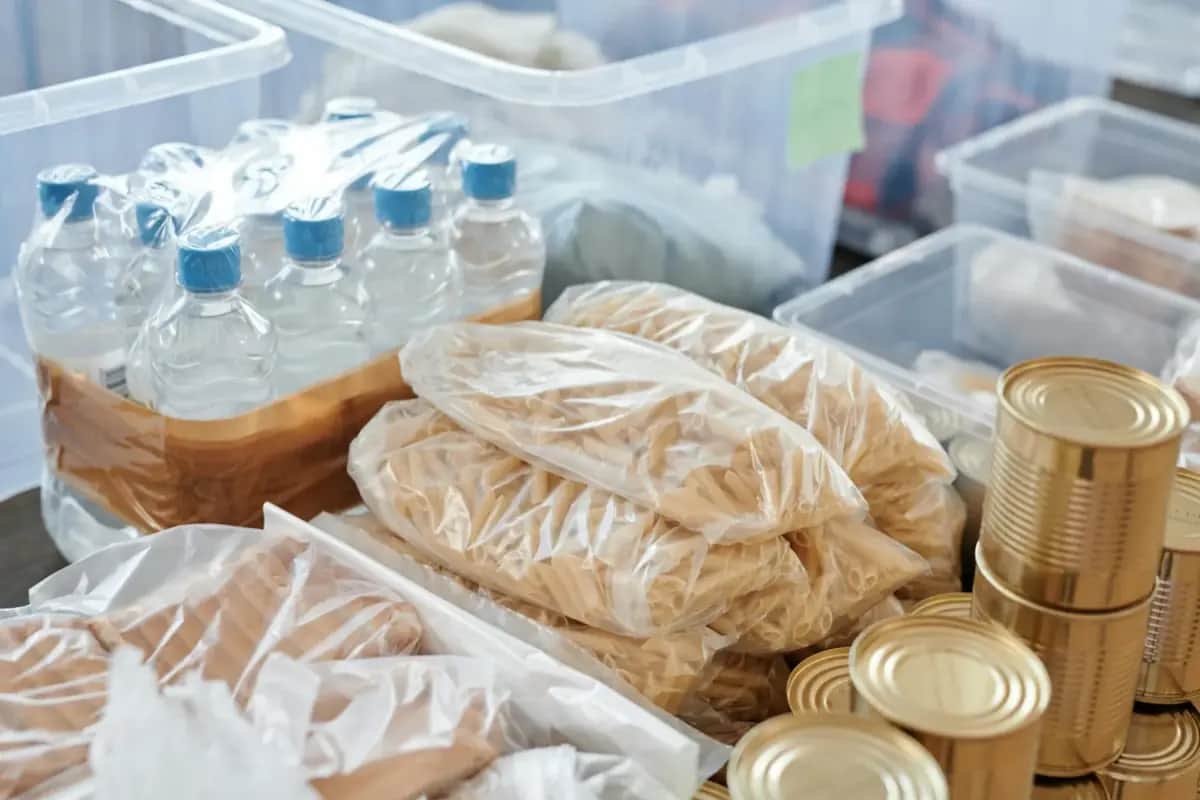
3-day supply for 1 person:
- 9 liters of water (3L/day)
- 6,000 calories of food (2,000 kcal/day)
Practical shopping list:
- 2kg pasta (7,000 kcal) — €2
- 1 jar pasta sauce — €2
- 1 can tuna (2) — €4
- 2 cans of beans — €3
- 6 granola bars — €4
- Coffee or tea — €3
Total cost: ~€18 for 3-day supply
Where to store it: A designated cabinet, a box under the bed, a drawer in the pantry. Doesn't need to be fancy.
Step 2: Extend to 2 Weeks
Once you have 3 days covered, extend to 2 weeks. The math: 2-week supply = 3-day supply × 4.7.
2-week supply for 4 people (roughly):
| Item | Quantity | Calories | Cost (approx) |
|---|---|---|---|
| White rice | 4kg | 14,400 kcal | €8 |
| Pasta | 4kg | 14,000 kcal | €6 |
| Rolled oats | 3kg | 11,400 kcal | €6 |
| Dried lentils | 2kg | 6,600 kcal | €6 |
| Canned tuna (12 cans) | 12 × 150g | 3,600 kcal | €18 |
| Canned vegetables (8 cans) | 8 × 400g | 2,400 kcal | €12 |
| Olive oil (1L) | 1L | 8,800 kcal | €10 |
| Crackers/biscuits | 2kg | 8,600 kcal | €8 |
Total: ~€74 for 2-week supply (70,000 kcal for 4 people — about 2 weeks at 2,500 kcal/day each)
Note: This is a bare minimum foundation. Add variety, snacks, and morale items when budget allows.
Step 3: The Rotation Habit
The secret to maintaining a food stockpile is using it. Here's the minimal rotation habit:
- Every time you use something from your emergency stock, add it to your shopping list
- When you shop, buy one extra of everything on your list and add it to the back of your stockpile
- That's it — you never need to do a big "restock day"
This "one extra" approach means your stockpile grows passively over months while staying fresh.
Common Beginner Mistakes to Avoid
Buying food you don't eat: If your family doesn't eat lentil soup in normal times, they won't enjoy it in a stressful emergency. Start with foods you regularly cook.
Ignoring cooking requirements: Rice and pasta need cooking. In a power outage, you need a camping stove and gas canisters. These are part of your food storage plan.
Not storing water: Food storage without water storage is incomplete. Water is heavier and bulkier, but more critical. Aim for at least 3 liters per person per day.
All-in-one kit without testing: Pre-packaged "emergency food kits" sound convenient but many taste terrible and have misleading calorie claims. If you buy one, open it and eat it before an emergency.
Storing in the wrong place: A hot garage or attic dramatically reduces shelf life. Find the coolest, darkest spot in your home (usually a basement, inner closet, or under stairs).
Your First Weekend Task
This weekend:
- Identify a storage space (even just a box or one shelf)
- Do one shopping trip — spend €50-100 on the items in the 2-week list above
- Organize by expiration date (newest in back)
That's it. You now have 2 weeks of emergency food. Next month, add a camping stove. The month after, add water storage. Build it in pieces — not all at once.