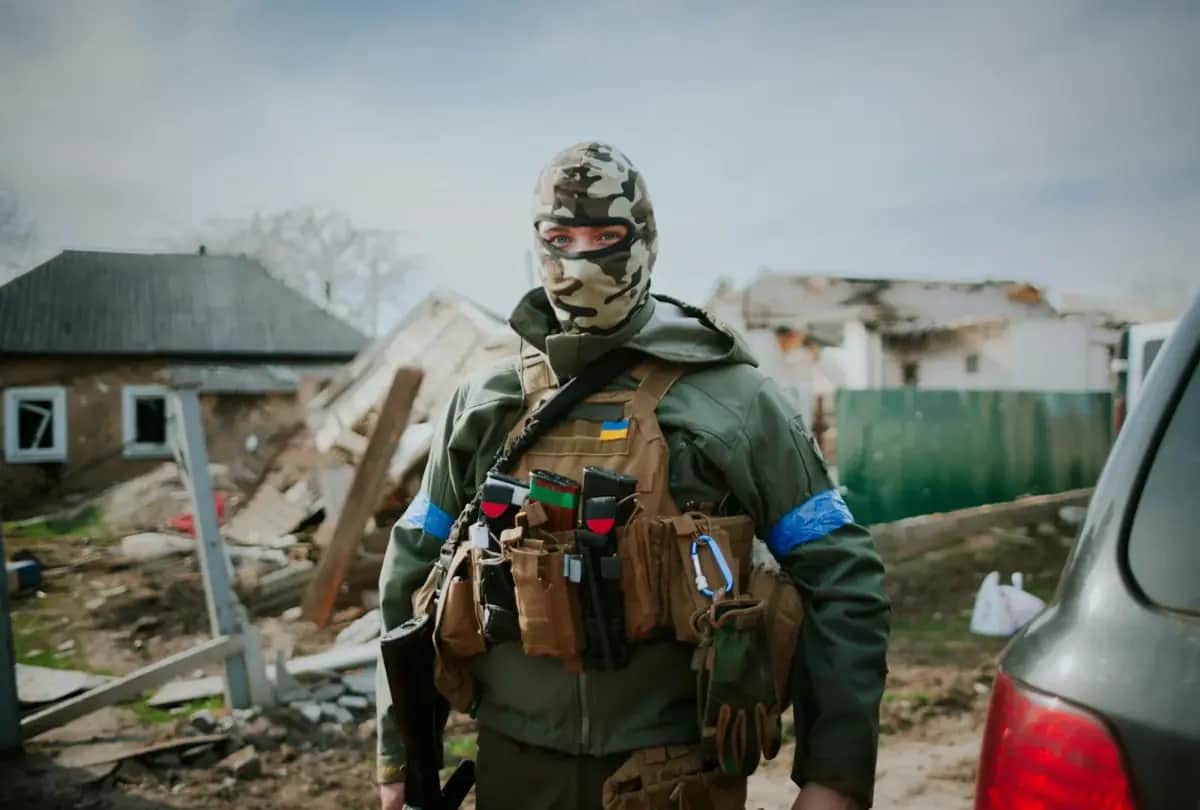
 Foto: Алесь Усцінаў / Pexels
Crisis Preparedness for Armed Conflict: What to Concretely Prepare in Germany
Practical guide to preparing for armed conflict scenarios in Germany: what civilian preparedness means, what authorities recommend, and the concrete steps to take now.
The Context: Why This Is No Longer a Theoretical Topic
In Germany and across Europe, the security landscape has shifted significantly since 2022. The Federal Government, the Bundeswehr (German Armed Forces), and civilian protection agencies have increasingly moved emergency preparedness from theoretical planning to active public guidance.
The BBK (Bundesamt für Bevölkerungsschutz und Katastrophenhilfe) has updated its guidance. The Bundeswehr's "Operationsplan Deutschland" addresses mobilization scenarios. Several European NATO members have reinstated or introduced military service. The civil preparedness context has changed.
This article is not about fear or alarmism. It is about what concrete, rational preparedness looks like in the current environment — the same principle that applies to fire, flood, or blackout preparedness, applied to a different threat scenario.
What Civilian Preparedness for Armed Conflict Actually Means
Civilian preparedness for an armed conflict scenario is not about combat or weapons. It is about the ability to:
- Sustain yourself independently when civilian infrastructure fails
- Evacuate safely if your area becomes unsafe
- Communicate and coordinate when normal systems fail
- Stay informed about what authorities recommend
- Support vulnerable people in your community
This is fundamentally identical to preparedness for any major infrastructure failure. The specific scenarios differ, but the material preparation is largely the same.
What the German Government Recommends
The BBK's official civilian preparedness guidance (last updated 2023–2024) includes:
Food and water:
- 10-day supply of food and drinking water for all household members
- 20 liters of water per person minimum
Medicine and health:
- 30-day supply of critical medications
- Extended first aid kit
- Prescription copies
Communication:
- Battery or hand-crank radio for official emergency broadcasts
- Written emergency contact list
Documents:
- Copies of all critical documents in a sealed, portable package
- Cash reserve in small bills
Energy:
- Alternative heating capability
- Battery-powered or solar-charged power reserves
This is the baseline. Armed conflict scenarios specifically add considerations around evacuation planning and community coordination.
Specific Considerations for Armed Conflict Scenarios
Evacuation Planning
Unlike a flood (you can predict the flood path and plan accordingly), armed conflict scenarios may require evacuation in multiple directions or at short notice.
Develop plans for at least two directions:
- Primary: your most likely safe destination
- Secondary: an alternative in a different direction
Know the routes by memory and on paper maps (GPS may fail). Know where fuel is available along each route. Identify friends or family who could host you at each destination.
Documentation Security
In wartime scenarios, documentation becomes critical: identity documents, insurance records, property documents, medical records. These may be needed to access services, cross borders, or prove identity.
Portable document kit (waterproof):
- Passport and ID copies
- Insurance documents
- Property/rental documents
- Medical records and prescription list
- Financial account information (not account numbers with passwords together)
- Cash (€500+ in mixed denominations)
- Small-denomination cash in a second currency if near a border
Communication Planning
In serious conflict scenarios, communications infrastructure is an early target. Plan for the possibility of no mobile network, no internet, and disrupted landline service.
Offline communication plan:
- Designated family meeting points (one local, one regional)
- Agreed check-in schedule with family members
- Written contact list
- Out-of-area contact person (someone outside the affected zone who everyone can try to reach)
- Battery-powered radio for official broadcasts
Cash and Financial Resilience
Banking systems, payment terminals, and ATMs are infrastructure that can be disrupted. Cash remains functional when electronic systems do not.
Maintain a cash reserve: minimum €500, ideally €1,000–2,000, in small bills. Store securely but accessibly.
What Is Not Necessary
Civilian preparedness for armed conflict does NOT require:
- Weapons or combat training
- Military-grade equipment
- Underground bunkers
- Hoarding extreme quantities of supplies
- Relocation away from urban areas
The vast majority of historical armed conflicts — including those in modern European cities — affected civilian populations primarily through infrastructure failure: power, water, food supply, healthcare. This is exactly what standard emergency preparedness addresses.
Practical Priority List
If you are starting from zero, this is the priority order:
Week 1–2:
- 10-day water supply
- 10-day food supply
- Battery-powered radio
- Cash reserve (€500)
Month 1:
- Complete document package (sealed, portable)
- Extended first aid kit with 30-day medication supply
- Alternative heating capability
- Power bank and solar charger
Month 2–3:
- 4-week food and water supply
- Evacuation plan (two directions)
- Community network (neighbors, mutual aid)
- Communication plan
Ongoing:
- Annual review of all supplies
- Practice the evacuation plan (drive both routes)
- Maintain cash and document kit
Community Resilience Is As Important As Individual Preparation
No household survives extended crisis in complete isolation. Historically, community networks — neighbors with complementary skills and resources — have dramatically improved outcomes in every conflict and disaster scenario studied.
In practical terms:
- Know your neighbors
- Know who has what skills (medical, mechanical, farming)
- Know who is vulnerable (elderly, ill, alone)
- Have an informal understanding that you look out for each other
This is not dramatic. It is the way humans have always lived through difficult times. Individual stockpiles are the foundation. Community is the multiplier.
Recommended Products
As an Amazon Associate we earn from qualifying purchases. Buying through our links supports the development of this app at no extra cost to you.