 Foto: Ibrahim Bashr / Pexels
War Preparedness Checklist for Families: What to Do Now (PDF)
Practical checklist for families to prepare for war scenarios in Europe. Download the PDF and go through the most important preparedness steps step by step.
Why This Checklist Exists
Preparing for a war scenario in Europe is no longer a fringe concern. The events of recent years have changed how governments and ordinary people think about security. Germany, Austria, Switzerland — governments in all three countries now explicitly advise citizens to prepare for extended crises, including security emergencies.
This checklist is not about paranoia. It's about applying the same logic you'd use for fire safety to a wider range of potential disruptions.
Part 1: Information and Communication
- NINA app installed on all family members' smartphones with notifications enabled
- Battery-powered or hand-crank radio available at home with fresh batteries
- Family meeting point agreed if communication infrastructure fails
- Emergency contacts written down on paper (not just in phone)
- Relatives in other regions identified as potential contacts in an emergency
- Local civil defense information reviewed (municipal website or app)
Part 2: Supplies for 14 Days
The BBK (Federal Office of Civil Protection) recommends 10-14 days of supplies. This checklist covers the minimum.
Water
- 28 liters per person stored (2 liters/day × 14 days)
- Water purification option available (filter, tablets, or both)
Food
- Non-perishable staples for 14 days: rice, pasta, canned goods, oats
- Manual can opener available
- Camping stove with sufficient fuel for cooking without power
- Special needs addressed: baby food, pet food, allergy-specific items
Medications and Health
- Prescription medications stocked for at least 30 days
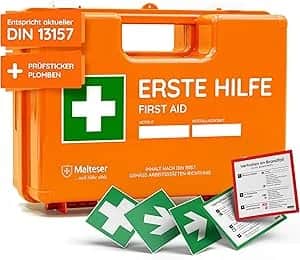
- First aid kit complete and accessible
- Copies of prescriptions and medical documents stored securely
Part 3: Communication Plan for the Family
- Each family member knows the meeting point if you can't reach home
- Children know the plan: what to do if parents can't be reached
- Emergency contacts shared across family members
- Responsibilities assigned: who handles what in an emergency
Part 4: Documents and Money
- Copies of critical documents: passports, birth certificates, insurance papers
- Cash available (at least €200-€500 per household member)
- USB stick with digital copies of important documents stored in go-bag
Part 5: Go-Bag Ready
- One go-bag per adult prepared for 72-hour evacuation
- Children's go-bags or items added to parent bags
- Location everyone knows: where go-bags are stored
Part 6: Home Security
- Blackout curtains or thick curtains available
- Backup power for critical devices (power bank, solar charger)
- Alternative heating planned if normal heating fails
What This Checklist Doesn't Cover
War preparedness overlaps with general crisis preparedness but has some specific aspects: evacuation routes, safe rooms, and radio communication. These are addressed in separate guides.
The most important step is not perfecting any single item on this list — it's starting. Choose three items from Part 2 to address this week.
Download This Checklist
Print this page or save it as PDF for offline use. Going through it physically with your family is more effective than reading it on screen.
Recommended Products
As an Amazon Associate we earn from qualifying purchases. Buying through our links supports the development of this app at no extra cost to you.