 Foto: Roger Brown / Pexels
First Aid Is the Most Underestimated Part of Crisis Preparedness
Why first aid training and supplies are more important than most preppers realize — and why food stockpiling without medical preparation is incomplete crisis readiness.
The Gap in Most Emergency Preparedness Plans
Walk through a typical prepper's supply list: food for three months, water for two weeks, hand crank radio, emergency generator. All valuable, all important.
Now ask: what happens when someone gets seriously injured or falls ill during the crisis?
Most people have a 25-euro car first aid kit and a half-remembered memory of a first aid course from their driving test. This is the most significant gap in typical household emergency preparedness — and the consequences can be severe.
Why Medical Emergencies Are More Likely in Crises
Counterintuitive fact: injury and illness rates increase during emergencies.
Reasons:
Improvisation leads to injury: Cutting firewood, using unfamiliar tools, working under pressure, navigating darkened spaces — all produce elevated injury rates. The "calm, ordinary day" assumption does not hold.
Delayed care worsens outcomes: A wound that would be treated promptly at an ER becomes a serious infection risk if untreated for 48-72 hours. A fracture that would be X-rayed and splinted in 30 minutes causes weeks of complications if self-managed poorly.
Chronic conditions become acute: Medication supply disruption, stress, diet changes, and physical exertion combine to trigger cardiac events, diabetic crises, and respiratory emergencies in people with pre-existing conditions.
Psychological stress triggers physical illness: Stress and anxiety activate physical symptoms — and in crisis conditions, distinguish between "stress headache" and "early signs of dehydration" becomes difficult without knowledge.
The Investment Asymmetry
Emergency preparedness communities spend significant resources on food storage — months of supplies, rotating stock systems, custom shelving. The time, money, and mental energy invested is substantial.
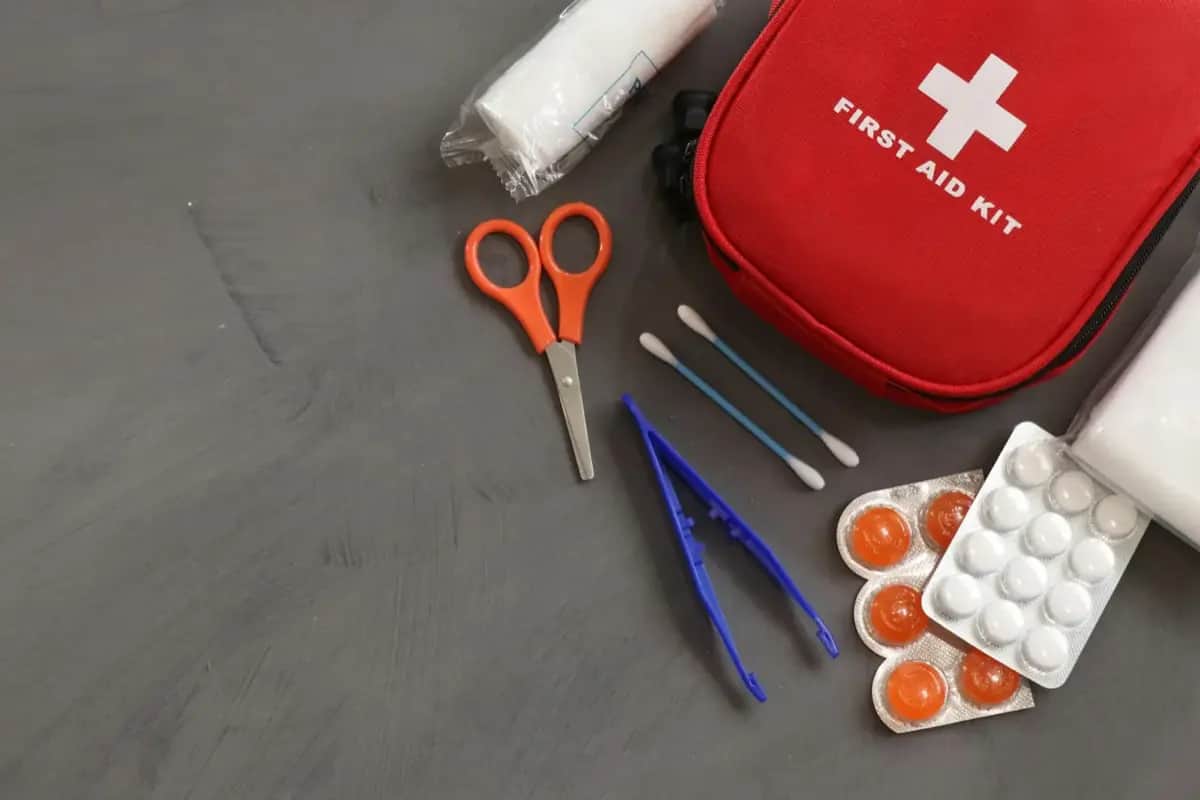
The same investment in medical preparedness: one or two 8-hour first aid courses (70-100 euros), an IFAK (~100 euros), and a comprehensive household medical kit (~100-150 euros).
Total medical investment: 300-400 euros once, plus a refresher course every 3-5 years.
Return: The ability to manage life-threatening injuries and serious illness in scenarios where emergency services are unavailable for 24-72 hours.
The investment is smaller. The potential impact is comparable — or greater, because illness and injury are more immediately life-threatening than hunger.
The Three Scenarios Where Medical Preparedness Matters Most
Scenario 1: Infrastructure Failure
A major blackout, flooding, or earthquake. Emergency services are overwhelmed. Response times are measured in hours, not minutes.
A family member suffers a serious laceration while moving debris. Without adequate supplies and knowledge: they bleed, the wound becomes infected, and what should be a minor medical incident becomes a serious complication.
With preparation: wound controlled, properly cleaned, dressed, and monitored. Definitive care when services become available.
Scenario 2: Remote or Rural Location
Many emergency scenarios specifically affect people in remote locations. A hiking accident, a rural homestead, or simply being stuck by a storm 30 kilometers from the nearest hospital.
The "golden hour" concept in trauma — the critical window for treating severe injuries — requires the responders to be there. In remote scenarios, that is you.
Scenario 3: Pandemic or Healthcare System Overload
During COVID-19, many people with non-COVID medical needs could not access routine or urgent care. Appointment backlogs reached months. Emergency departments diverted or overwhelmed.
The ability to manage illnesses at home — minor infections, injuries, pain management — reduced unnecessary emergency department visits and ensured care for those who genuinely needed it most.
What "Medical Preparedness" Actually Means
Medical preparedness is not about becoming a physician. It is about:
1. Basic trauma management: Bleeding control (tourniquet, wound packing), fracture immobilization, burn treatment. Achievable in a one-day first aid course.
2. Wound care over time: Cleaning, dressing, monitoring for infection. Requires supplies (irrigation syringe, non-adherent dressings, antiseptic) and knowledge of infection signs.
3. Illness management: Fever, diarrhea, pain, dehydration. Requires medications (fever reducers, ORS, antihistamine) and knowledge of when a condition requires escalation.
4. Psychological first aid: Recognizing and managing acute stress reactions in household members. Often overlooked; extremely relevant in extended crises.
5. Knowing when to escalate: Understanding which conditions require professional care regardless of conditions — and having the determination to pursue it.
The Knowledge Component Is Non-Negotiable
A kit without knowledge is hardware without software.
The Israeli bandage, tourniquet, and wound packing gauze in your IFAK are useless — and potentially harmful — if you do not know how to use them correctly.
Minimum training that changes outcomes:
DRK Basic First Aid Course (German Red Cross): 8 hours, covers CPR, bleeding control, burns, fractures, medical emergencies. Cost: ~35-50 euros. Available across Germany.
Refresher every 5 years: Guidelines change. Skills degrade without practice. A refresher course maintains competence.
What to practice at home:
- Tourniquet application: practice on your own thigh until you can apply correctly in under 30 seconds
- Wound dressing: practice changing dressings on a simulated wound
- CPR: a CPR manikin (~25 euros) allows realistic practice
The Argument to Your Family
If you are trying to convince a partner or family member why medical preparedness investment makes sense:
Frame it in statistical terms: Emergency service response times in Germany average 10-14 minutes. In a crisis event, this can extend to hours. Every minute of delay in treating serious bleeding increases mortality risk measurably. A tourniquet that costs 35 euros and 30 minutes of practice can bridge this gap.
Connect it to existing risk: Do they hike? Do they DIY with power tools? Do they have a family member with a cardiac condition? Every household has a specific risk profile. Map the preparation to the realistic risk.
Compare to insurance logic: They have car insurance, home insurance, and health insurance. Emergency medical preparation is the same category of decision — a modest cost against a low-probability, high-consequence event.
Conclusion
First aid is the most underestimated element of crisis preparedness because it feels intimidating (medical knowledge!) and because the need for it is less visible than the need for food or water. But the statistics are clear: injury and illness are the most common crisis complications, emergency service availability is precisely what crises compromise, and the investment in medical preparedness is modest relative to its impact. If your emergency kit has three months of food and a 25-euro car first aid kit, rebalance.