 Foto: Markus Winkler / Pexels
WHO Statistics: Drinking Water in Emergencies - Numbers That Should Alarm You
Current WHO data shows how quickly drinking water becomes scarce in crisis situations - even in industrialized countries.
Drinking Water in Emergencies: What the WHO Measures
The World Health Organization (WHO) is one of the leading authorities on drinking water standards worldwide. Its guidelines and emergency protocols — particularly the "WHO Guidelines for Drinking-Water Quality" and the Sphere Humanitarian Standards — precisely define minimum quantities and quality requirements for drinking water in crisis situations.
These numbers are not theoretical laboratory values. They are grounded in field data from humanitarian crises, natural disasters, and infrastructure failures across countries at every income level — including highly developed industrial nations like Japan, the United States, and Germany.
Daily Requirements Per Person: WHO Minimum Standards
The critical question is: how much water does a person need per day to survive — and to live with basic dignity?
The WHO distinguishes between the absolute minimum for survival and adequate provision. Both thresholds are relevant for emergency planning.
| Purpose | Survival Minimum | Recommended Level |
|---|---|---|
| Drinking | 1.5 liters | 2.0-3.0 liters |
| Cooking | 0.5 liters | 1.0 liter |
| Basic hygiene | 0.5 liters | 3.0-6.0 liters |
| Toilet flushing | n/a (emergency system) | 6.0-15.0 liters |
| Total (minimum) | 2.5 liters | 12.0-25.0 liters |
For practical emergency planning, Germany's BBK — aligned with WHO data — recommends at least 2 liters of drinking water per person per day as a minimum, rising to 4-5 liters when cooking and hygiene are included.
For a two-person household over 14 days, this means: 56 to 140 liters depending on planning level.
How Quickly Does Water Run Out in a Crisis?
Industrialized nations create a false sense of security: "Water always runs here." But data from historical events shows how quickly that assumption fails.
| Event | Location | Water Failure | Duration |
|---|---|---|---|
| Winter storm blackout | Texas, USA (2021) | Complete failure for 4.5M households | 4-7 days |
| Tohoku earthquake | Japan (2011) | 1.5M households without water | Up to months in some areas |
| Ahr Valley flooding | Germany (2021) | Water infrastructure destroyed | Weeks to months |
| Munster power outage | Germany (2005) | 100,000 households, 28 hours | ~28 hours |
| Drought summer | Central Europe (2022) | Groundwater critically low | No supply interruption, but near-threshold |
The Texas example is particularly instructive: one of the world's largest economies, highly developed infrastructure — and within 48 hours of a winter storm, millions of households had no water. Pipes froze and burst; water treatment plants lost operating pressure.
Germany's Water Infrastructure: Where the Vulnerabilities Lie
Germany's drinking water network is considered one of the safest in the world. But "safe" does not mean "invulnerable." The Federal Environment Agency (Umweltbundesamt) and the BBK have identified several weaknesses:
Electricity Dependence: The vast majority of German water treatment plants require electricity for pumping stations, treatment systems, and control technology. A widespread blackout takes these systems offline.
Backup Generator Coverage: Not all water treatment facilities have adequate emergency power. Those with diesel generators typically carry fuel for 24-72 hours, after which resupply is required — which may not be possible during a regional blackout.
Pipe Network Vulnerability: Particularly older pipe systems in cities (some 50-100 years old) are more susceptible to pressure drops and contamination when the system operates outside its normal parameters.
Flood and Drought Events: Heavy rainfall events can flood or contaminate water treatment plants. Sustained drought can critically reduce groundwater levels and spring outputs.
Practical Recommendations for Your Water Preparedness
The WHO data leads to clear practical conclusions for private households:
Minimum Preparation (2 weeks, 2 people):
- 56 liters of drinking water (2L/person/day) — approximately six 10-liter containers
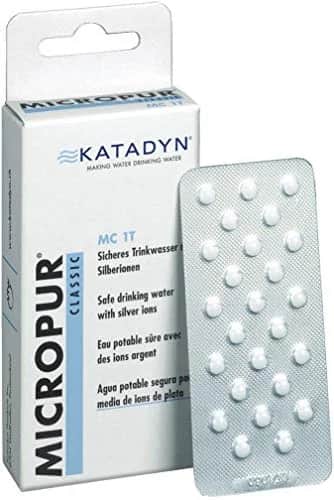
- Water purification tablets (chlorine dioxide, e.g., Micropur) as an emergency backup
- Knowledge of nearby water sources or wells
Comfort Preparation (2 weeks, 2 people):
- 140-200 liters total (5-7L/person/day) — large storage container or IBC tote
- Water filter (LifeStraw Family, Katadyn Vario) for treating tap or rainwater
- Rainwater collection system (tank with leaf filter)
For Families with Young Children or Medical Needs:
- Add 2 liters per child per day to all totals
- Store a separate sterile water reserve for medical applications
Water Quality in Emergencies: What the WHO Warns
A frequently overlooked aspect: in an emergency, not only water scarcity is a problem, but also contamination. The WHO warns that during infrastructure failures — pipe breaks, pressure drops, flooding — microbial contamination of the water distribution network is possible.
Water from the tap following a disaster event should be treated before drinking as a precaution: either by boiling (1 minute at a rolling boil), filtration, or disinfection with chlorine dioxide tablets.
A quality hollow-fiber membrane water filter (0.1 micron pore size) reliably removes bacteria and protozoa. For virus protection, additional chemical treatment or boiling is necessary.
The WHO data is not alarmism: it is the result of decades of field research in real crisis situations. Those who take it seriously and prepare accordingly will belong to the small percentage of the population that remains genuinely capable of action when an actual emergency unfolds.
Recommended Products
As an Amazon Associate we earn from qualifying purchases. Buying through our links supports the development of this app at no extra cost to you.