 Foto: Keegan Checks / Pexels
5 Water Filtering Mistakes That Can Make You Seriously Ill
These 5 common water filtration mistakes can lead to dangerous illness even when using quality equipment. Learn what not to do before you need your filter in a real emergency.
Why Water Filtration Mistakes Are Dangerous
A water filter gives you a false sense of security if you don't use it correctly. People with high-quality filters have still become seriously ill — from Giardia, Cryptosporidium, E. coli, or hepatitis — because of simple, avoidable errors in how they used, stored, or maintained their equipment.
In an emergency scenario, water-borne illness is not just uncomfortable. Severe diarrhea and vomiting cause rapid dehydration, which in a situation where clean water is already scarce creates a life-threatening spiral.
Mistake 1: Letting the Filter Freeze While Wet
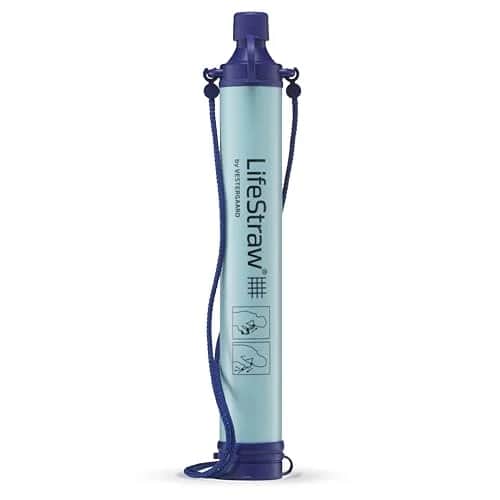
This is the most common and most catastrophic filter mistake. Hollow-fiber membranes — the type used in Sawyer, LifeStraw, and Katadyn BeFree — work because microscopic tubes filter out pathogens. When these membranes freeze while wet, ice crystals form inside the hollow fibers and crack them.
A cracked filter looks and feels exactly like an intact filter. Water flows through normally. But pathogens pass through the cracks without being removed.
The rule: Never store a hollow-fiber filter in conditions where it may freeze (below 0°C / 32°F) while it contains water. Before cold storage, backflush the filter and blow out all remaining water. Allow to dry completely in a warm environment before packing.
If your filter has been exposed to freezing temperatures while wet, treat it as compromised. Do not use it without testing or replacement.
Mistake 2: Not Backflushing Regularly
As water passes through a hollow-fiber filter, particles accumulate on the membranes. Over time, the flow rate decreases. This is expected and normal — but ignoring it until flow rate becomes a trickle means the filter is being pushed beyond its intended working range.
Backflushing — using the included syringe to push clean water backward through the filter — dislodges accumulated particles and restores flow rate. For Sawyer filters, this should be done every 5–10 liters of use in turbid water, or whenever flow rate noticeably drops.
Failure to backflush doesn't just reduce flow rate. In severe cases, it can cause premature membrane degradation and microscopic structural damage that is not visible to the eye.
Mistake 3: Contaminating the Clean Side
Every filter has a dirty inlet and a clean outlet. If the clean outlet touches a contaminated surface — your unfiltered water bag, your dirty hands, the ground — pathogens are transferred directly to the clean water.
In the field, under stress, this cross-contamination happens frequently:
- Setting the filter down on contaminated ground
- Handling the clean end after touching raw water containers
- Using the same hands to handle both clean and dirty equipment without washing in between
The solution: Establish a clear physical and mental separation between dirty (unfiltered) and clean (filtered) equipment. Color-code bags or use distinct shapes. Never touch the outlet with contaminated hands.
Mistake 4: Filtering Chemically Contaminated Water
Hollow-fiber and ceramic filters remove biological contaminants. They do not effectively remove:
- Heavy metals (lead, arsenic)
- Industrial chemicals and pesticides
- Petroleum products
- High dissolved solids
In an urban emergency scenario — especially near industrial areas, after flooding, or if the source is a visibly unusual color or odor — the threat may be chemical rather than biological.
Signs of potentially chemically contaminated water: unusual color (yellow, brown, oily sheen), unusual smell (petroleum, chemical, bleach-like but stronger than municipal treatment), and sources near industrial facilities or flooded farmland.
If chemical contamination is suspected: Do not filter and drink. Seek alternative water sources. As a last resort, activated carbon block filters improve taste and remove some organic chemicals, but are not reliable protection against heavy metal or hydrocarbon contamination.
Mistake 5: Relying on the Filter Without a Virus Plan
Most portable hollow-fiber filters — including the market-leading Sawyer Squeeze and LifeStraw — do not remove viruses. They remove bacteria (0.1 micron) and protozoa but viruses are typically 0.02–0.3 microns, smaller than most filter pores.
In backcountry use in North America or Europe, viral contamination from human sewage is relatively rare. In an urban emergency scenario — especially if sewage infrastructure has been damaged by flooding or power failure — viral contamination becomes a serious possibility.
Always pair your hollow-fiber filter with a virus-capable backup:
- Chlorine dioxide tablets (Aquatabs, Micropur Forte): effective against viruses, bacteria, and most protozoa
- UV purification (SteriPen): effective against all pathogens including viruses
- Boiling: 1 minute at rolling boil kills all pathogens
For emergency preparation in urban areas, the combination of hollow-fiber filter + chemical tablets costs less than €60 and covers all pathogen categories.
Summary: The 5 Mistakes and Their Prevention
| Mistake | Prevention |
|---|---|
| Freezing wet filter | Dry completely before cold storage; replace if frozen |
| Not backflushing | Backflush every 5–10L or when flow drops |
| Contaminating clean side | Strict separation of dirty/clean equipment |
| Filtering chemical contamination | Know your source; don't filter obviously contaminated water |
| No virus plan | Add chemical tablets or UV purifier as backup |
A water filter is only as effective as the person using it. Spend 30 minutes learning proper technique before the emergency — not during it.
Recommended Products
As an Amazon Associate we earn from qualifying purchases. Buying through our links supports the development of this app at no extra cost to you.