 Foto: Roger Brown / Pexels
7 Urban Crisis Preparedness Mistakes City Dwellers Make
The 7 biggest emergency preparedness mistakes for city and apartment dwellers — including evacuation planning failures and building-specific blindspots.
Why Urban Dwellers Make Specific Mistakes
Emergency preparedness advice often defaults to rural or suburban scenarios: store water in your basement, use your garage for supplies, drive out of danger. City and apartment dwellers get advice that doesn't fit their reality — and then conclude that "prepping" isn't for them.
These 7 mistakes are specific to urban emergency preparedness. Fixing them doesn't require a rural property or large budget — just urban-adapted thinking.
Mistake 1: Assuming You Can Always Drive Out of a City
The pattern: The evacuation plan is: "Get in the car and drive." During a major urban emergency, this plan fails completely.
What actually happens during large-scale urban evacuations:
- Major roads become gridlocked within 30-60 minutes of an emergency announcement
- Gas stations run dry in hours
- Bridges and tunnels become chokepoints
- Accidents compound delays
- What is normally a 45-minute drive can take 6-8 hours or become impossible
Historical example: During Hurricane Rita (2005), evacuation from Houston created one of the largest traffic jams in US history. People sat for 12+ hours with depleted gas tanks. Several people died in the evacuation, not the hurricane.
The fix:
- Plan multiple evacuation routes (not just major highways)
- Know your on-foot and bicycle evacuation routes
- Know what 10, 20, and 30 km on foot looks like from your home
- Identify destinations along each route
- Keep your car more than half full of fuel at all times
Mistake 2: Not Preparing for Building-Specific Emergencies
The pattern: City dwellers focus on external threats (storms, power outages) and completely ignore building-specific scenarios: elevator failure during a power outage, fire in the building, pipe burst affecting multiple apartments.
Building-specific failures:
- Never read the building emergency procedures posted in the lobby
- Don't know where the emergency stairwells are
- Don't know if the building has backup generator power (and what it powers)
- Haven't exchanged contact information with neighbors
- Don't know how to shut off water supply to their apartment
The fix:
- Read your building's emergency procedures
- Know two exit routes from your floor
- Exchange phone numbers with at least two neighbors
- Know where your apartment's water shutoff valve is
- Know whether your building elevator has backup power
Mistake 3: No Water Storage Because "There's Always a Store"
The pattern: Urban dwellers near supermarkets don't store water, assuming they can buy it when needed.
Why this fails:
- During a power outage, supermarkets close (no cash registers, refrigeration fails, staff can't work)
- When a storm is forecast, water is sold out 12-24 hours beforehand
- Building water pressure fails when electric pumps shut down (very common in high-rise buildings)
- A broken water main can affect an entire neighborhood for days
The fix:
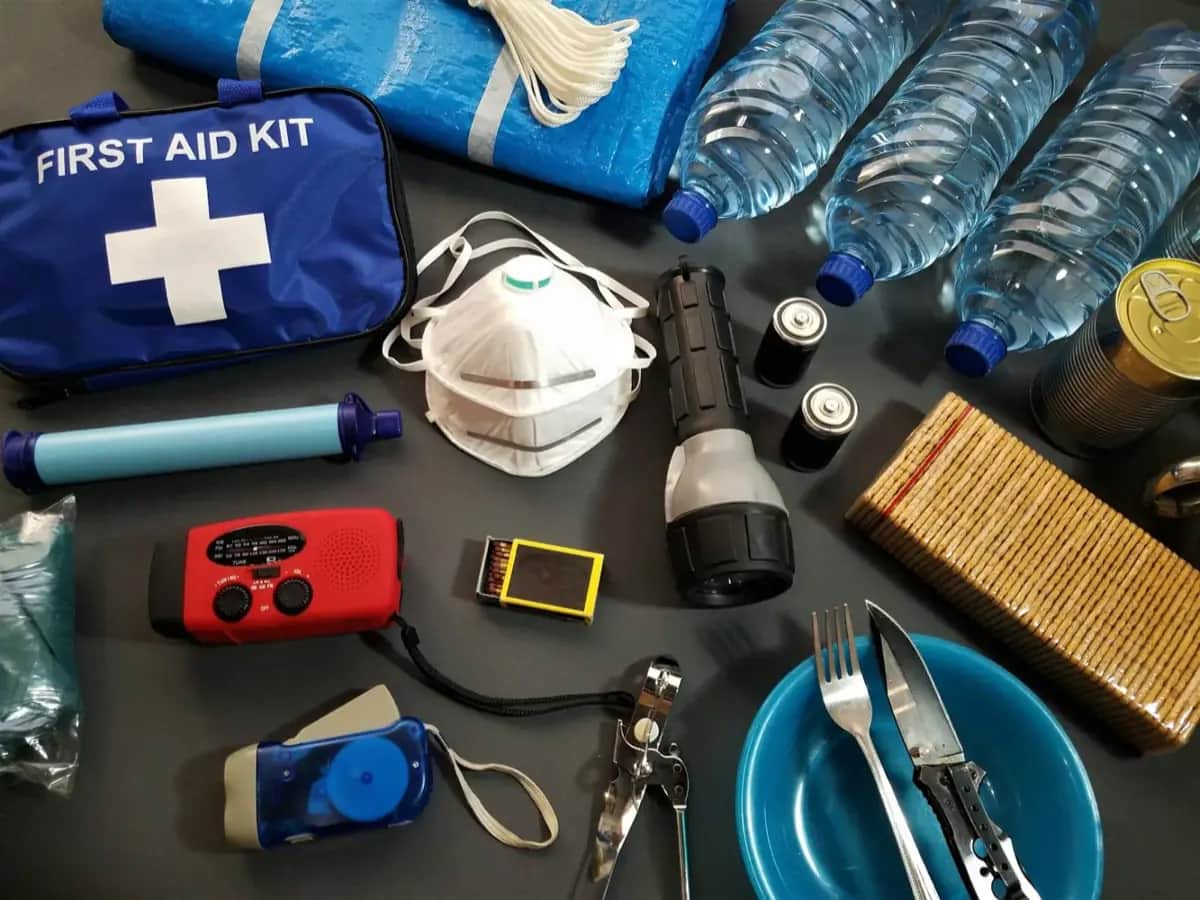
- Store 4 liters per person per day, minimum 2-week supply
- Use multiple 2-liter bottles stored in cabinet under sinks, back of closets, or under beds
- A water filter is excellent backup (lighter storage than full bottled water supply)
Mistake 4: Ignoring Stay-in-Place Scenarios
The pattern: All emergency planning focuses on evacuation. No preparation for scenarios requiring shelter-in-place for multiple days (severe storms, chemical incident, civil unrest in immediate area).
In an apartment, stay-in-place requires:
- 72-hour minimum food and water supply
- Ability to cook without normal utilities
- Entertainment and distraction for family members (especially children)
- Communication that doesn't depend on internet or cellular networks
- Medication supply for extended period
The fix:
- Build a 3-day stay-in-place kit in addition to your evacuation go-bag
- Camp stove with fuel (outdoor use only — balcony or at ground level)
- Battery radio for emergency broadcasts when internet is down
Mistake 5: Depending Entirely on Smartphone and Apps
The pattern: Navigation is via Google Maps. Emergency alerts are via an app. All contacts are in the phone. All documents are in cloud apps. When the phone battery dies or networks are overloaded, the person is completely unable to navigate, communicate, or prove their identity.
Urban cellular networks during major emergencies: During 9/11, Katrina, and other major urban emergencies, cellular networks were overloaded and nonfunctional for hours. SMS messages sometimes went through when voice calls didn't. Internet-dependent apps failed completely.
The fix:
- Power bank: 20,000+ mAh, always charged
- Paper map of your city stored at home
- Emergency contacts written on paper in wallet
- Key phone numbers memorized
- Important documents stored offline on device AND printed
Mistake 6: No Neighbor Network or Community Connections
The pattern: City living is often anonymous. Apartment neighbors don't know each other's names. There's no sense of community emergency network.
Why this matters:
- During extended emergencies, communities with existing social networks recover faster
- Neighbors with specific skills (medical training, mechanical skills, language skills) are invaluable
- Vulnerable neighbors (elderly, disabled, single parents) may need check-ins that only neighbors can provide
- Information about local conditions spreads quickly through trusted neighborhood networks
The fix:
- Know your immediate neighbors by name and with exchanged phone numbers
- Introduce yourself with a simple conversation: "I'm trying to improve my emergency preparedness and thought it would be smart to exchange numbers with neighbors."
- Join a neighborhood group (NextDoor, local Facebook or WhatsApp group)
- You don't need to become best friends — a phone number and a friendly face is enough
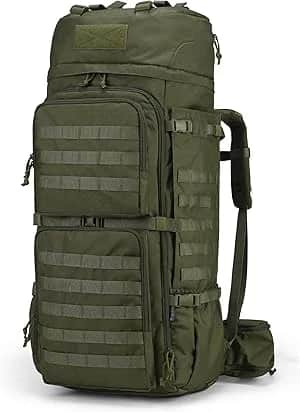
Mistake 7: Dramatically Underestimating Go-Bag Weight for Walking Evacuation
The pattern: People pack a "go-bag" that weighs 20-25+ kg. They've never walked more than a few blocks with it. During an urban evacuation where you must walk, the bag becomes impossible to carry after 500 meters.
The realistic urban walking evacuation scenario:
- You may need to walk 10-20 km to get out of an affected urban area
- This takes 2-4 hours under good conditions
- With a 25 kg bag, most people can't complete this distance
The fix:
- Test your go-bag: put it on and walk 3 km
- Your walking limit is how heavy it should be
- Most fit adults can manage 10-15 kg; many urban dwellers less
- Prioritize: documents, medications, water, energy bars, light, phone + power bank
- Leave large water quantities (heaviest single item) for scenarios where you're driving or caching water along the route
- Wheeled backpacks: compromise solution (wheels help on pavement, handle works on stairs)
Urban emergency preparedness doesn't require ruralizing your thinking — it requires urbanizing standard preparedness advice. Fix these 7 mistakes with city-specific solutions and you'll be among the best-prepared residents in your neighborhood.
Recommended Products
As an Amazon Associate we earn from qualifying purchases. Buying through our links supports the development of this app at no extra cost to you.