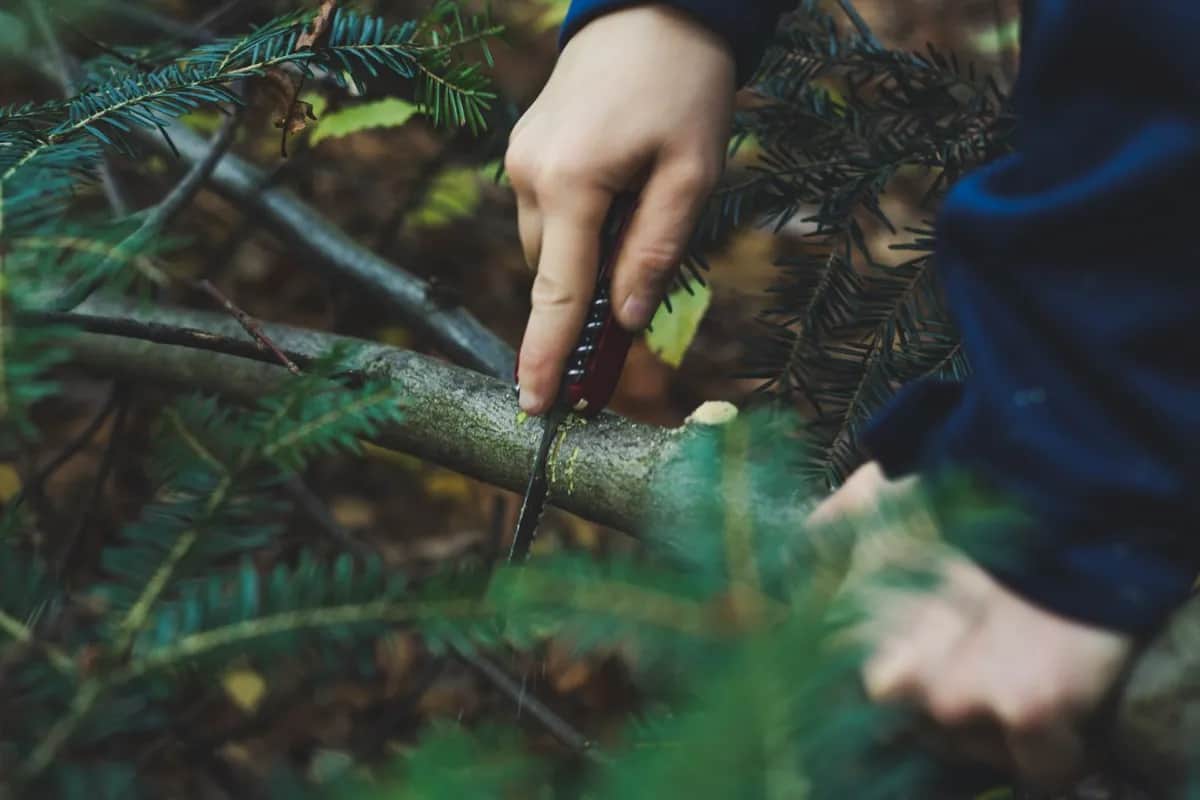
 Foto: Markus Spiske / Unsplash
Best Survival Knives: Top 5 Emergency Knives Compared
A good knife belongs in every emergency kit. We compare the best survival knives by steel, handle, and price.
Why a Good Knife Belongs in Every Emergency Kit
A knife is the most versatile tool you can carry in an emergency situation. It cuts food, opens packaging, processes fire-starting material (scraping tinder, striking a ferro rod), helps build emergency shelters (cutting cordage, processing branches), cuts seatbelts or trapped clothing in accident scenarios, and provides a measure of self-defense capability as a last resort.
Emergency preparedness puts different demands on a knife than kitchen or hunting use. The priorities are robustness, reliability, and versatility — not surgical precision for fine cutting tasks.
This guide compares five knives that are particularly well-suited for emergency kits and crisis preparedness, covering steel types, construction, and the all-important full-tang question.
What "Full Tang" Means and Why It Matters
Before comparing specific models, it's worth understanding the most important structural difference in survival knives: the tang.
The tang is the portion of the blade that extends into the handle. In a full-tang knife, the blade steel runs the full length and width of the handle — you're essentially holding the blade itself, with handle scales attached on either side. This construction is dramatically stronger than a partial tang, where only a narrow spike of steel extends into the handle.
For hard tasks — batoning (splitting wood by hammering the blade), prying, and heavy chopping — a full-tang knife is significantly more resistant to breaking at the blade-handle junction. For general camp and survival use, both designs are adequate. For worst-case scenarios where the knife is your primary tool, full tang wins.
The Five Contenders
Mora Companion (Morakniv)
The most popular entry-level survival knife in the world. Made in Sweden using 12C27 stainless steel (a High Carbon version is also available). Under $20.
Strengths: Exceptional value, comfortable handle, excellent edge geometry for easy sharpening Weaknesses: Not full tang (stick tang construction — less resistant to lateral stress and batoning)
ESEE 4
American-made fixed blade, full tang, 1095 high-carbon steel. One of the most recommended knives in the serious survival community. Available in two sizes (4 = shorter, 6 = longer).
Strengths: True full tang, proven 1095 carbon steel (excellent edge retention, easy to sharpen), tested in extreme conditions, lifetime warranty Weaknesses: Carbon steel rusts without maintenance, more expensive ($70-100)
ESEE 6
Same construction as the ESEE 4, longer blade (6.5 inches). Better for heavy chopping, wood processing, and bushcraft tasks.
Strengths: All ESEE 4 strengths, superior for heavy-duty tasks Weaknesses: Heavier, larger — less pocket-friendly, better suited as a camp knife than everyday carry
Victorinox Swiss Army Huntsman
The classic multi-tool. Not a dedicated survival knife, but the integrated tools (saw, scissors, can opener, corkscrew) add versatility that no single-blade knife can match. Legal to carry in most public contexts where fixed blades are restricted.
Strengths: Legal in most carry contexts, highly versatile, light (88g), proven for decades, reasonable price Weaknesses: Not full tang, blade too small for heavy wood work
Gerber StrongArm
Compact fixed blade, full tang, 420HC steel with Cerakote coating for corrosion resistance. Available with a MOLLE-compatible sheath.
Strengths: Full tang, corrosion-resistant, ergonomic grip, MOLLE sheath Weaknesses: 420HC steel softer than 1095 or D2 — requires more frequent sharpening
Comparison Table
| Knife | Steel | Full Tang | Blade Length | Weight | Price (approx.) | Best For |
|---|---|---|---|---|---|---|
| Mora Companion | 12C27 Stainless | No | 4.1" (10.4 cm) | 3.5 oz (98g) | ~$15 | Beginners, budget |
| ESEE 4 | 1095 Carbon | Yes | 4" (10.2 cm) | 5.4 oz (153g) | ~$80 | Serious survival |
| ESEE 6 | 1095 Carbon | Yes | 6.5" (16.5 cm) | 10 oz (284g) | ~$95 | Bushcraft, wilderness |
| Gerber StrongArm | 420HC | Yes | 4.8" (12.2 cm) | 7.75 oz (220g) | ~$50 | All-round, urban |
| Victorinox Huntsman | Stainless | No | 3.5" (9 cm) | 3 oz (88g) | ~$40 | Legal carry, versatility |
Steel Guide: What the Designations Mean
1095 High Carbon Steel: High carbon content (0.95%), excellent sharpening response, superb edge retention under hard use. Trade-off: will rust without maintenance (wipe dry after use, oil the blade). The go-to choice for serious survival and military applications.
12C27 / 14C28N (Morakniv): Swedish stainless steel, a balance between sharpenability and corrosion resistance. Excellent for beginners and wet environments.
420HC: An accessible stainless alloy, softer than 1095 and therefore easier to sharpen, but doesn't hold an edge as long. Found in many branded knives (Gerber, Buck). Fine for general use.
D2 (Semi-Stainless): Very hard (HRC 60+), excellent edge retention, but difficult to sharpen and more brittle than pure stainless. Best for users who sharpen infrequently and need extended edge life.
Recommendations by Situation
Budget Entry-Level (Under $20)
Mora Companion HC (High Carbon)
For under $20, you get one of the most capable survival knives in the world. The high-carbon version sharpens more easily than the stainless variant. Maintained with a simple sharpening stone, a Mora cuts as well after years of use as it did on day one.
Emergency Bug-Out Bag ($50-100 Budget)
ESEE 4 or Gerber StrongArm
Both offer full tang and proven performance. The ESEE 4 is the expert recommendation when maximum robustness is the priority. The Gerber StrongArm is the pragmatic alternative — more corrosion-resistant and more affordable.
Legal Everyday Carry
Victorinox Swiss Army Huntsman
A Swiss Army knife is legal to carry in most contexts, universally useful, and practical enough in daily life that you'll actually have it with you. The best emergency knife is the one you're carrying when you need it.
Care and Maintenance
A knife is only as good as its edge. A dull knife isn't just useless — it's more dangerous than a sharp one, because it requires more force and is more likely to slip.
Basic knife care kit:
- Sharpening stone (coarse/medium and fine grit) or pull-through sharpener
- Knife oil (essential for carbon steel)
- Sheath or blade protector
Regular maintenance: Clean the blade after use, dry thoroughly, apply a thin coat of oil. Carbon steel blades develop a patina over time — a surface oxidation layer that actually protects the steel.
Conclusion: Consider Carrying Two
For comprehensive emergency preparedness, the most practical approach combines two knives: a Mora Companion for everyday tasks and as an inexpensive backup, and an ESEE 4 or Gerber StrongArm as the full-tang primary knife in your emergency bag. Both fit within most people's budget and together cover nearly every emergency scenario you'll encounter.
Remember: the best knife is the one that gets sharpened regularly. A rusty, dull blade sitting in a drawer is not emergency preparedness — it's just clutter.
Recommended Products
As an Amazon Associate we earn from qualifying purchases. Buying through our links supports the development of this app at no extra cost to you.