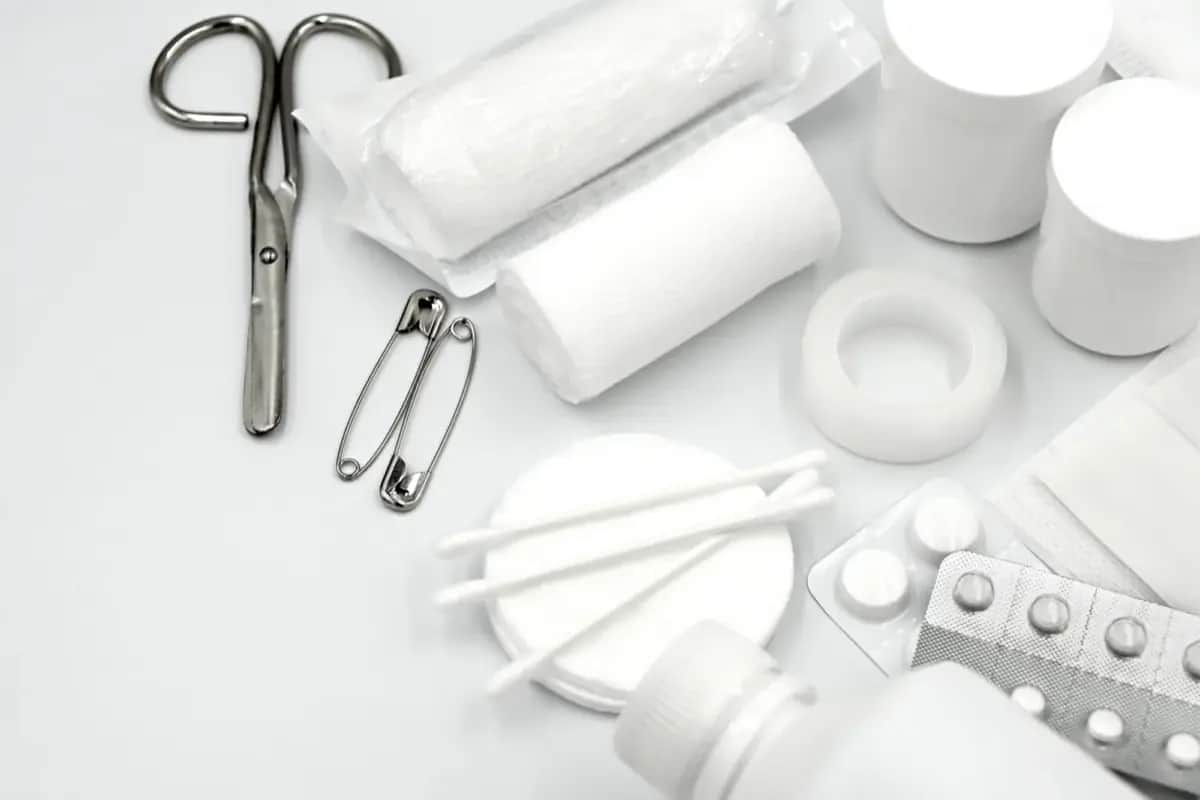
 Foto: Roger Brown / Pexels
First Aid Basics for Beginners: What You Need to Know to Save a Life
Essential first aid basics for beginners: CPR, bleeding control, choking, burns, and shock — the core skills that matter most in emergencies.
The Most Important 20% of First Aid
First aid encompasses hundreds of skills and procedures. But 80% of emergency situations are handled by a small set of core competencies. This guide focuses on exactly those skills — the ones that matter most.
The Chain of Survival
Before any specific technique, understand the framework:
- Recognition — identify that an emergency exists
- Activation — call for help (911/112)
- Intervention — provide first aid
- Handoff — transfer care to EMS
Every link matters. Excellent CPR technique cannot compensate for a 10-minute delay in calling for help.
Skill 1: Recognizing Loss of Consciousness
Check responsiveness:
- Tap shoulders firmly
- Shout loudly: "Are you okay?"
- No response = unconscious
Check breathing:
- Tilt head back slightly (chin-lift)
- Look, listen, and feel for 10 seconds
- No normal breathing = start CPR
Critical: Gasping (agonal breathing) is NOT normal breathing. If someone is gasping after collapse, start CPR.
Skill 2: CPR (Cardiopulmonary Resuscitation)
CPR maintains minimal blood circulation until the heart can be restarted.
When to start: Unconscious AND not breathing normally.
The technique:
- Place heel of one hand on the center of the chest (lower half of breastbone)
- Place second hand on top, interlace fingers, keep fingers off the chest
- Arms straight, shoulders directly above hands
- Compress 5–6 cm deep (about 2 inches) at 100–120 beats per minute
- Allow complete chest recoil between compressions — don't lean on the chest
- After 30 compressions: 2 rescue breaths (optional — see below)
- Repeat 30:2 cycle until AED arrives, EMS takes over, or patient recovers
Rhythm reference: "Stayin' Alive" by Bee Gees (103 BPM) — hum it.
Rescue breaths: Tilt head, pinch nose, seal over mouth, give 1 breath over 1 second. Watch for chest rise. If unable or unwilling to do mouth-to-mouth, hands-only CPR (continuous compressions without breaths) is nearly as effective and more sustainable.
Skill 3: Using an AED
Automated External Defibrillators are located in airports, malls, gyms, schools, and many public buildings. They are designed for untrained users.
- Power on (open lid or press button)
- Follow voice prompts — AEDs provide step-by-step instructions
- Apply pads as shown on the pads (right of neck / left ribcage)
- Stand clear when device analyzes — do not touch patient
- Deliver shock if prompted — press the flashing button
- Immediately resume CPR after shock — do not wait to see if it worked
AEDs do not shock people who don't need it. They analyze the rhythm first. Use it without hesitation.
Skill 4: Hemorrhage Control
Severe bleeding is the most common preventable cause of death in trauma.
For most bleeding:
- Apply direct pressure with clean cloth
- Maintain continuous pressure for 10 minutes
- Do not remove dressing to check — it disrupts clot formation
- If dressing soaks through: add more material on top, do not replace
For life-threatening limb bleeding:
- Apply tourniquet 5–7 cm above the wound
- Tighten until bleeding stops completely
- Note time of application
- Do not remove — let medical professionals decide
Tourniquets are the correct intervention for uncontrolled extremity hemorrhage. Hesitation costs lives.
Skill 5: Choking (Airway Obstruction)
Signs of severe choking: Cannot speak, cannot cough effectively, high-pitched sound or silence, blue lips.
Protocol for conscious adult:
- Lean person forward
- 5 firm back blows between shoulder blades with heel of hand
- 5 abdominal thrusts: stand behind, arms around waist, fist above navel, sharp upward thrusts
- Alternate 5+5 until obstruction clears or person becomes unconscious
If person becomes unconscious: Carefully lower to ground, call 911, begin CPR.
For infants under 1 year: 5 back blows on infant's back + 5 chest thrusts (not abdominal). No abdominal thrusts — too much risk of organ injury.
Skill 6: Burn Management
Cool immediately: Room-temperature water, 10–20 minutes. This is the most important intervention.
Do NOT use: Ice, butter, toothpaste, oil, or any household remedy.
Cover: Loosely with clean cloth or dressing. No tight wrapping.
Seek medical care: Burns larger than palm-sized, burns on face/hands/genitals/feet, any burn on infant, any third-degree burn (white, charred, or painless).
Skill 7: Recognizing Shock
Shock is inadequate blood circulation to vital organs. It follows severe bleeding, cardiac events, severe burns, anaphylaxis.
Signs:
- Pale, cool, clammy skin
- Rapid, weak pulse
- Rapid, shallow breathing
- Confusion or anxiety
- Weakness, dizziness
First aid for shock:
- Treat the cause (control bleeding, use epinephrine for anaphylaxis)
- Lay person flat
- Elevate legs 20–30 cm if no spinal or leg injury suspected
- Keep warm (blanket)
- Do NOT give anything by mouth
- Call 911 — shock is a medical emergency
Skill 8: Anaphylaxis
Severe allergic reaction can be fatal within minutes.
Signs: Hives + throat swelling + breathing difficulty — any combination after exposure to an allergen.
Intervention:
- Epinephrine auto-injector (EpiPen) into outer thigh — through clothing if necessary
- Call 911 immediately
- Person lies flat with legs raised (unless difficulty breathing — then sitting up)
- Second EpiPen after 5–15 minutes if no improvement
Key point: Epinephrine buys time. Even after epinephrine, a hospital evaluation is required. The reaction can return hours later.
The Most Important Thing You Can Do
Take a certified first aid course. This guide gives you the framework, but physical practice builds the muscle memory that works under stress.
Time investment: 8-hour class. Return: Skills that last a lifetime and can save a life.
Red Cross, American Heart Association, and many hospitals offer courses regularly. The cost is typically under $100.