 Foto: Mikhail Nilov / Pexels
Create a Family Emergency Plan Step by Step: Include Children in the Process
How to create a family emergency plan that children understand and can execute. Step-by-step including meeting points, communication plans, go-bags, and age-appropriate responsibilities.
Why Children Must Be Part of the Plan
Family emergency plans that are planned by adults and imposed on children don't work well. Children who understand the plan — who participated in making it, who have practiced it — respond far more effectively in real emergencies.
The goal of this guide is a plan your whole family knows, believes in, and can execute.
Step 1: Have the Family Meeting
Schedule 1-2 hours with the whole family. Frame this positively: "We're going to make a plan so that if anything unexpected ever happens, we all know exactly what to do."
For young children (3-6): Make it a game. "We're building an adventure plan." For older children (7-12): "This is like a fire drill plan, but for bigger things." For teenagers: Include them as co-planners, not just plan recipients.
Step 2: Define Your Two Meeting Points
Meeting Point 1 (near home): A specific point within walking distance from your home that everyone can reach independently.
Examples: The mailbox on the corner of your street, the entrance of the park two blocks away, the supermarket parking lot.
Critical: Be very specific. "The park" is vague. "The red bench near the park entrance on Hauptstraße" is specific.
Meeting Point 2 (away from neighborhood): A location further from home, in case the neighborhood is inaccessible.
Examples: A relative's home 10km away, a specific public library, your child's school.
Walk to both meeting points with your children before the meeting ends.
Step 3: Establish the Communication Plan
Three levels:
Level 1 — Phone calls: Try to call each other. Designate who calls whom (parent 1 calls oldest child, parent 2 calls youngest, everyone tries each other).
Level 2 — Text messages: Often more reliable than calls when networks are congested. Send a text with your status and location.
Level 3 — Out-of-area contact: One person outside your region that everyone calls. This person becomes the communication hub. Works because local networks are often overwhelmed while long-distance calls succeed.
Choose your out-of-area contact together as a family. Call that person and explain their role. They should agree to serve this function.
Step 4: Assign Responsibilities
Who does what in a family emergency? Define it explicitly:
- Who calls the out-of-area contact?
- If children are at school, who picks them up?
- Who brings the go-bags?
- Who's the backup if the primary person is unavailable?
Write this down. Everyone should be able to state it without the written plan.
Step 5: Create the Go-Bag System
Family go-bag (large, carried by adults):
- Documents: passports, insurance cards, medication list, cash
- First aid kit
- Food (2-day supply)
- Water or filter
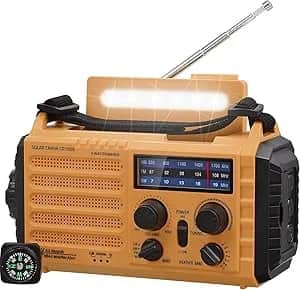
- Battery radio
- Power bank and chargers
Each adult's personal bag:
- Change of clothes
- Phone and charger
- Personal medications
Each child's personal bag (5+):
- Comfort item
- Water bottle
- Snack
- Change of clothes
- Laminated card with parents' numbers
Let children pack their own bags under your guidance. This builds ownership.
Step 6: Practice the Plan
Walk-through (same day):
- Walk to Meeting Point 1 together
- Pretend to call the out-of-area contact (or actually call and explain it's a test)
- Have children show where their go-bag is
Full drill (1-2 months later):
- "Emergency" announced
- Everyone grabs their bag (time it — it should be under 5 minutes)
- Assemble at Meeting Point 1
Debrief the drill:
- What took longest?
- Did everyone remember Meeting Point 1?
- Were all bags easy to find?
Step 7: Write It Down — Family Emergency Plan Card
Create a laminated index card for each family member with:
Family Emergency Plan
——————————————————
Meeting Point 1: [specific location]
Meeting Point 2: [specific location]
Out-of-Area Contact: [name and phone number]
Dad's cell: ___________
Mom's cell: ___________
Emergency number: 112
For children who can read: they carry this card. For younger children: they know Meeting Point 1 by heart (you've walked there).
Step 8: Review and Update Annually
Review your plan:
- When you move
- When children change schools
- When contact information changes
- At minimum, every January
A 30-minute annual review and a brief family discussion: "Does everyone still remember the plan?"
This is your annual drill. It's also your update mechanism. A plan that's never reviewed becomes wrong — and wrong plans are sometimes worse than no plan.
Recommended Products
As an Amazon Associate we earn from qualifying purchases. Buying through our links supports the development of this app at no extra cost to you.