 Foto: Erik Mclean / Pexels
Buying an Emergency Backpack: What to Look for in Volume, Material, and Carrying System
How to choose the right emergency backpack: the key factors of volume, material durability, carrying system comfort, and organization that matter for a bug-out bag.
Not every backpack works as an emergency bag. A cheap school backpack will fail under a 15kg load after 2km. A properly chosen pack distributes weight, lasts years of storage, and keeps working when you need it most. Here's what actually matters.
Volume: The Right Size for 72 Hours
Too small (under 25L): Can't fit 3 days of supplies for an adult. Compromises are necessary that leave critical gaps.
Sweet spot (30-55L): Fits a complete 72-hour kit for one adult. Manageable to carry over distance.
Too large (60L+): Encourages overpacking. Heavy when full. Cumbersome for urban evacuation.
Guidelines by scenario:
| Scenario | Recommended Volume |
|---|---|
| Urban evacuation (summer) | 30-40L |
| Urban evacuation (winter) | 40-55L |
| Wilderness survival | 55-75L |
| Get-home bag (car/office) | 20-30L |
Material: What Actually Holds Up
Fabric Durability
Denier (D) rating: Higher = thicker, more durable yarn. More durable doesn't always mean better — balance durability with weight.
| Denier | Use | Notes |
|---|---|---|
| 210D | Ultralight packs | Minimal durability |
| 420D-600D | Standard outdoor | Good balance |
| 1000D ballistic | Heavy tactical | Very durable, very heavy |
For emergency packs: 500D-600D ripstop nylon or 420D HD nylon is the sweet spot. Durable enough for years of storage and heavy use, not so heavy it adds unnecessary weight.
Fabric Type
Ripstop nylon: Grid pattern that prevents tears from propagating. Excellent strength-to-weight ratio. Industry standard for quality outdoor gear.
HDPE/Dyneema/Cuben Fiber: Ultralight high-performance materials. Expensive but significantly lighter than nylon for same strength. Overkill for most emergency applications.
Polyester: Common in budget bags. More UV and abrasion resistant than nylon but heavier for same strength. Adequate for most emergency use.
Zippers
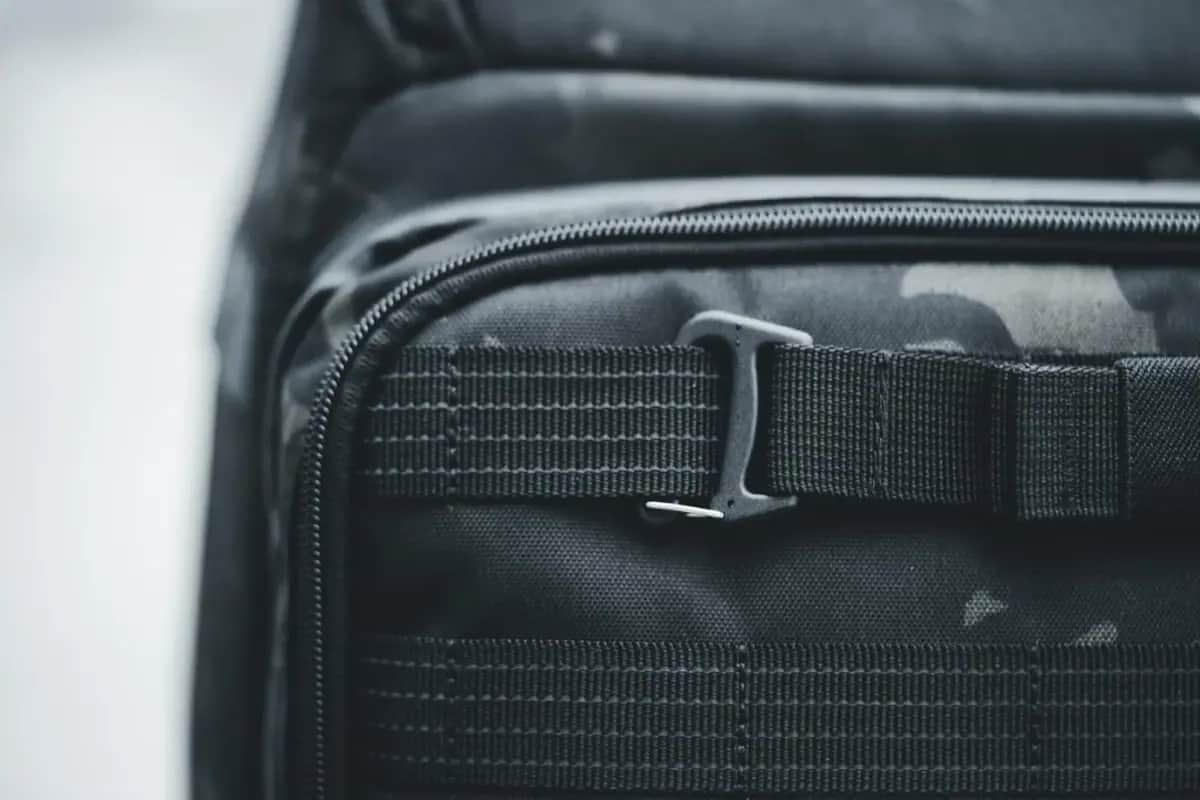
The most common failure point in any bag. Quality zippers last years; cheap zippers fail under load.
YKK: The industry benchmark. If a manufacturer specifically calls out YKK zippers, it's worth paying attention to. Most premium outdoor brands use YKK exclusively.
Signs of cheap zippers: Sticky operation, plastic teeth that deform under load, sliders that don't stay in place.
Emergency bag standard: Full-perimeter zippers on main compartments should be #8 or #10 YKK (larger teeth = stronger).
Carrying System: The Most Important Comfort Factor
A carrying system that doesn't fit your body will cause pain and injury. This matters more for extended carry than most other factors.
Hip Belt
Why it matters: The hip belt transfers 60-70% of pack weight from your shoulders to your hips. Hip bones handle weight better than shoulders for extended carry.
What to look for:
- Padded hip belt (minimum 2cm foam padding)
- Hip belt should sit on hip bones, not floating above them
- Adjustable to your body shape
Budget bag problem: Most bags under €60 have minimal or non-functional hip belts. They're better than nothing for short carries but inadequate for 8+ km.
Shoulder Straps
- Should be padded (minimum 2cm foam)
- Should follow your shoulder curve, not dig in
- Load lifters (straps from shoulder strap top to bag frame) improve load transfer
Back Panel
Options:
- No frame (frameless): Lightest, poor load transfer, ok for under 10kg
- Internal frame: Standard for quality bags. Semi-rigid stays direct load to hip belt
- Ventilated mesh back (air suspension): Creates 2-5cm gap between pack and back for airflow. Excellent for warm weather but reduces load transfer efficiency
Chest Strap
Simple but important: prevents shoulder straps from sliding apart during movement. Should be adjustable height and easily releasable.
Organization: Finding Things Under Stress
In an emergency, you need to find specific items quickly and reliably.
What to look for:
- Separate top lid pocket: For frequently needed items (phone, wallet, keys) that you don't want buried
- Hydration bladder compatibility: Sleeve and port for water reservoir if you use bladders
- Hip belt pockets: For most-accessed items (snacks, small first aid)
- Front organization panel: For smaller items like headlamp, fire kit, first aid
What to avoid: Single large main compartment with no internal organization. Everything falls to the bottom and finding anything requires emptying the bag.
Quick Summary: What to Look For
- Volume: 35-55L for a complete 72-hour kit
- Fabric: 500D-600D ripstop nylon or equivalent
- Zippers: YKK #8+ on main compartments
- Hip belt: Padded, functional, sits on hip bones
- Frame: Internal frame for packs over 10kg
- Organization: Multiple compartments with logical external access
Recommended Products
As an Amazon Associate we earn from qualifying purchases. Buying through our links supports the development of this app at no extra cost to you.