 Foto: Noland Live / Pexels
Boiling vs. Chlorine Tablets vs. UV Pen: The Best Emergency Water Purification Method
Which water purification method wins in an emergency? Honest comparison of boiling, chlorine tablets, and UV treatment for home preppers and bug-out scenarios.
Three proven water purification methods. Which is best for your emergency situation? The answer depends on your specific scenario — but one wins for most home preppers.
The Contenders
| Method | What it kills | Cost | Time | Fuel needed |
|---|---|---|---|---|
| Boiling | All pathogens | Free | 5-15 min + cooling | Yes (fuel) |
| Chlorine tablets | Bacteria, viruses | €0.50/L | 30-60 min | No |
| Chlorine dioxide | All pathogens | €1-2/L | 4 hours | No |
| UV pen | All pathogens | €80-120 device | 90 sec/L | Batteries |
Boiling: Reliable but Fuel-Dependent
Best for: Home use with gas stove, unlimited fuel supply, or wood fire available.
Advantages:
- Works on all pathogens including Cryptosporidium
- No chemical residue
- Works with any heat source
- No equipment needed beyond a pot
Disadvantages:
- Requires fuel (and fuel becomes scarce in extended emergencies)
- Requires cooling before drinking (time and container space)
- Energy-intensive for large quantities
Verdict for home prep: Primary method if you have a gas stove with sufficient canisters stored. Become your default purification in any extended outage.
Chlorine Tablets: The Portable Workhorse
Best for: Emergency kit, bug-out bag, short-term field use.
Advantages:
- Extremely lightweight (50 tablets = 50L coverage, weighs 20g)
- Long shelf life (5+ years sealed)
- Inexpensive (€10-15 for 50-100 tablets)
- Leaves residual disinfection (water stays treated in container)
Disadvantages:
- Doesn't kill Cryptosporidium (combine with filtration for full coverage)
- 30-60 minute wait time
- Chemical taste (though it dissipates)
- Less effective in cold or turbid water
Verdict: Best backup method and essential in every emergency kit. Pair with a hollow fiber filter for complete protection.
UV Pen: Fast and Chemical-Free
Best for: Backcountry use, travel, households wanting chemical-free treatment.
Advantages:
- Kills all pathogens including Cryptosporidium
- Fast (90 seconds per liter)
- No chemical taste
- Reusable (thousands of treatments per device)
Disadvantages:
- Requires clear water (doesn't work in turbid water)
- Battery-dependent (becomes useless when batteries die)
- More expensive upfront (€80-120 for quality device)
- Can only treat one bottle at a time
Verdict: Excellent for the right scenarios but has critical vulnerabilities in serious emergencies (batteries, turbid water). Best as a supplement to other methods.
The Winner for Home Emergency Prep: Boiling + Tablets as Backup
Primary: Boiling — with a camping stove and 4-6 full gas canisters stored, boiling covers everything. It's free (no chemical cost), treats all pathogens, and uses equipment you already need for emergency cooking.
Backup: Chlorine dioxide tablets — keep 50+ tablets in your emergency kit. When fuel runs low or you need portable purification, these cover you. Chlorine dioxide (not regular chlorine) also kills Cryptosporidium with a 4-hour wait.
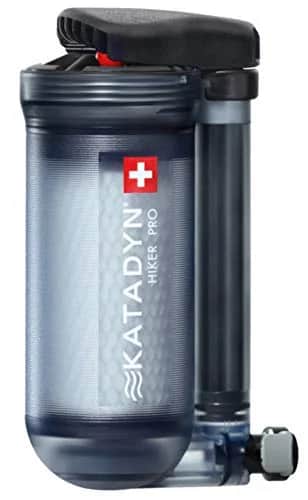
Field use: Hollow fiber filter + chlorine tablets — filter removes physical and biological contamination, tablets add virus coverage. Lightweight, no batteries, complete protection.
Quick Decision Guide
| Situation | Best method |
|---|---|
| Home, power outage | Boil with camp stove |
| Home, low fuel | Chlorine dioxide tablets |
| Bug-out bag | Hollow fiber + chlorine tablets |
| Travel | UV pen + pre-filter |
| Very turbid water | Pre-filter → boil |
| Large quantities | Boil in batches |
Recommended Products
As an Amazon Associate we earn from qualifying purchases. Buying through our links supports the development of this app at no extra cost to you.