 Foto: Bruno Henrique / Pexels
Backup Power Buying Guide: What You Really Need to Know
Buying guide for backup power: solar power stations, generators, and powerbanks for crisis preparedness. What matters for capacity, safety, and value.
Which Type of Backup Power Do You Need?
Before you buy, know what you actually need. The three relevant product categories differ fundamentally in purpose, cost, and suitability:
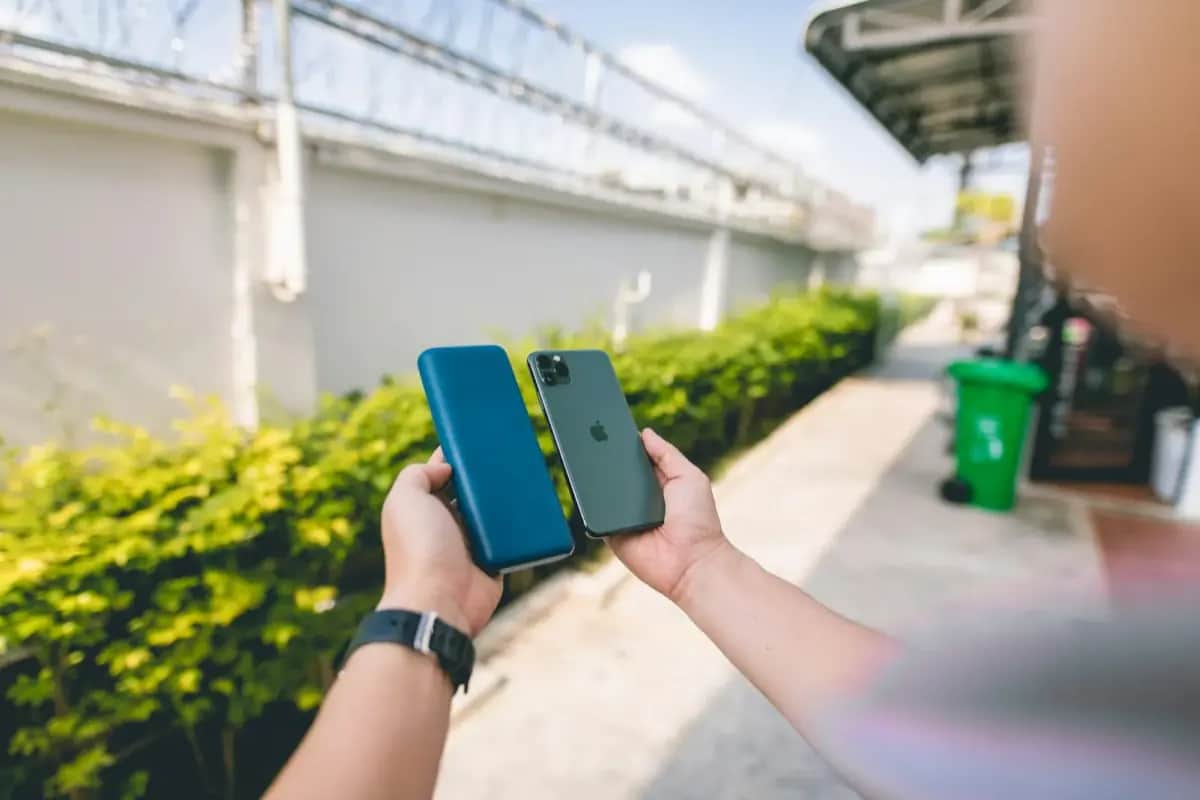
1. Powerbank (20,000-100,000 mAh): Only for smartphones, tablets, and small LED lights. No household outlets. From 30-80 euros.
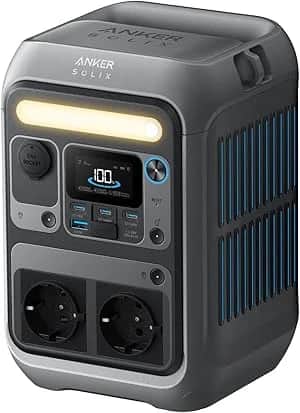
2. Solar Power Station (200-3,000 Wh): For smartphones, laptops, lighting, small appliances. With solar panel input for recharging. 400-2,500 euros.
3. Gasoline/Diesel Generator (1-7 kW): For refrigerators, heating pumps, power tools. Operate outdoors only. 300-2,000 euros.
Buying Criterion 1: Calculate Capacity Realistically
The critical question: How much power do you actually need?
Typical devices and their consumption:
| Device | Consumption | Hours/Day | kWh/Day |
|---|---|---|---|
| Charging smartphone | 15 W | 2 hrs | 0.03 |
| Laptop | 45 W | 4 hrs | 0.18 |
| LED lamp | 8 W | 6 hrs | 0.05 |
| Refrigerator (A+++) | 50 W | 24 hrs | 1.2 |
| Camping cooler | 40 W | 10 hrs | 0.4 |
| Heating pump | 100 W | 8 hrs | 0.8 |
Takeaway: For communication and lighting, a 500 Wh station easily covers 3-5 days. For refrigerator and heating you need either a very large station (2,000+ Wh) or a generator.
Buying Criterion 2: Key Technical Specifications
Wh (Watt-hours) vs. mAh
Many cheap powerbanks advertise in mAh — which tells you little about actual usable energy. Convert: Wh = mAh × V / 1000. A 20,000 mAh powerbank at 3.7V has only ~74 Wh.
Always buy based on Wh, not mAh.
Maximum Output Power (Watts)
Capacity tells you how long you have power — output power tells you what you can run simultaneously.
- Coffee maker: 800-1,200 W → needs 1,200 W+ output
- Kettle: 1,500-2,200 W → needs powerful generator
- Refrigerator: 50-150 W running, but 400-600 W startup current
Watch startup current: Refrigerators, pumps, and compressors need 3-6x more power at startup than during normal operation. Buy a station whose peak output is at least 3x the device's normal power rating.
Charging Time and Charging Options
Check how the station charges:
- AC (wall outlet): Fastest charging (2-6 hours) — but only useful during normal operation
- Solar: Independent but weather-dependent and slow (4-10 hours)
- 12V car: Slow (8-12 hours), but mobile
- EV charger: Only on high-end models, very fast (1-2 hours)
For genuine crisis preparedness: Choose a station that supports ALL three charging methods.
Buying Criterion 3: Safety Considerations
Battery Technology
Battery technology determines safety, lifespan, and performance:
LFP (Lithium Iron Phosphate): Safer, more stable, 3,000-6,000 charge cycles, less energy per weight. Recommended for crisis preparedness. Manufacturers: EcoFlow (newer models), Bluetti.
NMC (Nickel Manganese Cobalt): Higher energy density, but more heat-sensitive and maximum 500-1,000 cycles. Cheaper models often use NMC.
Recommendation: Always buy LFP batteries for crisis preparedness. More expensive, but significantly longer-lasting and safer.
BMS (Battery Management System)
A good BMS prevents overcharging, deep discharge, short circuits, and overheating. Quality manufacturers (EcoFlow, Jackery, Bluetti) build reliable BMS systems. For no-name products, look for certified BMS (IEC 62133, UN38.3).
Buying Criterion 4: Manufacturer and Warranty
Crisis preparedness equipment must work in an emergency — warranty and manufacturer support are more relevant than for regular consumer goods.
Reputable manufacturers (solar power stations):
- EcoFlow (very fast charging, good app, solid LFP models)
- Bluetti (large capacities, solid LFP quality)
- Jackery (slightly more expensive, but excellent build quality)
Buy where repair and spare parts are available in your country. Amazon own-brands or no-name products often have no local customer service.
Concrete Buying Recommendations by Budget
Budget ~200 euros (powerbank solution): Anker SOLIX C300 (288 Wh, 300 W output) — sufficient for smartphone, laptop, light for 2-3 days.
Budget ~600-800 euros (compact station): EcoFlow River 2 Pro (768 Wh, 800 W) or Jackery 1000 Plus (1,264 Wh) — main crisis preparedness solution for one person or a couple.
Budget ~1,200-1,500 euros (family solution): Bluetti AC200L (2,048 Wh, 2,400 W) — sufficient for a family of 2-4 days with cooler, lighting, communication.
What NOT to Buy
- No-name power stations under 200 euros with 1,000+ Wh: Almost always false capacity claims and poor BMS
- Combustion generators without inverter technology: Produce dirty waveforms that damage electronics
- Older NMC stations with fewer than 500 cycles: In a crisis, you don't want to discover the battery has degraded
Recommended Products
As an Amazon Associate we earn from qualifying purchases. Buying through our links supports the development of this app at no extra cost to you.