 Foto: Abdulrhman Alkady / Pexels
9 Self-Defense Tips You Can Implement Without Training
Practical self-defense that doesn't require martial arts training. These 9 tips focus on prevention, awareness, and simple techniques that work for anyone.
The Reality of Self-Defense Without Training
Martial arts training provides significant advantages in confrontational situations. But the truth is: most people will never train consistently enough to develop reliable defensive skills under stress.
The good news: most personal security comes from awareness and prevention, not from fighting ability. These tips require no training and can be applied immediately.
Tip 1: Be the Hard Target
Attackers — especially opportunistic ones — select targets that appear easy. They avoid people who:
- Are aware of their surroundings (not head-down on phone)
- Walk with purpose and confidence
- Make brief eye contact (shows awareness, not vulnerability)
- Are in groups rather than alone
Action: When walking in public, particularly at night or in unfamiliar areas, put your phone away. Scan your environment. Walk upright with purpose.
Tip 2: Increase Distance Before Assessing
The moment someone unknown approaches you at speed, at night, or in an isolated location — increase distance immediately. Move sideways or backward.
This isn't overreaction. It costs nothing if the person was innocuous. It provides time to assess and react if not.
The principle: Time and distance are your greatest assets. A 3-meter distance buys 2-3 seconds of reaction time.
Tip 3: Trust Your Intuition
Humans have evolved threat-sensing capabilities. The feeling that "something is wrong" about a situation often precedes conscious understanding of why.
People who have been victims of crime frequently report: "I felt uncomfortable but didn't want to seem rude."
Act on discomfort. Leave. Cross the street. Enter a shop. The social awkwardness of appearing paranoid is minor compared to the cost of ignoring a genuine threat.
Tip 4: Verbal Deterrence Works
Loudly and clearly stating: "Stop! Get back!" serves multiple functions:
- Signals to the aggressor that you're alert and will resist
- Attracts attention of bystanders
- Prepares your body physiologically (activates adrenaline, ready for action)
A confident verbal response prevents many confrontations from escalating. Practice saying this aloud — many people are genuinely uncomfortable with loud, assertive verbal communication.
Tip 5: Know Your Environment's Exits
In any public space — transport hub, event, restaurant — spend 30 seconds identifying:
- Exit locations
- Potentially threatening individuals (or absence of them)
- High-density choke points to avoid
This is situational awareness. It requires no training, just habit.
Tip 6: Go-Bag and Car Should Always Have a Basic Safety Item
Keep a legal, appropriate safety item accessible:
- Loud personal alarm (legal everywhere, 120+ dB, effective deterrent)
- Torch/flashlight (powerful light temporarily blinds and disorients)
- Appropriate spray where legal in your jurisdiction
The item is secondary. Having it creates a mindset of preparedness.
Tip 7: Escape First, Fight Last
Self-defense training emphasizes this; most beginners don't internalize it. Fighting is a last resort when escape is blocked.
The correct priority sequence:
- Avoid the situation developing
- De-escalate verbally
- Escape — run, enter safe location
- Defend if escape is blocked
People who skip to step 4 out of pride or ego consistently end up worse than those who use steps 1-3.
Tip 8: Target the Sensitive Areas
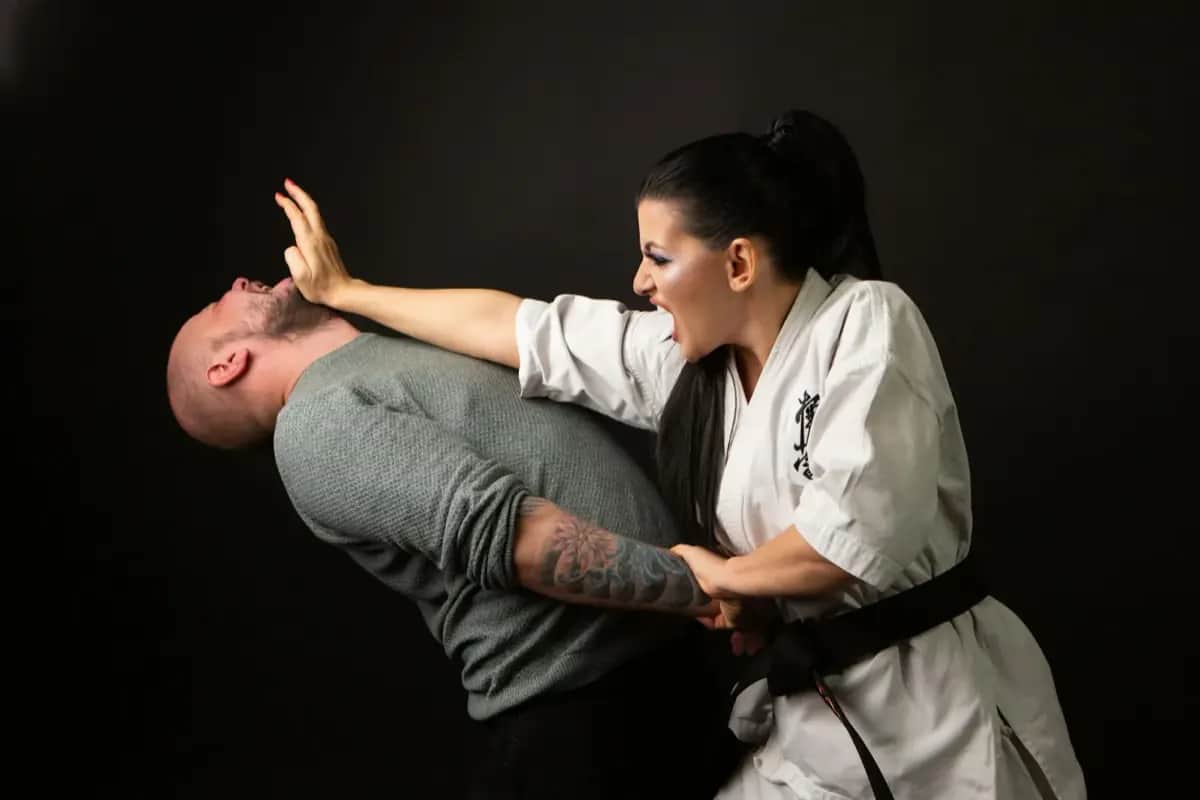
If physical defense becomes necessary and you have no training, three targets provide maximum effect with minimum technique:
- Eyes: Temporary disruption; fingers toward face causes instinctive recoiling
- Throat: Even moderate impact is significantly disabling
- Groin (male attacker): High-impact target
These work without training because they exploit biology, not technique.
Tip 9: Make Noise, Attract Help
Bystanders often fail to intervene because of diffusion of responsibility. Remove the ambiguity: point at a specific person and say: "You — call the police! NOW!"
Direct, specific requests are dramatically more effective than general calls for help. Use your voice loudly throughout any physical confrontation.
What This Article Doesn't Replace
Formal self-defense or martial arts training adds significantly to your capabilities. If you have the opportunity: basic self-defense courses (2-4 hours) teach effective, simple techniques in a short time.
These 9 tips are not a substitute — they're a foundation.
Recommended Products
As an Amazon Associate we earn from qualifying purchases. Buying through our links supports the development of this app at no extra cost to you.