 Foto: Paris Lopez / Pexels
Irritant Spray, Pepper Spray, Animal Repellent: What's What and What's Allowed?
The confusing world of sprays for self-defense: OC vs. CS, Tierabwehrspray vs. Reizstoffspray, what's legal without a permit and what requires one. A clear explanation.
The Terminology Maze
In German law and retail, several terms are used that mean similar but not identical things:
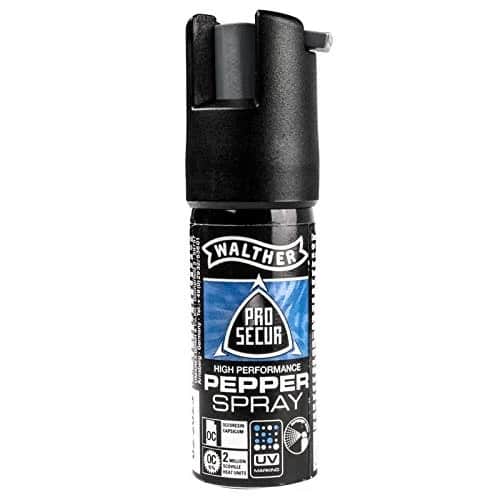
- Pfefferspray (pepper spray): General term for OC-based sprays
- Reizstoffspray (irritant spray): Broader term covering CS gas and OC sprays
- Tierabwehrspray (animal deterrent spray): Legal classification allowing sale without permit restrictions
- CS gas: Tear gas compound (2-chlorobenzalmalononitrile)
- OC: Oleoresin capsicum — the active component in pepper sprays
Understanding which category a product falls into determines what you can legally buy and carry.
OC vs. CS: The Chemistry
OC (Oleoresin Capsicum)
Derived from chilli peppers. Causes intense burning pain in eyes and skin, temporary blindness (20-45 minutes), and respiratory distress.
Advantages: Works on people regardless of mental state (including those under drug influence), animals, and is considered more physiologically reliable than CS.
Disadvantages: Slightly slower onset than CS in some formulations.
CS (2-Chlorobenzalmalononitrile)
Synthetic tear gas compound. Causes tearing, eye pain, respiratory irritation, skin burning.
Advantages: Fast onset.
Disadvantages: Effectiveness on highly agitated individuals (adrenaline, drugs) is less reliable than OC. Considered by some to be less effective for civilian self-defense than OC.
Recommendation for most users: OC formulation.
The "Tierabwehrspray" Legal Classification
Under German law (Waffengesetz), sprays classified as "Tierabwehrspray" (animal deterrent) can be purchased and carried by adults (18+) without a weapons permit.
Key point: This is a legal classification based on labeling and packaging, not just the chemical content. The same OC compound can be in a "Tierabwehrspray" (legal without permit) or a "Selbstverteidigungsspray gegen Menschen" (may require permit in certain formulations).
What to buy: Look for the "Tierabwehrspray" label on the packaging. This confirms legal carry without Waffenschein for adults.
What's NOT Allowed Without Permits
- Sprays explicitly labeled for use against humans (without the Tierabwehrspray classification) — legal ambiguity, avoid
- CN gas (chloroacetophenone, older tear gas compound) — prohibited
- Mace brand original formulation (CN-based) — not the OC-based Mace sold today
Concentration and Size
Concentration: OC sprays are often rated in SHU (Scoville Heat Units) or OC percentage. For self-defense, 1-3% OC concentration in a stream spray is typical. Higher concentration is not necessarily more effective.
Spray pattern:
- Stream: Long range (3-5m), accurate, less wind-sensitive. Preferred for outdoor use.
- Fog/mist: Faster to deploy, more area coverage, wind-sensitive. Better indoors.
- Gel: Good range, sticks to target (reduces secondary contamination), less wind-sensitive.
Size: 40-50ml canisters are common and practical. Enough for multiple deployments.
Practical Safety Information
Storage
- Keep away from heat and direct sunlight
- Check expiry date (typically 3 years)
- Keep away from children
- Do not store in sealed vehicles in summer heat
Carrying
- Accessible (not at bottom of bag)
- In pocket or dedicated holder
- Adults only (18+ in Germany)
After deployment
- Move upwind immediately
- Wash affected skin and eyes with cold water (do not rub)
- Fresh air — remove from area
- If eye pain persists, seek medical attention
The Bottom Line
For legal civilian self-defense in Germany:
- Buy: OC-based spray marked "Tierabwehrspray"
- Avoid: Products with ambiguous labeling or not marked for civilian use
- Carry: In an accessible location, check expiry annually
- Practice: Familiarize yourself with operation before you need it
Recommended Products
As an Amazon Associate we earn from qualifying purchases. Buying through our links supports the development of this app at no extra cost to you.