 Foto: Mikhail Nilov / Pexels
Emergency Supplies for Pets Explained: What Dogs, Cats and Other Animals Really Need
What emergency supplies does your dog, cat, rabbit, or bird actually need? A practical guide to pet-specific crisis preparation for different animal types.
Why Pet Emergency Supplies Are Different from Human Supplies
Pet emergency supplies aren't just scaled-down human supplies. Animals have species-specific needs, respond differently to stress, require different medical care, and need documentation requirements unique to their species.
This guide breaks down exactly what each type of pet needs for a 72-hour emergency supply.
Universal Principles for All Pets
Before getting species-specific, three principles apply to every animal:
-
Food continuity matters: Sudden food changes during stress can cause significant digestive upset. Your emergency supply should be your pet's normal food, stored for rotation.
-
Stress compounds everything: Animals can't understand what's happening in a crisis. Familiar items (toys, blankets, carrier) dramatically reduce stress responses.
-
Documentation must be ready: Vaccination certificates, chip registration, identification photos. These matter at emergency shelters and if your pet becomes separated from you.
Dogs
Food and water:
- 72-hour food supply in airtight container (your dog's regular food, rotated every 6 months)
- Collapsible water bowl
- 50ml water per kg body weight per day minimum
Medical:
- Wound care supplies: gauze, bandages, antiseptic (dog-safe)
- Emergency muzzle (stress causes biting in even familiar dogs)
- Tick removal tool
- Any regular medications (minimum 7-day supply)
- Veterinarian contact and emergency vet address
Documentation:
- Vaccination certificate copy
- Chip registration number
- Photo of you with your dog
- ID tag on collar with current phone number
Comfort and containment:
- Spare leash
- Familiar toy or blanket
- Transport carrier or harness if needed
Cats
Cats are more difficult to evacuate than dogs and require specific preparation.
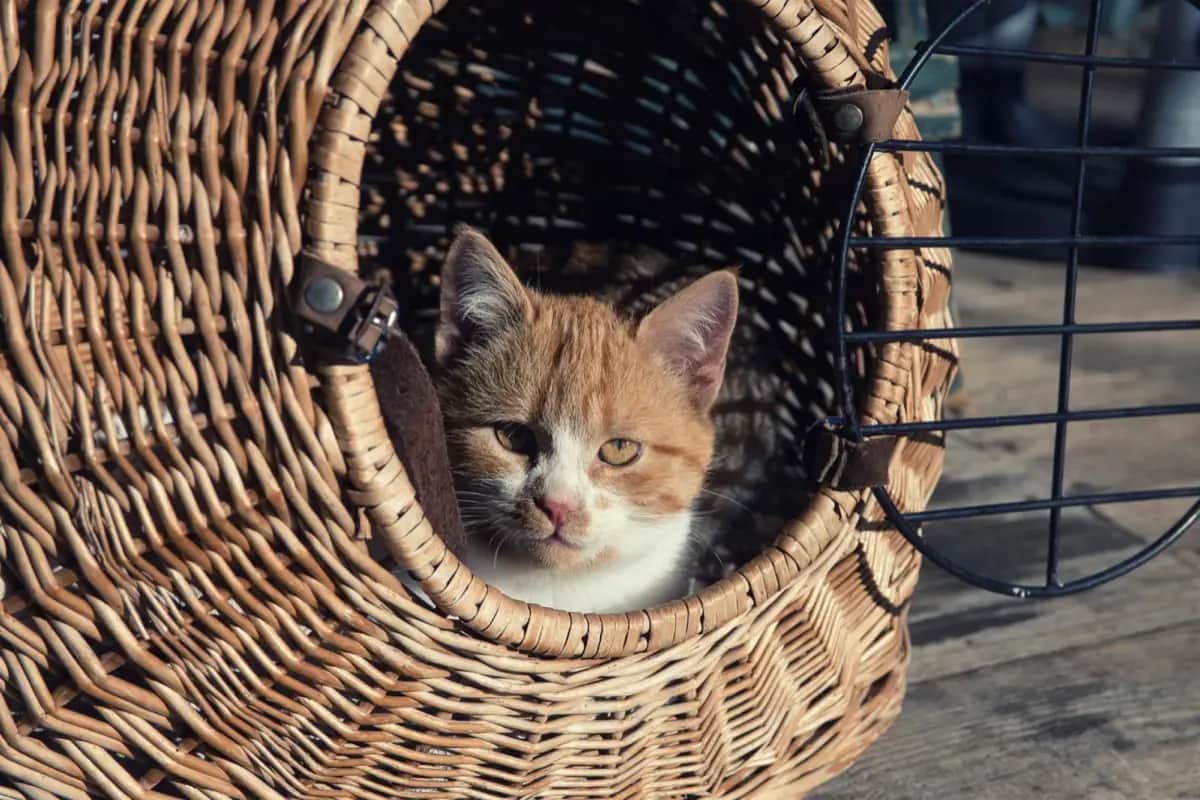
The carrier problem: Most cats are reluctant to enter carriers during emergencies because the carrier only appears in stressful contexts (vet visits). Solution: Keep the carrier out permanently, make it a comfortable resting spot. Your cat will enter it voluntarily.
Food and water:
- Same principle as dogs: familiar food in airtight container
- Cats are particularly prone to refusing unfamiliar food under stress
- Collapsible bowl
Specific to cats:
- Small travel litter box (disposable option)
- Litter supply (1 kg for 72 hours)
- Calming spray (Feliway pheromone-based) for extreme stress
- Secure carrier (cats escape under pressure — quality of carrier matters)
Documentation:
- Same as dogs: chip, vaccination, photo, ID collar
Small Mammals (Rabbits, Guinea Pigs, Hamsters)
Small mammals are often overlooked in emergency planning but have specific vulnerabilities:
Temperature sensitivity:
- Rabbits and guinea pigs don't tolerate temperatures above 25°C or below 10°C well
- Hamsters hibernate in cold (which looks like death)
- In evacuation, carriers must protect from temperature extremes
Food and bedding:
- 72-hour food supply (hay, pellets, species-appropriate fresh food if feasible)
- Bedding material in a bag
- Small travel enclosure or secure carrier
Specific vulnerabilities:
- Extreme stress can cause shock in rabbits (literally fatal)
- Minimize handling and noise exposure
- Transport carrier must be secure — escape in a car is dangerous
Birds
Birds are highly sensitive to air quality, temperature, and stress.
The core challenge: Birds have extremely efficient respiratory systems — which makes them uniquely vulnerable to smoke, chemical vapors, and air quality changes. A smoke situation that humans tolerate can be fatal for birds quickly.
Evacuation priorities:
- Secure carrier or travel cage
- Cover during transport (darkness reduces stress)
- Avoid temperature drafts during transport
Food and water:
- 72-hour seed/pellet supply
- Attached water dispenser
Key rule: At the first sign of air quality problems (smoke, gas leak, chemical odor), birds should be evacuated before humans — they are the early warning system.
Fish and Aquarium Animals
Fish generally cannot be evacuated in emergencies. Prepare instead:
- Battery-powered air pump (keeps oxygen levels stable during power outage)
- Note of tank parameters (for restarting after crisis)
- Contact for an aquatics specialist
Planning note: If crisis scenarios in your area include extended power outages, have a contingency plan for your fish. Depending on the species, tanks can survive 1-4 days without power before water quality becomes critical.
All Pets: The Critical Identification Steps
The single most important action regardless of species:
- Microchip: Done and registered in national database
- Current photo with you: Proves ownership in disputes
- Contact information: On collar or tag, up to date
- Documentation: Vaccination, registration, medical history in waterproof sleeve
Lost pets are significantly more likely to be reunited with owners who have chip registration and photos. This paperwork takes 30 minutes and matters enormously if the worst happens.