 Foto: American Public Power Association / Unsplash
Best Emergency Power Banks: Top 5 Models Compared
Which power bank is best for power outages? We compare capacity, solar charging, and durability.
Why a Power Bank Belongs in Every Emergency Kit
Power outages rarely happen when your devices are fully charged. Smartphone, flashlight, hearing aid, medical devices — in an emergency, these items can be genuinely life-critical. A high-capacity power bank buys you the time you need to call for help, access information, or simply keep the lights on.
Germany's Federal Office for Civil Protection and Disaster Assistance (BBK) recommends preparing for outages of at least 72 hours. That's three days without any external power source — a gap where the difference between a 5,000 mAh power bank and a 26,800 mAh model separates communication from isolation.
This guide compares five power bank categories on the factors that matter most in an emergency: capacity, charging speed, solar capability, durability, and value.
The 5 Key Criteria for Emergency Power Banks
Not every power bank is suited for emergency use. Here's what to evaluate:
Capacity (mAh): For 72 hours, plan for at least 20,000 mAh — that's roughly 5 smartphone charges. 26,800 mAh is typically the maximum for carry-on-compliant models.
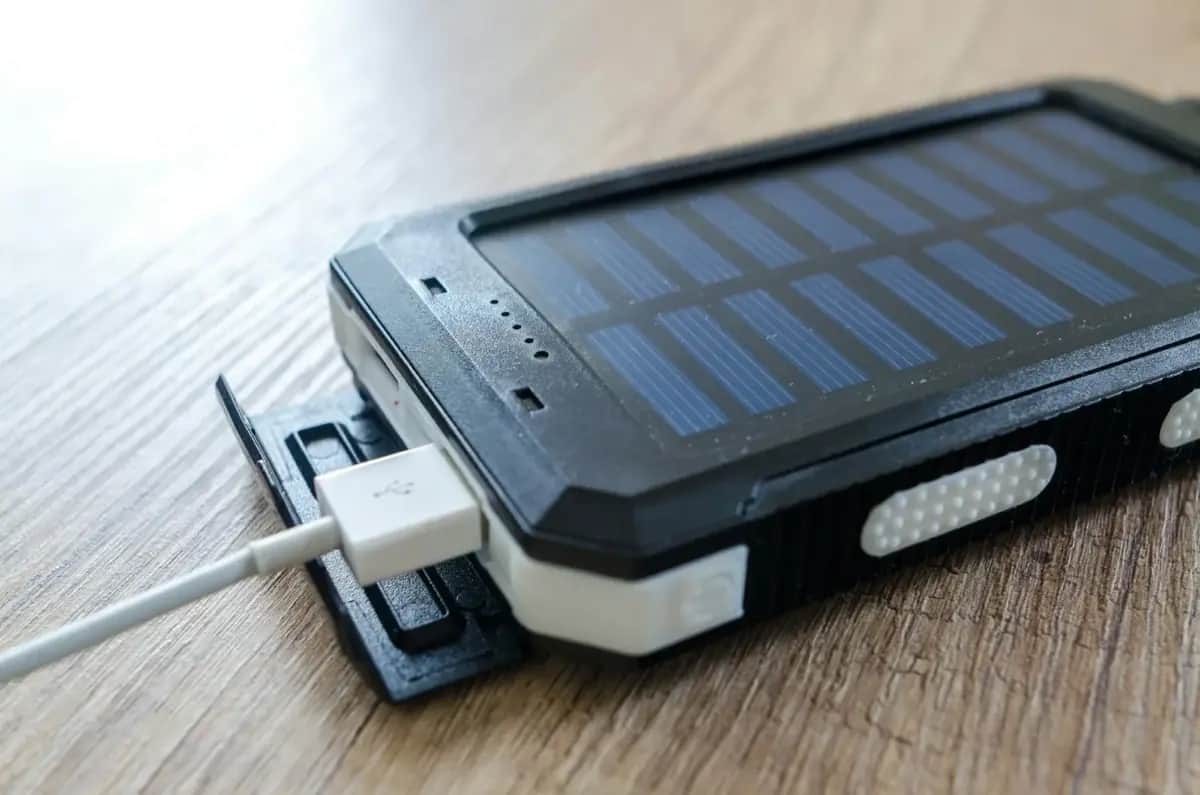
Solar Charging: For outages longer than 3 days, solar capability becomes critical. Look for at least a 5W panel — smaller panels charge so slowly they're barely practical.
Durability (IP Rating): IP65 or higher protects against spray water and dust. Essential for outdoor use or a bug-out bag.
Charging Speed: USB-C Power Delivery (PD) at 18W or higher charges smartphones significantly faster than older 5W standards.
Weight: More capacity means more weight. For a go-bag: maximum 500g, ideally under 400g.
Comparison Table: Top 5 Emergency Power Banks
| Model | Capacity | Solar Panel | IP Rating | USB-C PD | Weight | Price (approx.) |
|---|---|---|---|---|---|---|
| Anker 737 Power Bank | 24,000 mAh | No | IPX5 | 140W | 612g | ~$100 |
| Goal Zero Venture 35 | 9,450 mAh | Yes (5W) | IP67 | 18W | 310g | ~$80 |
| BigBlue 28W Solar Power Bank | 20,000 mAh | Yes (10W) | IP65 | 18W | 420g | ~$50 |
| Jackery Explorer 300 | 293 Wh (79,000 mAh) | Compatible | IP54 | 200W | 6.8 lbs | ~$300 |
| RAVPower 26,800 | 26,800 mAh | No | IPX4 | 30W | 480g | ~$50 |
Recommendations by Use Case
For a Bug-Out Bag
Winner: BigBlue 28W Solar Power Bank
When weight is a constraint, the BigBlue strikes the best balance: reasonable weight (420g), genuine solar capability (10W panel), and enough capacity for 4-5 smartphone charges. The IP65 rating handles rain and dust without issue. The price point is hard to beat.
Alternative: Goal Zero Venture 35 for those who want IP67 protection and can trade capacity for a lighter, more compact package.
For Home Emergency Preparedness
Winner: RAVPower 26,800 or Anker 737
Weight doesn't matter at home. Here, maximum capacity and charging speed take priority. The RAVPower offers the most charges per dollar. The Anker 737 stands out for its massive 140W output — ideal for laptops, CPAP machines, or other power-hungry devices.
For Extended Outages (5+ Days)
Winner: Jackery Explorer 300 (Power Station)
After five days, you're in portable power station territory. The Jackery Explorer 300 holds nearly 300 watt-hours and recharges via solar panels. It powers not just phones but small coolers, LED lights, and medical equipment. The trade-off: 6.8 lbs — no longer a bag candidate.
Capacity vs. Weight: The Core Trade-Off
For a go-bag, a common guideline is no more than 10% of body weight for total pack contents. In that context, the power bank shouldn't exceed 5-8% of your total weight budget.
| Capacity | Typical Weight | Smartphone Charges (4,000 mAh) | Best For |
|---|---|---|---|
| 10,000 mAh | 180-220g | ~2 | Day trips, light carry |
| 20,000 mAh | 380-450g | ~4 | Emergency bag, 3 days |
| 26,800 mAh | 450-500g | ~5-6 | Max mobile capacity |
| 79,000+ mAh | 3-4 kg | 15+ | Stationary home prep |
Maintenance: Don't Let It Die in the Drawer
A power bank that's been sitting on a shelf for two years may be useless when you need it. Lithium-ion batteries degrade during extended storage — especially if left completely drained or perpetually at 100%.
Care recommendations:
- Cycle your power bank every 3 months: charge to 50-70%, discharge, repeat
- For storage, aim for 40-60% charge
- Never store at temperatures above 104°F (40°C)
- After 2-3 years, perform a capacity test and replace if significantly degraded
Conclusion: Which Power Bank Is Right for You?
The perfect emergency power bank depends on your situation. For home preparedness without weight constraints, get the highest-capacity option within budget (RAVPower 26,800 or similar). For mobile readiness, invest in a solar model with IP protection.
The most important thing: a power bank that sits fully charged in your emergency kit is worth far more than the most expensive model that was forgotten on a charging cable.
Recommended Products
As an Amazon Associate we earn from qualifying purchases. Buying through our links supports the development of this app at no extra cost to you.